






Why Cushions Are Your Secret Weapon
Committing to a new wall colour or a statement sofa is a big decision, both financially and emotionally. The fear of getting it wrong often leads us to play it safe with neutrals, even when we crave a bolder look. Accent cushions provide the perfect,
low-stakes solution. They are relatively inexpensive, easily returnable, and allow you to introduce a new colour or pattern into your space on a small, manageable scale. Think of them as a trial run for a new aesthetic. If you love the effect, you can build the palette out from there. If you don't, you've lost very little and can simply try something else. This freedom to experiment is the key to discovering a style that truly feels like you, removing the pressure of permanence.
Choosing Your Experimental Colours
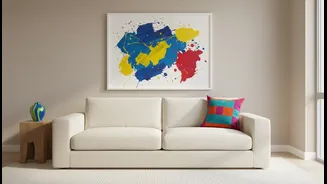
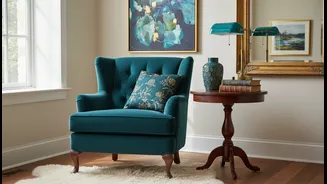
The first step is to identify potential accent colours. Look for inspiration in what you already have. A patterned rug, a piece of artwork, or even a favourite vase can provide a starting point. Pulling a lesser-used colour from an existing item is a great way to create a cohesive feel. Alternatively, look to the colour wheel for classic pairings. Complementary colours (opposites on the wheel, like blue and orange) create a vibrant, high-energy look. Analogous colours (next to each other on the wheel, like blue and green) offer a more serene and harmonious feel. Don't be afraid to grab a few different options. The goal is to audition these colours in your own space, so pick two or three cushion covers in hues you're drawn to.
Running the Live-in Test
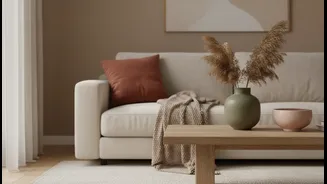
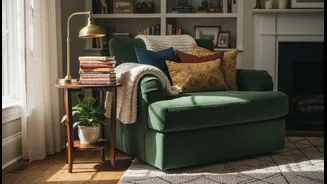
Once you have your contenders, it's time to live with them. This step is crucial and mimics how professional designers test paint. Place the new cushions on your sofa, armchair, or bed. Then, simply go about your life for a few days. The goal is to see how the colours look and feel at different times. Notice how the morning light hits them versus the warm glow of your evening lamps. How does that pop of emerald green feel on a quiet Tuesday morning compared to a busy Friday night? Does the burnt orange make the room feel cosy or chaotic? Moving the cushions around the room can also be insightful. A colour that feels right on the sofa might look even better on an accent chair across the room.
Reading the Results and Building Your Palette
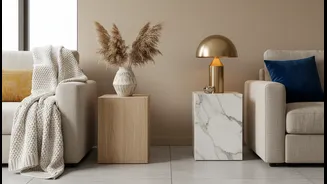
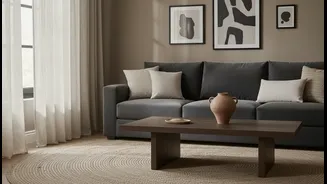
After a few days, you'll likely have a clear winner. One colour will just feel right—it will energise, calm, or complete the room in a way that resonates with you. This is your green light. Now, you can confidently build upon this accent. A popular interior design principle is the 60-30-10 rule. Your dominant colour (like neutral walls) makes up 60% of the room, a secondary colour (furniture, curtains) takes up 30%, and your chosen accent colour should form about 10% of the space. This ensures the accent adds a pop of personality without being overwhelming. To make the design feel intentional, repeat your new accent colour in at least two or three other places. This could be a throw blanket, a lamp base, picture frames, or a vase.
Beyond Colour: Texture and Pattern
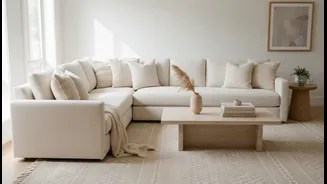
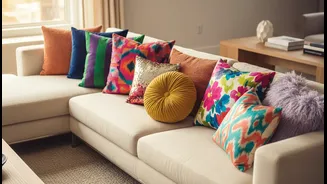
While you're testing colours, don't forget about texture and pattern. Mixing different materials like velvet, linen, bouclé, or chunky knits adds depth and a luxurious, layered feel, even in a neutral scheme. Similarly, playing with patterns can elevate your design. The key is to vary the scale. Pair a large-scale floral print with a small, delicate geometric or a simple stripe. As long as they share a cohesive colour palette, the patterns will complement each other rather than compete. Your accent cushion test isn't just about finding one colour; it's about discovering a combination of colour, texture, and pattern that brings your room to life.