



Survival Is Not Life
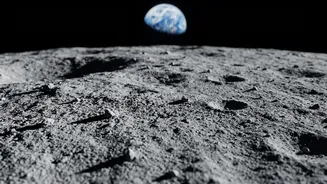
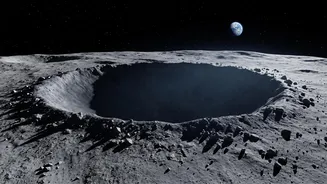
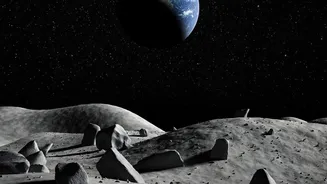
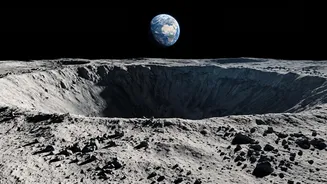
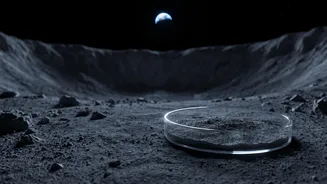
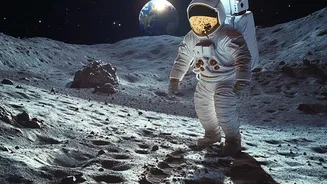
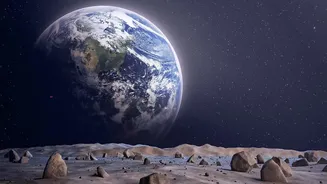
Recent NASA-led research has revealed that some of Earth's hardiest microorganisms could likely survive in the brutally harsh environment near the Moon's south pole. A study published in August 2026 identified survivable niches, particularly in permanently
shadowed craters where microbes are shielded from extreme temperatures and lethal solar radiation. Scientists clarified, however, that their study focused only on survival—the ability of a dormant cell to remain viable—not on growth or reproduction. This is a crucial distinction. Survival in this context means entering a state of suspended animation, like an animal in hibernation. The microbes are not 'living' in any active sense; they are not metabolizing, growing, or creating new cells. They are simply waiting for conditions to improve, a wait that, on the Moon, would likely be eternal.
The Ultimate Extremophiles
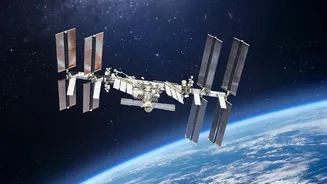
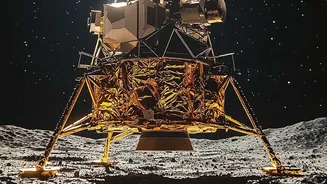
The organisms in question are 'extremophiles,' life forms that can withstand conditions that would kill most others. One such star is a bacterium called Deinococcus radiodurans, nicknamed 'Conan the Bacterium.' This microbe can endure desiccation, acid, vacuum, and doses of radiation thousands of times greater than what a human can withstand. Experiments on the International Space Station showed it could survive for years exposed to open space. Another famous survivor is the tardigrade, or 'water bear.' These microscopic creatures can enter a state called cryptobiosis, expelling nearly all the water from their bodies and becoming inert 'tuns.' In this state, they can survive extreme temperatures, pressures, and even the vacuum of space. In 2019, a payload of tardigrades in this state crash-landed on the Moon aboard Israel's Beresheet lander. While experts believe they likely survived the impact, they remain inert husks, unable to reanimate without liquid water—something the Moon lacks.
Why The Distinction Matters
The difference between passive survival and active reproduction is central to one of science's most fascinating theories: panspermia. This is the hypothesis that life can spread between planets, moons, and even star systems, hitching a ride on meteorites. For panspermia to be a viable explanation for life on Earth, microbes would need not only to survive the journey through space but also to 'reawaken' and begin reproducing upon arrival. The new findings both support and challenge this idea. They show that survival in space is possible, reinforcing the first part of the theory. However, they also underscore the immense challenge of the second part. Without a hospitable environment—including liquid water, nutrients, and protection from radiation—a microbe could remain dormant forever, a seed that never finds fertile ground.
Contamination and Future Exploration
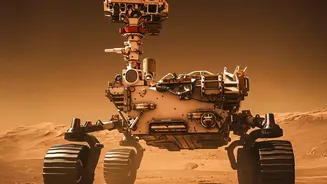
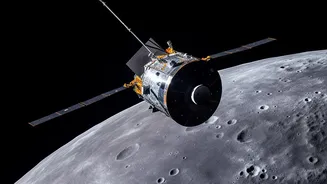
The fact that our microbes can survive on the Moon has significant implications for future exploration, particularly as NASA's Artemis program targets the lunar south pole. The primary concern is planetary protection. Scientists want to study the Moon's pristine environment to understand its geology and search for chemical clues about the origins of our solar system. If we contaminate these sites with our own bacteria, it could become impossible to tell if any organic molecules we find are truly lunar or are just hitchhikers from Earth. This concern extends to Mars, a prime target in the search for extraterrestrial life. Understanding which of our microbes are most likely to survive helps space agencies develop better sterilization protocols and choose landing sites more carefully, ensuring that if we do find life, we can be confident it isn't our own.