







A Story of Resilience and Success
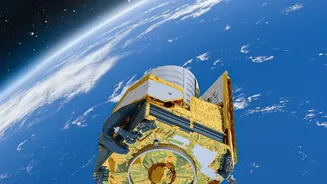
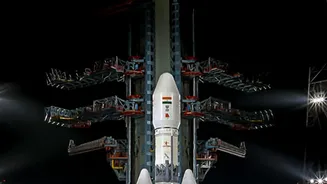
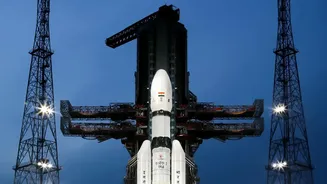
On September 4, 2026, ISRO's Geosynchronous Satellite Launch Vehicle (GSLV-F17) lifted off from Sriharikota, carrying the EOS-05 satellite. This mission was more than just a routine launch; it was a story of recovery. This new satellite, also known as GISAT-1A,
is the replacement for EOS-03 (or GISAT-1), which was lost in a launch failure in August 2021. That failure was a significant setback, caused by a technical anomaly in the rocket's cryogenic upper stage. The success of EOS-05 therefore marks a crucial comeback for ISRO, demonstrating its ability to overcome technical challenges and deliver on strategically important projects. The successful launch was a significant morale booster, marking ISRO's first major success of 2026 after some earlier setbacks.
The Significance of a Fixed Position
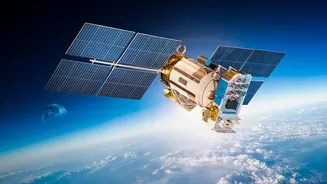
The "latest position" of EOS-05 is what makes it a game-changer. After its launch into a sub-geosynchronous transfer orbit, the satellite used its own engines for a series of manoeuvres to reach its final destination: a geosynchronous orbit approximately 36,000 kilometres above the Earth. Unlike satellites in Low Earth Orbit (LEO) which circle the planet and can only view a specific location for a short time every few days, a satellite in a geosynchronous orbit matches the Earth's rotation. This means EOS-05 remains fixed over the Indian subcontinent, allowing for continuous, persistent monitoring of a large area. This capability transforms India's surveillance from taking periodic snapshots to maintaining a constant watch.
What Continuous Monitoring Means for India
The meaning of EOS-05 lies in its powerful applications for both civilian and strategic purposes. For disaster management, it is a revolutionary tool. The satellite can provide near real-time imagery of the entire Indian landmass every 30 minutes. This allows for rapid tracking of fast-developing natural disasters like cyclones, floods, and forest fires, enabling quicker response times. Its advanced sensors can also monitor agriculture, forestry, and water resources. Furthermore, EOS-05 has significant strategic importance. Its ability to maintain an uninterrupted watch over border areas and the Indian Ocean provides a vital layer of security and situational awareness for the country's defence forces.
The Advanced Technology Onboard
EOS-05 is equipped with a sophisticated payload designed for detailed observation. It carries high-resolution multispectral and hyperspectral imagers. In simple terms, this means the satellite can 'see' the Earth in numerous wavelengths of light, far beyond what the human eye can perceive. This capability allows it to distinguish between different types of vegetation, assess soil health, and identify specific minerals on the ground. The satellite, weighing over 2,300 kg, is the heaviest ever launched by this specific configuration of the GSLV rocket. Its successful deployment and operation are a testament to the increasing sophistication of India's indigenous space technology.