





The Allure of Assured Income
For many farmers in Punjab, the choice to cultivate paddy is a pragmatic one, rooted in economic security. The primary driver is the Minimum Support Price (MSP) mechanism. Paddy enjoys robust procurement by government agencies at a pre-announced MSP,
effectively guaranteeing a buyer and a stable price. This creates a predictable income stream, shielding farmers from the volatile price fluctuations common in open markets. In contrast, cotton prices can be uncertain, and while they can sometimes be very high, they are subject to market demand and quality assessments that make the final income less reliable. This government-backed safety net for paddy makes it a less risky and therefore more attractive option for farmers seeking financial stability for their families.
The High Risks of Growing 'White Gold'
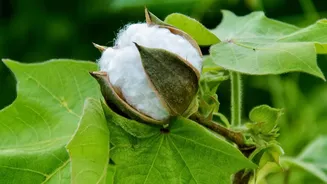
While cotton is often called 'white gold', its cultivation is fraught with challenges that have eroded farmer confidence over the years. The crop is highly susceptible to pest attacks, with infestations of pink bollworm and whitefly causing widespread damage and significant financial losses. These pest problems often lead to increased spending on pesticides, raising the cost of cultivation without a guarantee of a good harvest. Furthermore, cotton is sensitive to weather conditions, particularly erratic rainfall, which has become more common. Unseasonal rains during the picking season can destroy the standing crop, as seen in recent years, wiping out a farmer's expected earnings. These recurring setbacks have made cotton a high-risk, high-cost venture for many, pushing them towards the relative safety of paddy.
The Environmental Price of a Safer Bet
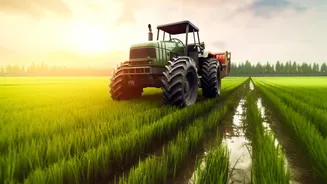
The large-scale shift to paddy comes at a severe environmental cost, primarily concerning water. Paddy is an incredibly water-intensive crop, requiring massive amounts of irrigation. It is estimated that it takes up to 5,000 litres of water to produce just one kilogram of rice, a practice ill-suited to Punjab's semi-arid climate. This has led to the drastic over-extraction of groundwater. Reports indicate that the water table in Punjab is declining at an alarming rate, with some sources suggesting an average drop of half a meter per year. Over 80% of the state's groundwater blocks are now classified as 'over-exploited', threatening to turn the fertile 'Granary of India' into a desert in the coming decades. The issue is so severe that it jeopardises the long-term agricultural sustainability of the entire region.
A Policy Paradox
The government faces a difficult balancing act. On one hand, the MSP for paddy, along with subsidies like free power for tube wells, indirectly encourages its cultivation. On the other hand, there is a growing push for crop diversification to conserve water. Various schemes have been launched to incentivise farmers to switch to less water-guzzling alternatives like maize, pulses, and cotton. However, the success of these programs has been limited. Farmers often find that the financial incentives offered do not adequately compensate for the perceived loss of income and the security that paddy provides. Without an assured procurement and stable market for alternative crops, the economic logic for sticking with paddy remains overwhelmingly strong for the individual farmer.