





A New, United Front on Safety
Something unusual is happening at the top of the AI industry. Sam Altman of OpenAI and Dario Amodei of Anthropic, typically seen as chief rivals in the race to build the most powerful AI, have begun speaking with one voice on a critical issue: safety.
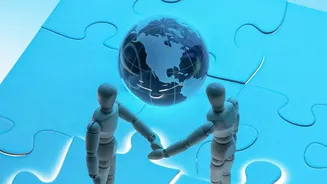
In recent public statements, including at a United Nations Security Council meeting, both CEOs have stressed the urgent need for global cooperation and new safety standards for the technology they are creating. This alignment is a remarkable development. For years, the narrative has been one of fierce competition. Now, the creators of systems like GPT and Claude are publicly agreeing that the pace of development has become so rapid that no single company can manage the risks alone. They are part of a growing chorus of executives from top labs, including Google, who are pushing for a more collaborative approach to AI governance.
What Are 'Frontier Models'?
The focus of this newfound concern is on what the industry calls “frontier AI models.” These are the most advanced, state-of-the-art systems at any given moment, trained on immense datasets to push the boundaries of what AI can do. Think of them as the bleeding edge of artificial intelligence, capable of complex reasoning, generating sophisticated code, and understanding multiple data types like text and images. It is precisely because these models are so powerful and their capabilities are advancing so quickly that their creators are sounding the alarm. Amodei has warned that models could soon become too powerful for even their developers to handle, while Altman has cautioned that such systems could concentrate too much power in too few hands or make decisions humans can no longer control.
The Push for Independent Evaluation
The central proposal gaining consensus is the need for independent, third-party evaluation of frontier models before they are released to the public. This would function like an external safety audit. Instead of just relying on internal testing, companies like OpenAI and Anthropic would allow vetted, independent experts to access their models to test for dangerous capabilities, potential for misuse, and alignment with human values. This represents a significant concession from famously secretive labs. The goal is to create a trusted, standardized process for verifying that a powerful new AI system doesn't pose catastrophic risks, such as being used to design bioweapons or enabling large-scale cyberattacks, before it is deployed. This move is already being formalized through partnerships with government bodies like the U.S. and U.K. AI Safety Institutes.
The Central Takeaway: Self-Regulation Is Not Enough
So, what is the single takeaway from this sudden alignment? It is the implicit admission from the leaders of the AI revolution that they cannot be trusted to regulate themselves. The warnings are no longer coming from outside critics or academics; they are coming from the sitting CEOs of the companies building the technology. For years, the industry operated on a model of rapid, competitive development, with safety often discussed but rarely allowed to meaningfully slow down progress. This public call for shared standards and external audits marks the end of that era. It is a recognition that the risks associated with frontier AI have grown too large for any one company's balance sheet or ethical compass. The race is no longer just about who can build the most powerful system, but about who can prove their system is safe enough for the world.
Challenges and Skepticism Remain
Despite the apparent consensus, significant hurdles remain. A key challenge is defining who these “independent” evaluators will be and who will fund them to ensure they are not captured by industry interests. There are also concerns among critics that this push for coordinated standards could be a form of regulatory capture, where dominant players like OpenAI, Anthropic, and Google create rules that box out smaller, open-source competitors. Furthermore, there is political disagreement, with some arguing that any slowdown in the U.S. could cede a critical advantage to rivals like China. These calls for collaboration will be tested the next time a company faces pressure to beat a rival to market with a groundbreaking new model, a scenario where past safety pledges have often faded.