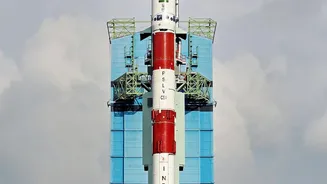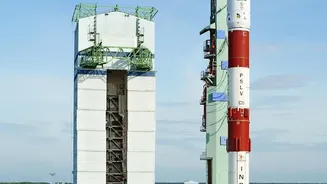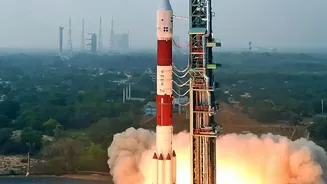






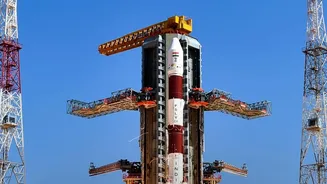


A New Gateway to the Stars
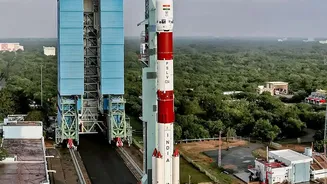
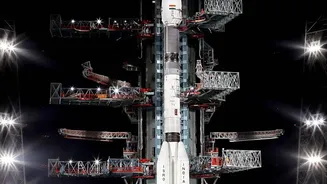
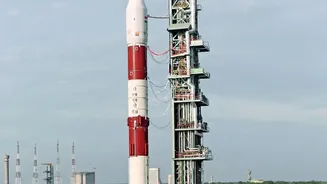
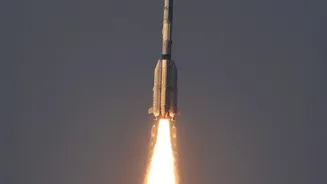
In Kulasekarapattinam, a village in Tamil Nadu's Thoothukudi district, the Indian Space Research Organisation (ISRO) is building the nation's second rocket launch complex. The foundation stone for this ambitious project was laid in February 2024, marking
a new chapter for India's space program. Unlike the existing Satish Dhawan Space Centre (SDSC) in Sriharikota, which handles all of ISRO's missions from heavy-lift rockets to interplanetary journeys, this new facility has a very specific and strategic purpose: to become a dedicated hub for launching small satellites. Its sheer scale and cost underscore a significant national priority, aimed at decongesting the busy launch schedule at Sriharikota and positioning India as a dominant player in a rapidly growing market.
The Strategic Advantage of a Southward Path
The choice of Kulasekarapattinam is a masterstroke of geographical and strategic planning. For years, rockets launching into a polar orbit (circling the Earth from pole to pole) from Sriharikota had to perform a costly "dogleg manoeuvre." To avoid flying over Sri Lanka's landmass, rockets had to burn precious fuel to steer east before turning south. This manoeuvre significantly reduces the payload capacity of smaller rockets. The new spaceport solves this problem entirely. Located further south and west, it offers a direct, unobstructed path southward over the Indian Ocean. This straight trajectory saves a considerable amount of fuel, making launches more efficient and increasing the weight of the satellites that can be carried, a crucial factor for the cost-sensitive commercial market.
Built for the Small Satellite Revolution
The global space economy is undergoing a massive shift. The demand for launching small satellites, weighing under 500 kg, is exploding. These smaller, often more affordable satellites are used for everything from Earth observation and weather monitoring to communications and academic research. The Kulasekarapattinam complex is purpose-built to cater to this market, primarily serving ISRO's own Small Satellite Launch Vehicle (SSLV). The SSLV is designed for quick, on-demand launches with a fast turnaround time, and the new spaceport's infrastructure is tailored to support this high-cadence launch schedule. This synergy between the vehicle and the launch site will give India a powerful competitive edge.
Opening the Doors to Private Industry
This project is also a cornerstone of India's policy to open the space sector to private companies. In a landmark move, the space regulator IN-SPACe has already initiated the process to hand over the operations and management of the new complex to a private entity. This means a private company will be responsible for everything from launch campaign operations and maintenance to safety and mission readiness. ISRO will provide technical guidance during a transition period to ensure a smooth handover. This move is intended to foster a vibrant commercial space ecosystem in India, where private players can not only build satellites and rockets but also manage launch infrastructure, a domain once exclusively held by the government agency.
Boosting the Local Economy and Beyond
The impact of the spaceport extends far beyond the launchpad. The Tamil Nadu government is planning to establish a Space Industrial and Propellants Park nearby to create an ecosystem for space-related manufacturing and research. The proximity to the ISRO Propulsion Complex at Mahendragiri offers further synergies. This large-scale investment is expected to generate significant employment, foster skill development, and attract ancillary industries to the region, transforming the local economy. It's a clear signal of India's ambition to not just launch satellites, but to build a comprehensive, self-reliant space industry from the ground up, aligning with national initiatives like 'Make in India'.