




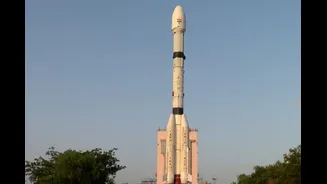
1. The Thunderous Liftoff
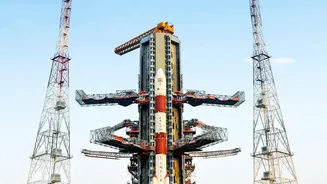
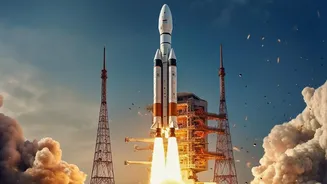
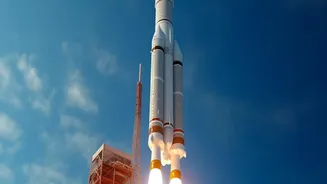
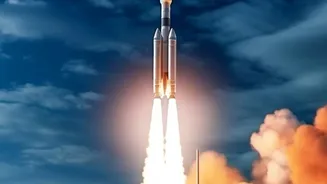
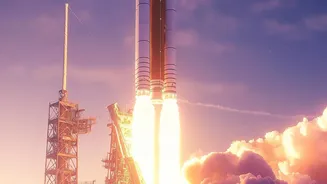
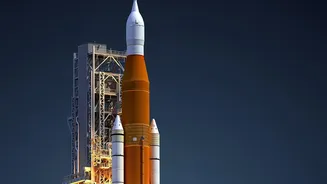
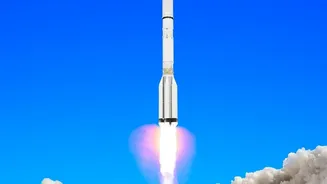
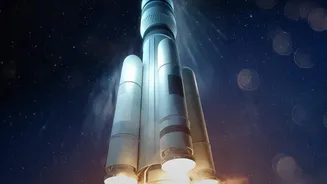
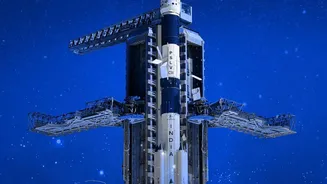
The mission began at the Satish Dhawan Space Centre in Sriharikota, where the nearly 50-metre-tall GSLV-F17 rocket ignited its engines. The first stage, comprising a solid propellant core and four liquid-fueled strap-on boosters, provided the immense
thrust needed to lift the 400-tonne vehicle off the launchpad. For the initial moments of the flight, these powerful engines worked in unison, pushing the rocket through the dense lower atmosphere and setting the stage for the journey ahead. This powerful, controlled ascent is the first critical step where countless variables must perform perfectly.
2. Booster and First Stage Separation
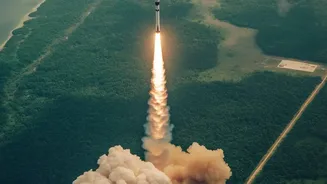
Approximately two minutes into the flight, after burning through their propellant, the four liquid-fueled strap-on boosters separated and fell away. Soon after, the solid-fuel core stage also completed its burn and separated, having done its job of providing the initial upward momentum. This multi-stage approach allows the rocket to shed weight as it gains altitude, making it more efficient. Each successful separation is a precisely choreographed event, relying on small explosive charges to ensure the spent stages fall away cleanly without interfering with the main vehicle.
3. Second Stage Burn and Fairing Jettison
With the first stage gone, the powerful liquid-fueled second stage, powered by the reliable Vikas engine, ignited. This stage is responsible for taking the rocket to the edge of Earth's atmosphere. A few minutes into this burn, another crucial milestone occurred: the payload fairing separation. This protective nose cone, which shields the satellite from atmospheric pressure and heat during ascent, split into two halves and was jettisoned. This moment marked the first time the EOS-05 satellite was exposed to the vacuum of space.
4. The Cryogenic Upper Stage Ignition
This is arguably the most complex and critical phase of a GSLV launch. After the second stage separated, the indigenous Cryogenic Upper Stage (CUS) took over. This stage uses super-cooled liquid hydrogen and liquid oxygen as propellants, which provide extremely high efficiency and thrust, crucial for placing heavy satellites into high orbits. The successful ignition and sustained burn of the cryogenic engine, a technology mastered by only a handful of nations, demonstrated India's advanced launch capabilities and was a pivotal moment for the mission's success.
5. Satellite Injection into Orbit
After burning for several minutes, the cryogenic engine cut off, having pushed the EOS-05 satellite to the required velocity and altitude. The satellite was then precisely injected into a Geosynchronous Transfer Orbit (GTO). This is a highly elliptical orbit, which serves as an intermediate step. The GSLV-F17 mission was reported to have outperformed expectations, placing the satellite at a higher apogee (farthest point) than initially planned, showcasing the rocket's robust performance. This precise injection is the primary objective of the launch vehicle.
6. A New Eye in the Sky
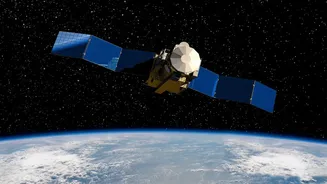
Once in orbit, the mission control team at ISRO took over. The next milestones belonged to the satellite itself: deploying its solar panels to generate power and unfurling its antennas to communicate with ground stations. The successful deployment of these systems confirmed that the satellite had survived the rigours of launch and was in good health. Over the coming days, onboard propulsion systems will be used to gradually raise and circularise its orbit to the final geosynchronous position, approximately 36,000 km above the Earth.