



The Art of Finding Equilibrium
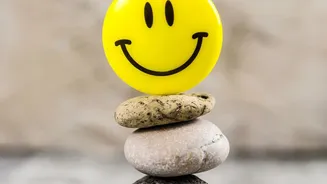
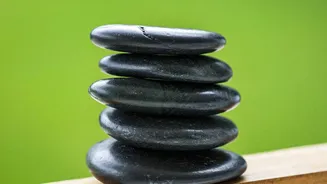
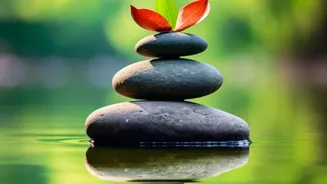
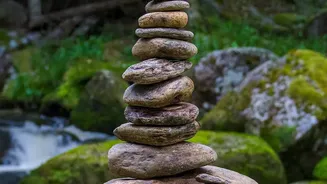
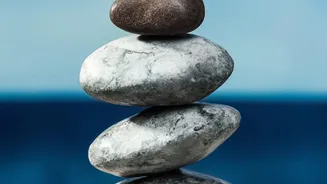
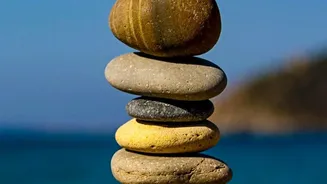
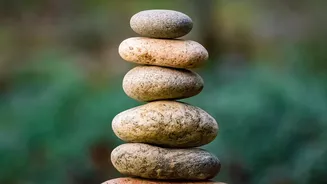
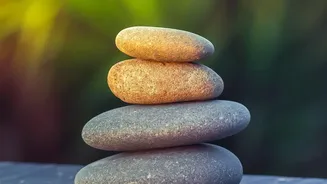
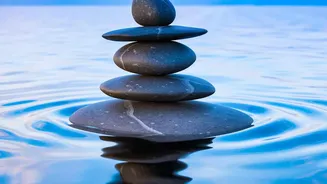
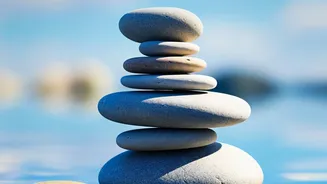
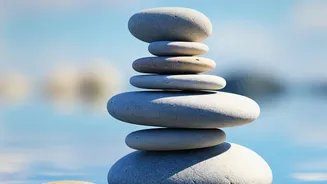
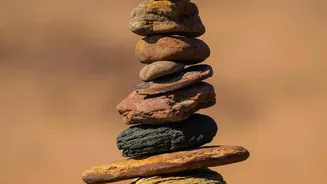
At its core, stone balancing is the simple act of arranging rocks in precarious, often gravity-defying, stacks without using any adhesives or supports. It is both an art form and a meditative practice. Practitioners select stones and carefully feel for their
balance points, searching for the unique combination of indentations and contact points that allows them to lock together. Unlike simple piling, true stone balancing often involves very small points of contact, creating sculptures that seem physically improbable but are entirely real. It’s a patient dance with physics, requiring you to become fully present and attuned to the subtle feedback from the stones in your hands.
A Workout for Your Mind
The primary benefits claimed by practitioners are mental. Stone balancing demands intense concentration. To find that fleeting point of equilibrium, your mind must be fully engaged in the present moment, effectively silencing the usual chatter of daily worries and to-do lists. This immersive focus is often described as a state of 'flow,' a meditative condition where distractions fall away. Regular practice can help sharpen your ability to concentrate on other tasks in daily life, enhancing mental clarity. It’s a process that teaches patience and resilience; when a stack inevitably tumbles, you learn to let go of frustration and simply begin again.
Improving Coordination and Physical Awareness
While it appears stationary, stone balancing is a subtle physical activity. The delicate nature of positioning each rock demands precise hand-eye coordination and develops fine motor skills. You learn to make minute adjustments, feeling for the shifts in weight and stability. This process enhances your proprioception—your body's awareness of its position in space. Although it’s not strenuous, the activity often involves walking to find suitable stones, encouraging light physical movement. This gentle engagement of the body complements the mental focus, making it a holistic exercise in control and steadiness.
How to Get Started
Getting started is accessible to almost anyone. The first step is to go on a hunt for stones, perhaps along a riverbed, a beach, or in a park. Collect rocks of various shapes, sizes, and textures. To begin, find a stable base rock. Choose another rock and try to find its balance point on the base. It’s a process of trial and error. Feel for where the rock wants to fall and gently tilt it in the opposite direction. Look for natural indentations or divots that can serve as anchors. Practitioners often talk about finding three points of contact to create a stable 'tripod' for the stone to rest on. Start with simple, two-stone balances before attempting taller, more complex stacks.
Balancing with Responsibility
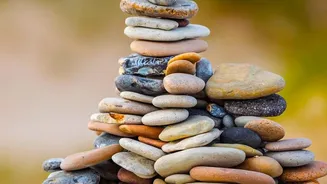
As the popularity of stone balancing grows, so do concerns about its environmental impact. Moving rocks can disturb fragile ecosystems, dislodging insects and micro-organisms that live on and under them, and disrupting homes for creatures like crabs and salamanders. In some areas, removing embedded rocks can accelerate soil erosion. Furthermore, human-made stacks can be confused with cairns, which are official trail markers used for navigation. To practice responsibly, follow the 'Leave No Trace' principle. Enjoy the process of creating your balance, take a photo, and then gently return the stones to where you found them, leaving the landscape as it was for others to enjoy.