
Why Is It Called the 'Doomsday Glacier'?
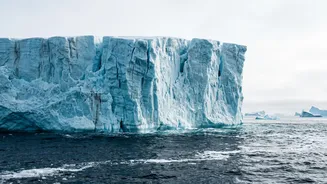
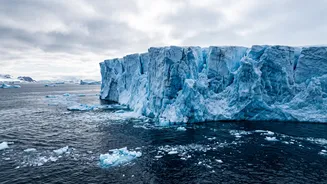
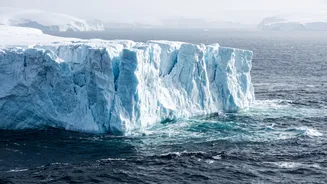
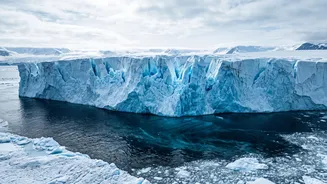
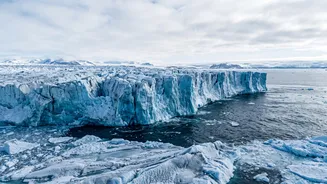
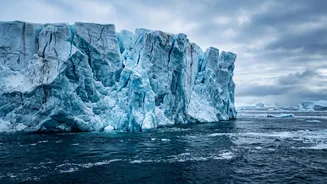
Roughly the size of Great Britain, the Thwaites Glacier is one of the widest on Earth. It has earned the ominous nickname 'Doomsday Glacier' because of the severe consequences its potential collapse could trigger. Currently, its meltwater accounts for
about 4% of annual global sea-level rise. More critically, it acts as a natural dam, or cork, holding back the rest of the massive West Antarctic Ice Sheet. Scientists believe its complete failure could eventually lead to a catastrophic sea-level rise of up to 10 feet, although this would unfold over centuries, not overnight. This would reshape coastlines and threaten major cities around the globe.
A New Look at Melting Doubles Projections
A recent study published in Nature Communications has provided a more alarming forecast. Using advanced ice-sheet models, researchers from the University of California and NASA's Jet Propulsion Laboratory found that Thwaites could contribute up to 30 millimetres (1.2 inches) to global sea levels by the year 2100. This figure is significant because it roughly doubles the 15-millimetre contribution projected by previous conventional models. The new estimate comes from a better understanding of how warm ocean water is intruding beneath the glacier, melting it from below in a way that was previously underestimated.
The Science of the 'Grounding Zone'
The key to the revised projection lies in the 'grounding zone' — the area where the glacier lifts off the seabed and begins to float. Earlier models often treated this as a fixed line. However, the new research shows that tides push warm, salty ocean water several kilometres inland beneath the ice. This creates a broader, more active melting zone. This 'tidal pumping' mechanism lubricates the base of the glacier and weakens its connection to the seabed, accelerating its flow towards the ocean. The study found that incorporating this process was essential to accurately reproduce the glacier's observed retreat and thinning over the past three decades.
The Risk of Becoming 'Unpinned'
Another major concern highlighted by the new modelling is the glacier's connection to an underwater mountain called the Mouginot Ridge, which currently helps to restrain its movement. The simulations indicate there is a 60% probability that the glacier could become detached, or 'unpinned', from this ridge by 2100, with some models showing it could happen as early as the late 2030s. Once Thwaites loses this foothold, its retreat could accelerate significantly as it slides down a seabed that slopes deeper inland. This would expose coastal communities worldwide to even greater risks from rising seas than previously anticipated.
What 30 Millimetres Really Means
While 30 millimetres might not sound like much, it represents a substantial increase in the volume of water entering the ocean from a single source. This contribution is happening even without factoring in additional climate warming beyond current conditions. The findings underscore the glacier's sensitivity and highlight a critical source of uncertainty in global sea-level predictions. It reinforces that even small-sounding numbers have significant consequences, increasing the frequency and severity of coastal flooding for millions of people. The study does not predict a total collapse this century, but it confirms that the melting of Thwaites is happening faster and more aggressively than we once thought.