

Musk’s Counterintuitive Claim
In a recent statement, Elon Musk suggested that the very benefit of autonomous vehicles — their convenience — is also their biggest potential drawback for city traffic. His argument is rooted in human behavior: when you remove the “pain of driving,” people
will choose to travel more. Instead of enduring the stress of navigating gridlock, finding parking, or simply staying alert, passengers in a robot car can work, relax, or nap. This friction-free travel makes longer or more frequent trips far more appealing, which Musk predicts will lead to a significant increase in demand for road space.
The Old Concept of Induced Demand
Musk’s warning is a modern application of a century-old concept in urban planning known as “induced demand.” The principle states that increasing the supply of something, like roads, makes it cheaper or more convenient, which in turn increases demand for it. The classic example is building a new highway to ease congestion. While it might work for a short time, the new, faster route encourages people who previously took public transit, traveled at off-peak hours, or avoided the trip altogether to start driving. Within a few years, the new lanes are often just as congested as the old ones were. In essence, you can’t build your way out of traffic, because the convenience of new roads simply invites more cars.
How Robot Cars Supercharge the Problem
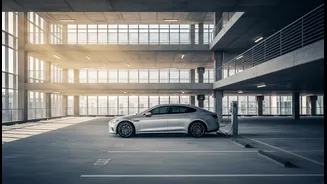
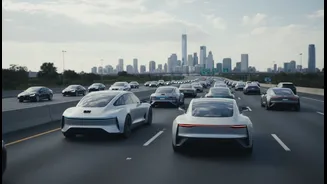
Autonomous vehicles (AVs) could amplify induced demand in several key ways. First, they open up personal car travel to people who currently cannot drive, such as the elderly, people with disabilities, and young people. Second, the nature of the commute changes. A one-hour drive spent working or watching a movie is far more tolerable than one spent clutching a steering wheel, encouraging people to live farther from their jobs and leading to urban sprawl. Finally, there's the problem of “zero-occupant trips” or “zombie cars.” These are the empty miles logged by an AV as it drives to park itself after dropping a passenger, repositions for its next pickup, or runs errands on its own. These empty trips still take up valuable space on the road, contributing to congestion without even moving a person.
Is Gridlock Inevitable?
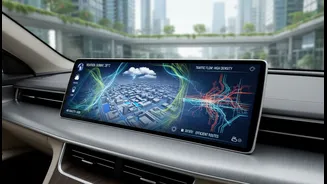
The future isn't necessarily doomed to permanent gridlock. Experts note that the impact of AVs depends entirely on how they are deployed and regulated. If the dominant model is privately owned autonomous cars, congestion is likely to worsen. However, if the future is dominated by shared, autonomous fleets — or robotaxis — the story could be different. A single shared AV could replace a dozen privately owned cars, drastically reducing the number of vehicles needed and the demand for parking, which takes up an estimated 30% of land in some cities. Furthermore, AVs can be programmed to drive more efficiently, communicating with each other to form tight-knit “platoons” that increase highway capacity. However, these technological gains could be easily erased by the sheer volume of induced demand if policies like congestion pricing or incentives for shared rides aren't implemented.