




Two Missions, One Shared Goal
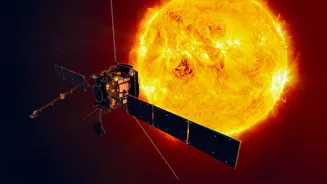
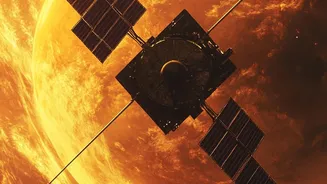
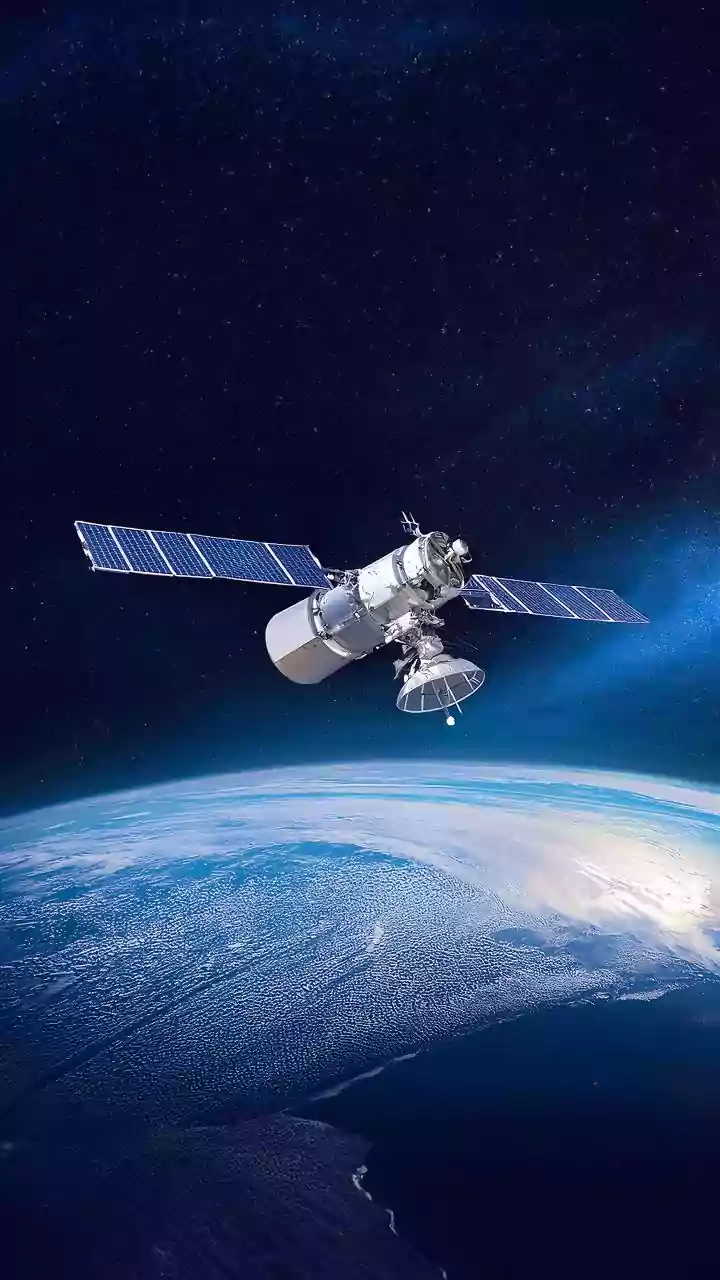
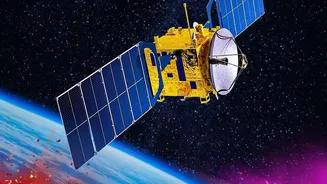
Aditya-L1 is India's first dedicated solar observatory, a landmark project for ISRO. Launched in September 2023, it travelled to the Sun-Earth Lagrange point 1 (L1), a unique spot 1.5 million kilometres from Earth that allows for an uninterrupted view
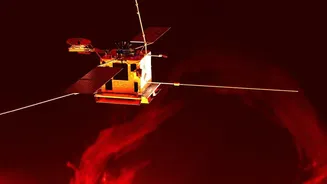
of the Sun. Its suite of instruments includes the Visible Emission Line Coronagraph (VELC), designed to study the Sun’s outermost layer, the corona. Meanwhile, the European Space Agency's (ESA) Proba-3 mission, launched by an ISRO PSLV rocket in December 2024, is a feat of engineering in itself. It consists of two satellites flying in perfect formation, about 150 metres apart. This precision allows one satellite to block the Sun's bright face, creating a prolonged artificial eclipse so the other can study the faint corona with incredible clarity.
Decoding Solar Fury
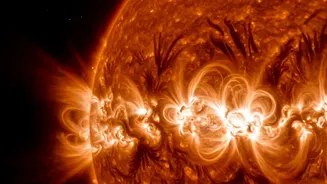
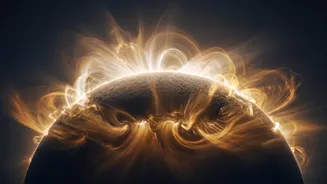
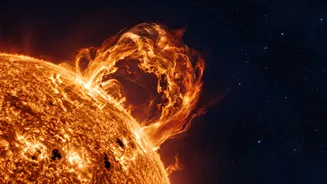
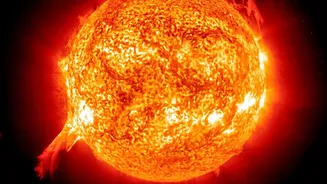
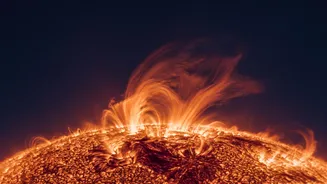
The Sun’s serene appearance is deceptive. Its outer atmosphere is the stage for violent eruptions known as coronal mass ejections (CMEs), which hurl enormous clouds of magnetised plasma into space. When these eruptions are aimed at Earth, they can trigger powerful geomagnetic storms, threatening our satellite networks, communication systems, and even power grids. Understanding how CMEs form and evolve is therefore crucial for predicting and mitigating the effects of 'space weather'. However, studying these events in their infancy, very close to the Sun's surface, has been a major challenge for scientists. The Sun's overwhelming glare makes it difficult for traditional coronagraphs to get a clear picture of these phenomena right after they erupt.
A Powerful Combination
This is where the synergy between Aditya-L1 and Proba-3 becomes revolutionary. The recent study, led by researchers at the Indian Institute of Astrophysics, combined data from two CMEs that occurred in September 2025. Aditya-L1's VELC instrument performed spectroscopy, analysing the light from the eruption to determine properties like the density and temperature of the plasma. Simultaneously, Proba-3’s ASPIICS instrument used its artificial eclipse to capture crisp images of the same events. By layering these two different types of data—spectroscopic from VELC and imaging from ASPIICS—scientists could create a much more complete picture of the CMEs' early evolution than either mission could achieve alone.
First Glimpse of New Discoveries
The joint analysis provided crucial measurements of the mass, density, and energy of the CMEs as they blasted away from the Sun. Researchers were able to observe how the energy within the CMEs was distributed between kinetic (motion), thermal (heat), and magnetic energy right from the start. For instance, the team examined two specific eruptions: one travelling at a swift 645 km per second and a slower one moving at 145 km per second. This deeper understanding of the initial properties of CMEs is a critical missing piece in the puzzle of space weather forecasting. Having a better handle on these initial conditions allows for more accurate models of how a CME will travel through space and what its impact might be if it reaches Earth.