





A New Landmark on the Moon
Scientists using NASA's Lunar Reconnaissance Orbiter (LRO) have identified a colossal new crater, proving that the Moon is still being actively shaped by cosmic collisions. The discovery was made by comparing high-resolution images taken over several
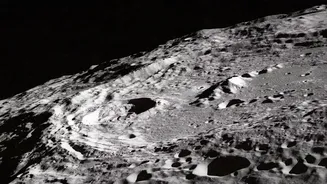
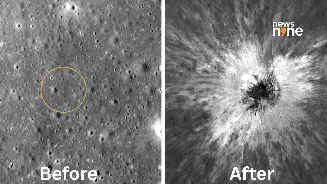
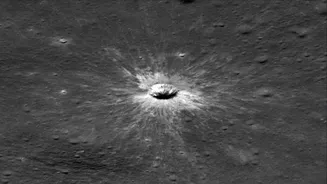
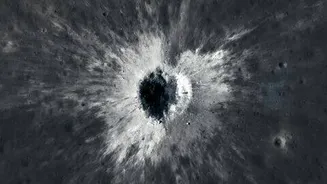
years. A researcher conducting a routine data check noticed a feature that wasn't there before, prompting a closer look that revealed the impact's aftermath. Named McGetchin crater, after pioneering lunar scientist Tom McGetchin, this new feature is immense. Measuring approximately 728 feet across—roughly the length of two football fields—and 141 feet deep, it is the largest freshly formed crater ever observed by a spacecraft in our solar system. The impact itself occurred sometime between April and May of 2024, but the sheer volume of data from the LRO meant the crater was not fully identified and confirmed until 2026.
A Once-in-a-Century Collision
What makes this event so significant is its rarity. Scientists estimate that an impact capable of creating a crater of this magnitude occurs on the Moon only once a century, or perhaps even less frequently. The object responsible was likely an asteroid or comet fragment the size of a three- to six-story building, which slammed into the lunar surface without the braking effect of an atmosphere that Earth has. While the LRO has detected thousands of smaller, more recent craters during its 17-year mission, the McGetchin crater is in a class of its own. Its discovery provides an unparalleled opportunity to study the immediate consequences of a large-scale impact, giving scientists a front-row seat to a process that has shaped planetary bodies for billions of years. Having detailed 'before' and 'after' images makes this a goldmine for planetary science.
More Than Just a Crater
The term 'dramatic change' in the headline is no exaggeration. The effects of the impact extend far beyond the hole it punched in the ground. One of the most startling discoveries is a vast 'cold spot' surrounding the crater. Data from the LRO's thermal instrument revealed a four-mile-wide area that is about 16 degrees Fahrenheit cooler than the adjacent terrain. Scientists believe this happened because the force of the impact 'fluffed up' the lunar soil, or regolith, making it less dense. Just like a fluffy blanket traps air and feels warmer to us, the loosened lunar soil is a poor conductor and cannot retain heat from the sun as effectively, causing the noticeable temperature drop. This finding demonstrates that a single impact can alter the physical properties of the lunar surface across a region many times the size of the crater itself.
A Dynamic and Evolving World
This discovery fundamentally challenges the old view of the Moon as a static, 'dead' world where nothing ever happens. Instead, it paints a picture of a dynamic landscape that is constantly being gardened and reshaped by impacts, big and small. The churning of the surface, as seen at the McGetchin site, happens much faster than previously believed. Some estimates now suggest the top inch of the Moon's soil is completely overturned every 80,000 years. This has profound implications, not only for our understanding of lunar history but also for future exploration. The physical state of the regolith affects everything from the stability of landing sites to the design of rover wheels. It even suggests that historic artifacts, like the Apollo astronauts' footprints, might be erased by this cosmic sandblasting far sooner than once imagined.