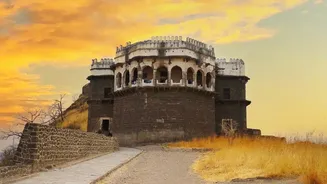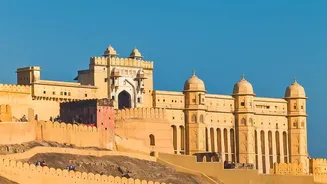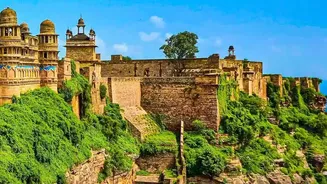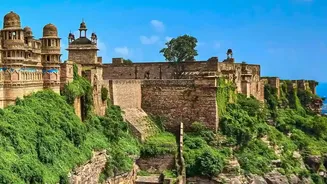








The Golden Sentinels of the Desert
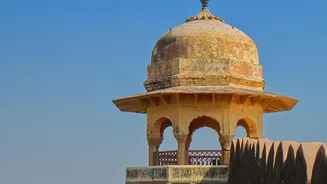
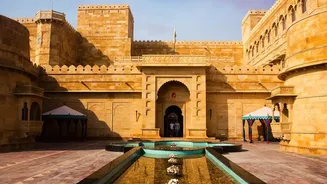
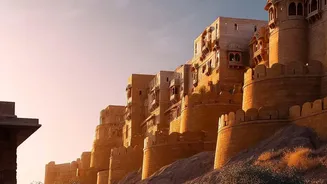
In the vast, arid expanse of the Thar Desert, forts were not just defensive structures but self-sustaining ecosystems. The quintessential example is Jaisalmer Fort, often called Sonar Quila or the Golden Fort. Built in 1156 from yellow sandstone, its
walls seem to merge with the desert, glowing like honey at sunset. This remarkable camouflage was its first line of defence. The architecture of desert forts was a masterclass in sustainability long before the term was coined. Narrow lanes were designed to shield against the scorching sun and guide cooling winds, while ingenious water harvesting systems like stepwells (baoris) and tanks captured every precious drop of rain. Jaisalmer is also one of the world's few remaining 'living forts', with a significant population still residing within its ancient walls, continuing a legacy of life that has spanned over 800 years. These forts controlled crucial trade routes, like the Silk Road, making them centers of great wealth and power.
The Majestic Guardians of the Hills
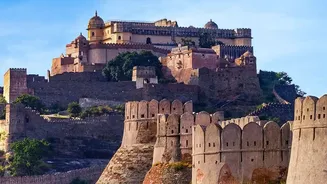
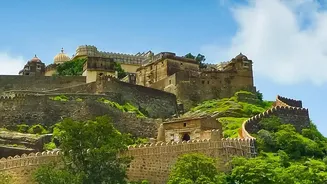
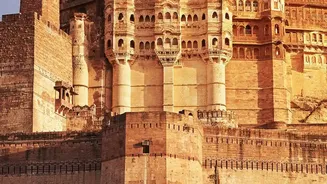
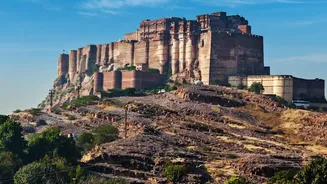
Hill forts, or 'Giri Durgas', represent the classic image of Indian martial architecture, perched on formidable heights to command the surrounding landscape. Their strategic placement on hilltops offered a natural and decisive advantage against invading armies. Mehrangarh Fort in Jodhpur, rising 400 feet above the city on a rocky cliff known as the 'Mountain of Birds', is a breathtaking example. Founded in 1459 by Rao Jodha, its imposing walls, which are up to 36 meters high in places, seem to grow organically from the hill itself. This vertical advantage made them incredibly difficult to besiege. The architecture of hill forts across regions like Rajasthan and Maharashtra prioritized defence through elevation, with winding access routes, multiple fortified gates, and bastions providing panoramic views for miles. These forts were not just military outposts but also thriving administrative centers, housing palaces, temples, and residential complexes within their secure perimeters.
The Unconquerable Protectors of the Coast
Guarding India's extensive coastline, sea forts or 'Jala Durgas' were crucial for controlling maritime trade and fending off naval invasions from European powers and pirates. These fortresses were marvels of engineering, designed to withstand both enemy cannons and the relentless power of the sea. Perhaps the most legendary of these is the Murud-Janjira fort off the Konkan coast in Maharashtra. Situated on an oval-shaped rock in the Arabian Sea, it is renowned as India's only unconquered fort. Despite repeated attacks by powerful forces including the Marathas, Portuguese, and British, its 40-foot high walls, 19 formidable bastions, and cleverly concealed main entrance made it impregnable. The fort's founders, the Siddis, leveraged its island geography to create a naval stronghold that dominated the western sea lanes for centuries. Inside its walls, freshwater wells ensured that the occupants could withstand long sieges, a testament to the strategic foresight of its builders.
A Legacy Carved in the Landscape
The incredible variety of India's forts is a direct reflection of the ingenuity of their builders in adapting to diverse geographical challenges. Ancient Indian treatises like the Arthashastra classified forts based on their terrain—desert, water, hill, and forest—recognizing that geography was a fundamental element of defence. From the sandstone blending into the desert to the fortresses rising from the sea, each structure tells a unique story of survival, power, and culture. They were not merely walls to keep enemies out but were complex urban centers, administrative hubs, and cultural sanctuaries. This architectural diversity showcases a sophisticated understanding of ecology and strategy, where the land itself was an integral part of the fortress's strength. The result is a heritage map dotted with monuments that are as varied and fascinating as the subcontinent itself.