


A Galaxy in Transition
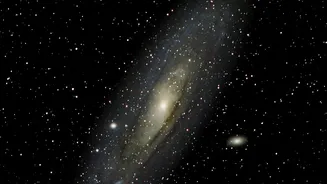
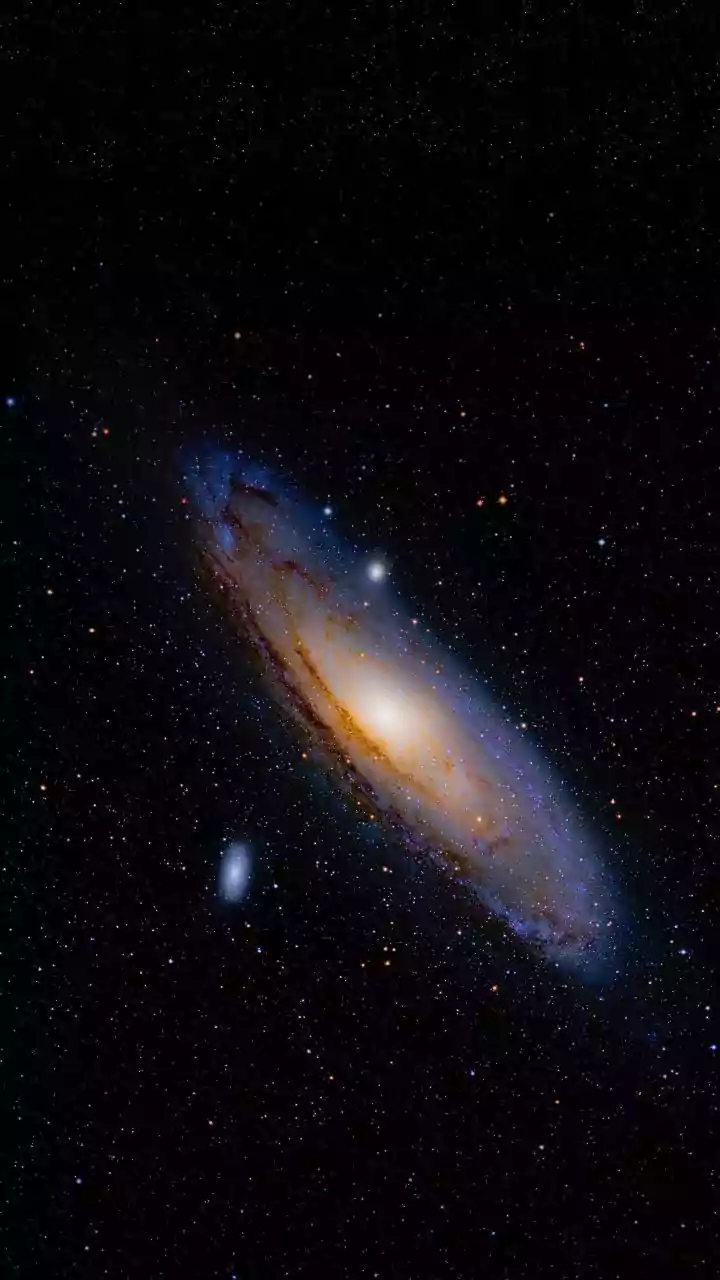
Just 2.5 million light-years away, the Andromeda galaxy (M31) has long been a vital laboratory for understanding how massive spiral galaxies like our own Milky Way live and die. New research, analysing an unprecedented 200 million individual stars, confirms
Andromeda is not as active as it once was. A study published in The Astrophysical Journal shows its star formation has been steadily declining for the last 500 million years, with the slowdown becoming even more pronounced in the last 40 million years. Scientists found that 500 million years ago, Andromeda was churning out stars at a rate of about one solar mass per year. Today, that has plummeted to just one-fifth of a solar mass annually. This cosmic retirement is a natural, if dramatic, step in its lifecycle.
The Ring of (Dying) Fire
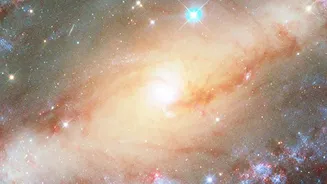
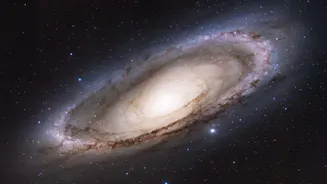
The headline-making claim points to Andromeda's rings, and for good reason. The slowdown isn't happening uniformly across the galaxy's vast, 220,000 light-year-wide disk. Instead, much of the decline is concentrated within a prominent ring of gas and dust located about 32,000 light-years from the galactic centre. This structure, sometimes called the 'ring of fire' for its previously intense star-forming activity, is where most of the galaxy's stellar nurseries have been located in recent cosmic history. As activity in this specific ring dwindles, it pulls down the average for the entire galaxy. It's less a case of the galaxy running out of fuel and more a story of its most productive region taking a breath.
What Created the Rings?
Andromeda's ring-like structures are not just decorative; they are scars from a violent past. Many astronomers believe these rings were formed by galactic collisions. One leading theory suggests a smaller satellite galaxy, M32, plunged directly through Andromeda's disk hundreds of millions of years ago. This cosmic bullseye sent ripples, or density waves, expanding through the galaxy's gas and dust, much like a stone dropped in a pond. These waves compressed material and triggered bursts of star formation, creating the very rings that are now fading. Another major merger event around 2 billion years ago is also thought to have caused a massive surge in star birth, a party that the galaxy is now quietly winding down from.
Reading the Fossil Record
Scientists could piece together this history by studying the 'fossil record' embedded in Andromeda's starlight. Using the unparalleled sharpness of the Hubble Space Telescope, they mapped the age and distribution of millions of stars. Massive, hot stars burn blue and die young, so their presence indicates recent star birth. Older, cooler, and less massive stars glow redder and live much longer, signalling regions where star formation ceased long ago. By dividing the galaxy into thousands of small sections and analysing the colour of the stars within them, researchers created a detailed historical map of Andromeda's activity, revealing the fading productivity of its famous ring.
A Glimpse of the Milky Way's Future?
Studying Andromeda isn't just an academic exercise; it offers a preview of what might be in store for our own galaxy. Both the Milky Way and Andromeda are giant spiral galaxies, and understanding Andromeda's transition to a more quiescent, or quiet, state provides clues about our own eventual fate. While our galaxy is still relatively active, it too will one day exhaust its most accessible gas reserves and see its star formation rates decline. The story of Andromeda's fading rings is a story of galactic ageing, a process that governs the evolution of nearly all galaxies in the universe. In about 4.5 billion years, this will all become moot, as the two galaxies are on a collision course to merge into one giant elliptical galaxy, temporarily reigniting star formation in a spectacular cosmic finale.