





The Astronauts' Lifeline in Space
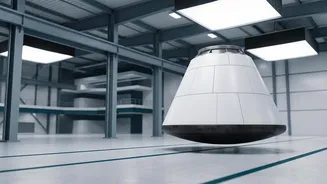
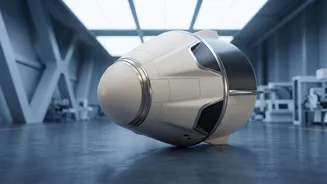
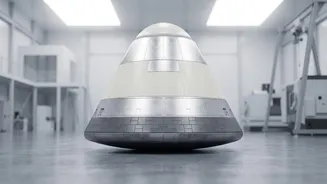
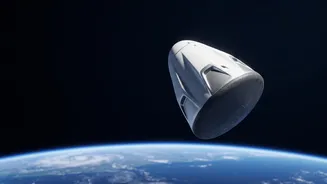
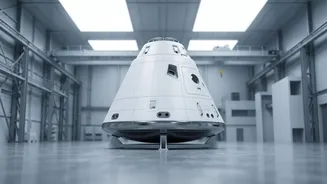
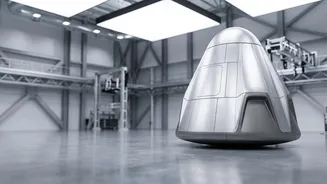
The Gaganyaan Crew Module is more than just a cockpit; it's a self-contained habitat that must keep its occupants safe from the launchpad to low-Earth orbit and back to a splashdown in the ocean. This double-walled capsule provides a pressurized, Earth-like
environment. Its most important job is to withstand the violent forces of launch, the extreme temperatures of atmospheric re-entry, and the final impact with the sea. Every component is therefore subjected to a battery of tests to ensure that when the time comes for the crewed mission, the hardware is flawless. Human spaceflight has no margin for error, and this rigorous qualification process is central to ISRO's philosophy.
Test One: Surviving the Splashdown
A crucial part of the mission happens after the space journey is over: the landing. ISRO recently validated the Crew Module Up-righting System (CMUS). After splashing into the ocean, the capsule might not be in the correct orientation. The CMUS uses a system of floats inflated by stored gas to ensure the module rights itself, which is a critical safety requirement for the crew. This test demonstrated that the inflation system works perfectly, ensuring the astronauts can be safely recovered. This is one of several tests focused on the final phase of the mission, which also includes extensive trials of the parachute system in tests like the Integrated Air Drop Test (IADT).
Test Two: Ensuring Clean Separations
A space mission involves multiple stages separating from each other at high speeds. Two of these separations are critical for the crew module's safety. One recent test validated the umbilical disconnect system, which severs the electrical and fluid connections between the crew module and the service module just before re-entry. Another test confirmed the structural integrity of the module when the apex cover is jettisoned. This cover protects the parachutes during the flight and must be blasted away cleanly to allow the main chutes to deploy for a safe landing. To prove the design, ISRO applied forces 1.75 times greater than what is expected during an actual mission, confirming the module can handle the stress without any damage.
Beyond Components: Full System Rehearsals
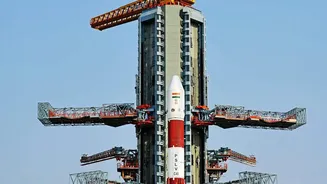
While testing individual components is vital, ISRO also conducts integrated tests to see how everything works together. A major part of this is the series of Test Vehicle Abort Missions. The TV-D1 mission, for example, successfully demonstrated the Crew Escape System, which is designed to pull the crew module and its occupants safely away from the rocket in case of a launch failure. These abort tests are essential for qualifying the most critical safety system of all. The entire process will culminate in at least one uncrewed orbital flight, currently targeted for the end of 2026. In this full dress rehearsal, a humanoid robot named Vyommitra will ride inside the capsule, allowing ISRO to verify every system from launch to recovery before the first crewed flight.