



An Essential Meeting of Minds
SMOPS-2026, the International Conference on Spacecraft Mission Operations, is scheduled to take place in Bengaluru, India, from April 8-10, 2026. Jointly organised by the Indian Space Research Organisation (ISRO), the Astronautical Society of India (ASI),
and the International Academy of Astronautics (IAA), this event will bring together experts from space agencies, industry, and academia from around the world. The central theme is managing space missions in a way that is smart, secure, and, most importantly, sustainable for future generations. Against the backdrop of India's expanding space sector, including the ambitious Gaganyaan human spaceflight program, the conference provides a crucial platform for global collaboration on the challenges facing the final frontier.
The Challenge: A Crowded Sky
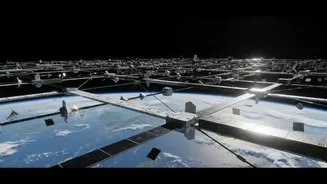
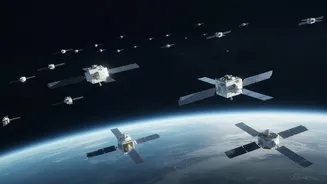
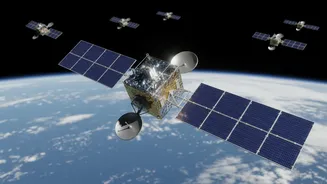
The urgency for such a conference is clear. Low Earth Orbit (LEO) is more congested than ever. Tens of thousands of satellites are expected to be launched by 2030, adding to the more than 14,500 already active as of early 2026. This satellite boom, driven by large commercial constellations, has dramatically increased the risk of collisions. Each collision, and even defunct satellites left in orbit, can create thousands of pieces of dangerous space debris. This orbital junk travels at incredibly high speeds, and even a small fragment can disable or destroy a vital operational satellite, threatening everything from GPS navigation and weather forecasting to global communications and financial transactions. The problem is so significant that the space traffic management market is projected to grow from over $19 billion in 2026 to nearly $29 billion by 2030.
On the Agenda: Debris, Traffic, and AI
The agenda for SMOPS-2026 is packed with sessions dedicated to finding solutions. A major focus will be on Space Situational Awareness (SSA) and Space Traffic Management (STM)—essentially, creating a system to track objects in orbit and coordinate satellite movements to avoid crashes. Another critical area is active debris removal (ADR). Experts will discuss emerging technologies like robotic arms, nets, harpoons, and even ground-based lasers designed to capture or de-orbit existing junk. Furthermore, Artificial Intelligence (AI) is set to play a huge role. Discussions will cover how AI can be used for automated collision avoidance, improving orbit prediction, and making mission operations more efficient and safer. The conference will also address the need for robust international regulations and policies to ensure all space-faring nations and companies operate responsibly.
Toward a Circular Space Economy
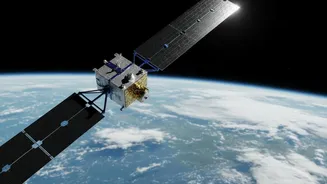
Beyond just cleaning up orbit, a key shift in thinking is toward creating a 'circular economy' in space. This involves designing satellites for longer lifespans, with capabilities for on-orbit servicing, refuelling, and upgrading. Extending the operational life of satellites reduces the need for replacement launches and slows the rate at which new debris is created. This approach treats space infrastructure as a long-term, reusable asset rather than disposable hardware. Technologies that support this model, including robotics and advanced mission design, are a core part of the SMOPS-2026 discussion. This represents a fundamental change in how the industry approaches mission planning, aiming to make space activities sustainable in the long run.