




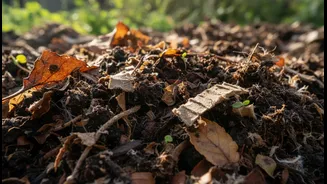



Why Moisture Is the Secret Ingredient
Think of your compost pile as a bustling city of microscopic workers. These beneficial bacteria and fungi are responsible for breaking down your kitchen scraps and yard waste into nutrient-rich humus. Like any living organism, they need water to survive,
thrive, and do their job. The ideal moisture content for a compost pile is between 40% and 60%. In this range, a thin film of water coats all the organic particles, allowing microbes to move, eat, and reproduce efficiently. Too little water brings this activity to a halt, while too much water drowns the workers, leading to problems.
Master the 'Squeeze Test'
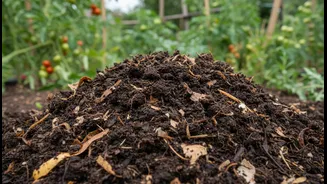
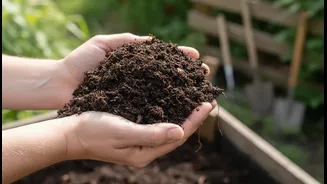
You don't need special equipment to check the moisture. The best method is the simple 'squeeze test'. Reach into the center of your compost pile (wearing gloves is a good idea) and grab a handful of material. Squeeze it firmly in your fist. The goal is for the compost to feel like a well wrung-out sponge. If you squeeze and only one or two drops of water emerge, the moisture level is perfect. The material should feel damp and clump together in your hand. If it’s dry and crumbles, it’s too dry. If a stream of water runs out, it's far too wet.
Signs Your Compost Is Too Wet
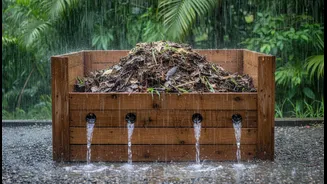
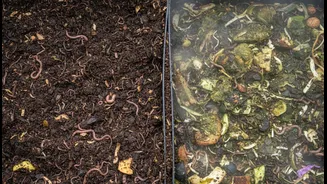
An overly wet compost pile is an unhappy one. Excess water fills the air pockets that aerobic (oxygen-loving) bacteria need to survive. This creates an anaerobic environment, which invites a different, less pleasant, crew of microbes. Signs of a soggy pile include a foul, sour, or ammonia-like smell, a slimy texture, and slow or non-existent decomposition. In very wet piles, you might see water pooling at the bottom or notice worms and insects trying to escape to drier ground. This is common in regions with heavy monsoons if the pile is not adequately managed.
How to Fix a Soggy Pile
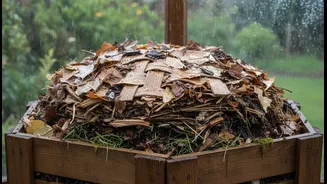
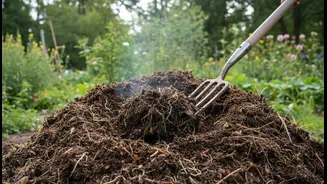
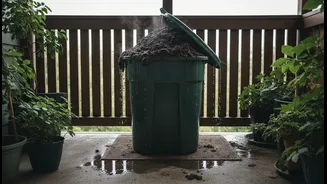
Fixing a wet compost pile is all about absorbing excess moisture and reintroducing air. The easiest way is to add more 'brown' materials. Mix in a generous amount of dry leaves, shredded newspaper or cardboard, sawdust, or cocopeat (nariyal ka joota). These carbon-rich materials will soak up the extra water and restore the critical carbon-to-nitrogen balance. Turn the pile thoroughly with a garden fork to break up compacted clumps and let air circulate. If you expect heavy rains, consider covering the top of your pile with a tarp, removing it once the rain stops to allow evaporation.
What if Your Compost Is Too Dry?
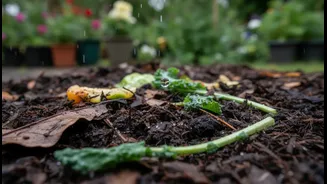
A dry compost pile is a dormant one. When moisture levels drop below 40%, the microbial activity slows dramatically or stops completely. You'll notice that the pile is not generating any heat, and the materials inside are not breaking down. It might look and feel dusty, lightweight, and greyish rather than rich, dark brown. This is a frequent issue in hot, dry climates or during peak summer months when evaporation is high. A pile with too many brown materials can also become excessively dry.
How to Revive a Dry Pile
Rehydrating a dry pile requires more than a quick spray with a hose, as water often runs off the surface without penetrating the core. The best approach is to add water while turning the pile. Break it apart and sprinkle water on each layer as you rebuild it, ensuring the moisture is evenly distributed. You can also mix in more 'green' materials, which have a high water content, such as fresh kitchen scraps (vegetable peels, fruit waste) or new grass clippings. Once watered, cover the pile to help it retain the newfound moisture and kickstart the decomposition process again.