






What is the Bharatiya Antariksh Station?
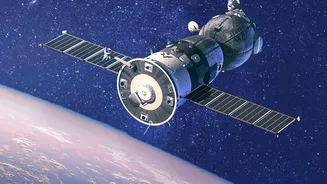
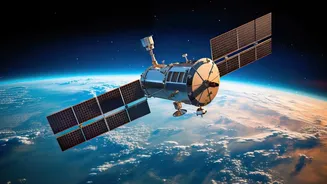
The Bharatiya Antariksh Station is India's answer to the International Space Station (ISS). It is envisioned as a modular, multi-module orbital laboratory where astronauts can live and work for extended periods. Planned to be fully operational by 2035,
the station will orbit the Earth at an altitude of about 400 to 450 kilometers. The entire station is expected to weigh around 52 tonnes and will be assembled in space, piece by piece. The primary goals are to conduct advanced scientific research in microgravity, develop new space technologies, and establish a continuous human presence in space. It will be able to host three to four astronauts for missions lasting three to six months. This project places India in an elite club of nations with space station capabilities, joining the ranks of the US, Russia, and China.
From Blueprint to Building Blocks
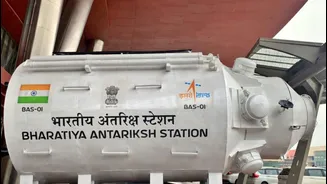
The recent announcement that ISRO has started designing subsystems is a pivotal moment. It signifies that the foundational planning is complete, and engineers are now working on the tangible components that will make up the station. According to a statement in Parliament, the Baseline Design Review for the first module, BAS-01, has been completed, and 31 baseline design documents have been released. These 'key systems' are the vital organs of the station. They include the Environmental Control and Life Support Systems (ECLSS) that will provide breathable air and water for the crew, power systems like solar arrays to generate electricity, propulsion systems to maintain orbit, and crucial docking mechanisms that will allow spacecraft to connect to the station.
The Gaganyaan Connection
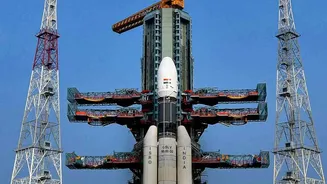
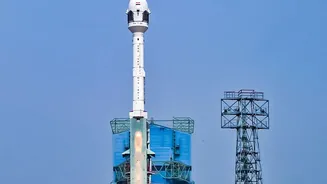
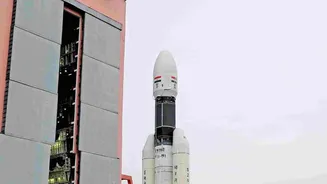
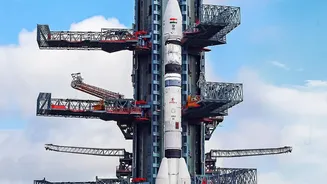
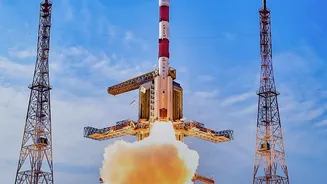
The Bharatiya Antariksh Station is a direct and ambitious extension of the Gaganyaan programme, India's first human spaceflight mission. Essentially, Gaganyaan is the stepping stone. The technologies developed for Gaganyaan—including the powerful Human Rated Launch Vehicle (HLVM3), the orbital module where astronauts will travel, the crew escape system, and the complex ground control infrastructure—are all foundational for the space station. Before India can build a home in space, it must first master the art of safely sending astronauts into orbit and bringing them back. The successful uncrewed test flights and the upcoming crewed Gaganyaan missions are critical for validating these systems. Cabinet approval in September 2024 formally expanded the scope of Gaganyaan to include the development of the first station module.
A Phased Approach to Assembly
Building a space station is not a single launch event; it's a multi-year construction project in orbit. ISRO plans a phased approach. The first module, BAS-01, is targeted for launch by 2028. This initial module will serve as a testbed for the station's core technologies. Following its launch, four more modules are planned to be added progressively, including a core docking module, science and laboratory modules, and a common working area, with the full five-module station expected to be complete by 2035. These modules will be launched into space using India's heaviest rocket, the LVM3, and potentially its successor, the Next Generation Launch Vehicle. This modular design allows for flexibility and the gradual scaling up of capabilities.
The Significance for India
Having a national space station is about more than just scientific experiments; it's a powerful statement of a nation's technological prowess and strategic autonomy. The BAS will provide a unique platform for Indian scientists to conduct research that is impossible on Earth, leading to potential breakthroughs in medicine, materials science, and more. It solidifies India's position as a major player in global space exploration and opens new avenues for international collaboration on India's own terms. Furthermore, the project is expected to inspire a new generation of scientists and engineers and drive high-tech manufacturing within the country, aligning with India's long-term vision for 'Viksit Bharat' by 2047.