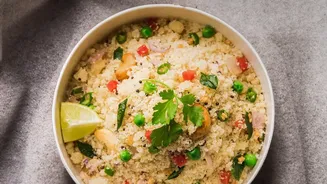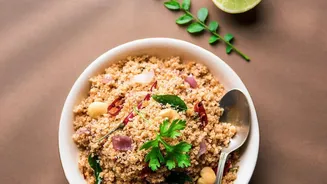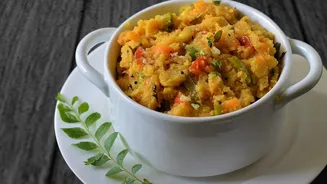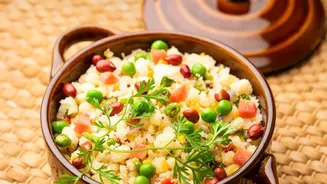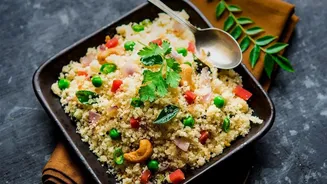


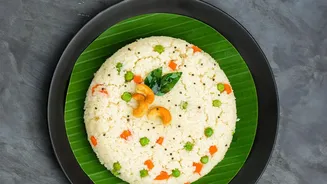
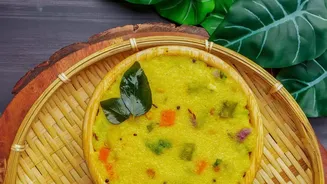
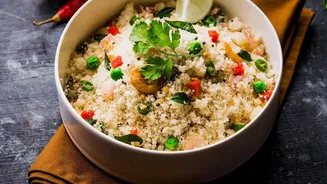
A staple in countless Indian households, Upma is the quintessential quick and comforting meal. But have you ever wondered what makes one bowl of upma so different from another? The secret lies in a foundational technique: tempering.
The Soul of Flavour: What is Tempering?
Before we dive into
regional variations, it's crucial to understand 'tempering', known in India as 'tadka' or 'chaunk'. This is the brief process of frying whole or ground spices in hot oil or ghee. This technique isn't just for show; it's a science. The hot fat causes the spices to bloom, releasing their essential oils and aromatic compounds. These flavour-packed oils then become the foundation of the dish, ensuring every single grain of semolina is infused with a deep, complex taste. Think of it as waking the spices up and allowing their true potential to perfume the entire meal. This single step can make or break the final flavour profile.
The Classic South Indian Standard
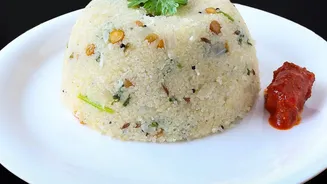
In Tamil Nadu and Kerala, the quintessential upma tempering sets a baseline of flavour that is both nutty and aromatic. The process typically begins with spluttering mustard seeds in hot oil. This is immediately followed by lentils like urad dal (split black gram) and chana dal (split chickpeas), which are fried until they turn a beautiful golden brown, adding a delightful crunch. Curry leaves and asafoetida (hing) are added for their unmistakable fragrance and digestive properties. Green chillies and ginger provide a gentle, fresh heat. This combination creates a savoury, multi-textured base that is comforting and familiar, forming the backbone of what many consider the classic upma experience.
Karnataka’s Khara Bath: A Spicy Elevation
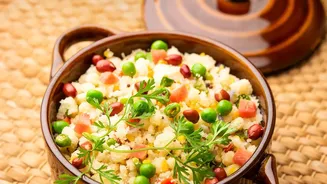
Travel to Karnataka, and you'll find 'Khara Bath', a close cousin of upma but with a spicier, more robust personality. While the initial tempering process is similar—often involving mustard seeds, lentils, and curry leaves—the key difference lies in the addition of a special spice blend. Many recipes call for Vangi Bath powder or a similar masala mix, which is added along with vegetables like carrots, peas, and beans. This powder, typically a fragrant blend of roasted lentils and spices like coriander and red chillies, completely transforms the dish from a simple savoury porridge into a complex and spicy meal. Often finished with a generous amount of ghee and grated coconut, Khara Bath demonstrates how tempering can be a multi-stage process that builds layers of flavour.
Maharashtra’s Hearty and Savoury Style
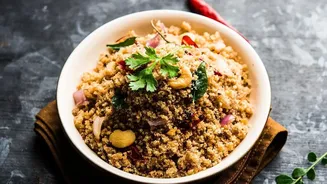
In Maharashtra, upma, sometimes called 'Tikhat Sheera', often starts with a different aromatic base. Here, after the initial mustard seeds pop, finely chopped onions are added and sautéed until they become soft and translucent. This step introduces a subtle sweetness and a deeper savoury flavour that defines the regional style. Peanuts are also a common addition to the tempering, providing a satisfying crunch in the finished dish. This onion-forward approach results in a heartier, more flavourful upma that stands on its own, perfectly reflecting the bold culinary traditions of the region.
Beyond the Big Three: Endless Variations
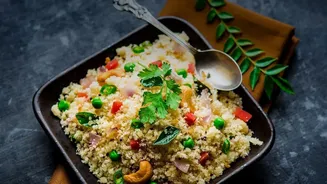
The beauty of upma is its incredible adaptability, with tempering at its heart. In Andhra Pradesh, tomatoes are often added after the initial tempering for a tangy twist. In Mumbai, street vendors create a 'Masala Upma' by adding local spice blends for a fiery kick. Some preparations use cumin seeds alongside mustard seeds for an earthier aroma, while others add whole dried red chillies for smokiness. The choice of fat itself, whether it's coconut oil, groundnut oil, or ghee, also leaves a distinct signature on the final taste. Each variation is a testament to how this simple opening step of tempering allows a single dish to have countless identities across the country.