





The Myth of 10,000 Steps
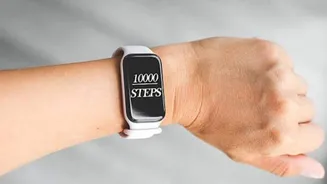
First, it’s important to understand where the 10,000-step figure came from. It wasn't born from a clinical trial or a consensus among health experts. Instead, it originated in the 1960s as a marketing slogan for a Japanese pedometer called Manpo-kei,
which translates to “10,000 steps meter.” The number was catchy, aspirational, and easy to remember, so it stuck. For decades, it has served as the default goal on countless fitness devices, becoming deeply ingrained in global health culture without robust scientific proof to support it as the single best target for everyone. While moving more is always a good thing, clinging to this arbitrary number can be discouraging for those who consistently fall short, making them feel like their efforts aren't good enough.
The Scientific Sweet Spot: 7,000 Steps
Recent, more rigorous research has painted a different picture. A major review of dozens of studies involving hundreds of thousands of adults found that the most significant drop in the risk of premature death occurred well below the 10,000-step mark. The sweet spot for longevity and major health benefits appears to be around 7,000 to 8,000 steps per day. One landmark study found that middle-aged adults who averaged at least 7,000 steps daily had a 50 to 70 percent lower risk of dying during the study period compared to those who were more sedentary. Another sweeping global review showed that hitting 7,000 steps a day slashed the risk of dying early by nearly half compared to taking only 2,000 steps. While benefits do continue to increase beyond this point, they do so far more modestly. The leap from 4,000 to 7,000 steps delivers a much bigger health return than the leap from 7,000 to 10,000.
More Than Just Longevity
The advantages of hitting the 7,000-step mark go far beyond simply living longer. The same research that identified this target also linked it to a wide range of positive health outcomes. Compared to less active individuals, those walking around 7,000 steps a day showed a significantly lower risk of developing chronic conditions. This includes a 25% lower risk of cardiovascular disease, a 38% reduced risk of dementia, and fewer falls. The benefits also extend to mental health and metabolic function, with studies noting a lower risk of depressive symptoms and improvements in weight management. This target seems to be a powerful, all-around prescription for improving both physical resilience and mental well-being.
Does Walking Pace Matter?
Once you have a step goal, the next logical question is about intensity. Do you need to be power-walking, or is a leisurely stroll enough? The good news is that for reaping the biggest mortality benefits, volume seems to be more important than pace. Several studies have found that the total number of steps taken per day was the key factor in reducing death risk, regardless of how fast those steps were taken. However, that doesn't mean intensity is useless. For those who are already quite active, or for those with limited time, picking up the pace can provide comparable health benefits at a lower step count. A brisk walk that gets your heart rate up will always be beneficial for your cardiovascular system. But the main message is clear: don't let an inability to walk fast stop you from walking at all. Just focus on getting the steps in.
Making 7,000 Steps a Daily Habit
Knowing the goal is one thing; achieving it is another. For many, 7,000 steps can still feel like a big number, especially with a sedentary job. The key is to integrate movement into your existing routine. Instead of carving out a single large block of time, find small opportunities throughout the day. Take a 10-minute walk after lunch and another after dinner. Pace around the house while talking on the phone. Choose the stairs instead of the lift. If you commute via public transport, get off one stop early and walk the rest of the way. Park your car a little further from the entrance at the office or supermarket. These small, seemingly minor decisions add up quickly, and before you know it, you'll be hitting that 7,000-step target without feeling like you've overhauled your entire life.