

The Tale of Two Doughs
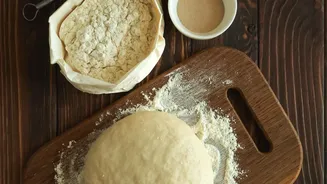
Anyone who has made both chapatis and pooris knows they are siblings, but not twins. The difference begins with the very first step: adding water to flour. For chapatis, the goal is a soft, pliable dough. It should be easy to knead and feel supple to the touch.
This high moisture content is what helps create soft, layered rotis on a dry tawa. Poori dough, however, is a different story. It requires a firm, tight, and stiff consistency. While chapati dough is forgiving, poori dough demands discipline. You must add water sparingly, bringing the flour together into a mass that feels dense and requires a bit of effort to knead. This fundamental difference in hydration is the cornerstone of a perfectly puffed poori.
The Science of the Puff
So, why does a stiffer dough lead to a better puff? The answer is simple science. When you slide a rolled poori into hot oil, the moisture within the dough instantly converts to steam. This steam needs to escape, and it pushes outwards with great force. A soft, high-water dough, like that for a chapati, creates a weaker structure. The steam can escape too easily, or the dough might not have the strength to contain the pressure, resulting in a flat or only slightly puffed poori. In contrast, a stiff poori dough has a much stronger internal structure. This robust network effectively traps the expanding steam inside. The pressure builds until it forces the two layers of the poori apart, creating that signature, dramatic puff. The entire poori inflates like a balloon because the dough is strong enough to hold the steam in.
Gluten's Critical Role
The hero behind this structural integrity is gluten, a protein in wheat flour that forms when mixed with water. Kneading develops these gluten strands. In a stiff poori dough, you naturally have to knead more vigorously to bring it together. This intensive kneading develops a strong, elastic gluten network. Think of it as creating a resilient, stretchable container. This container is strong enough to trap the rapidly expanding steam during frying but also elastic enough to swell without breaking. A softer chapati dough has a more relaxed gluten structure, which is ideal for soft rotis but not for the high-pressure environment of deep frying.
The Problem with Soft Dough
Using a soft, chapati-like dough for pooris leads to two common problems. First, the pooris will absorb significantly more oil. The porous, weaker structure of the soft dough acts like a sponge in the hot oil, leading to greasy, heavy pooris. A stiff dough, by its nature, is less absorbent. Second, as mentioned, they are less likely to puff up consistently. If the dough is too soft, it won't provide the resistance needed to trap steam effectively. You might get a few small bubbles, but you will miss out on that satisfying, uniform puff that makes a poori truly special. The right dough consistency is therefore not just for texture, but also to ensure the poori cooks correctly without becoming oily.
Getting the Dough Right
To achieve the ideal stiff dough, always start by adding less water than you think you need. Gradually add more, a tablespoon at a time, just until the flour comes together. The final dough should be smooth but firm and not sticky. When you press a finger into it, the indentation should remain without springing back much. Many experienced cooks also recommend resting the dough, but only for a short period—around 15 to 20 minutes is often sufficient. Over-resting can cause the gluten to relax too much, making the dough softer and leading to oilier pooris. After resting, a final quick knead will ensure it's perfectly smooth and ready for rolling.