



A Philosophy of Triple-Checking
In the unforgiving environment of space, systems cannot simply work; they must be proven to work under the worst imaginable conditions. This is the guiding principle behind the Indian Space Research Organisation's (ISRO) meticulous qualification process
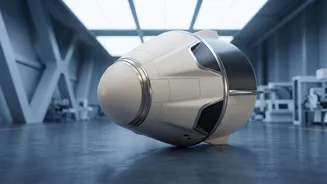
for the Gaganyaan crew module. The strategy isn't just about a single test for a single component. It’s about creating layers of redundancy and conducting a battery of tests that cover every phase of the mission, from the seconds before launch to the moments after splashdown. This exhaustive approach, focusing on escaping failures, surviving re-entry, and ensuring a safe recovery, is what makes the mission’s progress tangible. Recent successes in a trio of crucial ground tests highlight this focus, moving the programme closer to its first uncrewed flight.
Success on the Ground
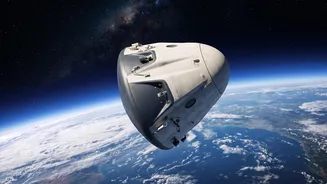
In July 2026, ISRO announced the successful completion of three critical ground-based qualification tests that are essential for crew safety, particularly in the final stages of the mission. The first was the float inflation test for the Crew Module Up-righting System (CMUS), which uses gas-inflated floats to ensure the capsule turns upright after landing in the sea. The second validated the umbilical separation system, which guarantees a clean disconnection from the service module before the capsule re-enters the atmosphere. The third test confirmed the crew module's structural strength during the pyrotechnic separation of the apex cover, which protects the parachutes. While seemingly technical, these tests prove the reliability of automated systems that are indispensable for astronaut safety.
Rehearsing for Disaster: The Abort Tests
The most dramatic tests are those that rehearse disaster scenarios. The Gaganyaan programme relies on a robust Crew Escape System (CES), designed to pull the crew module and its astronauts to safety in the event of a launch vehicle failure. This capability has been validated through different types of abort tests. The Pad Abort Test, successfully conducted in 2018, demonstrated the system's ability to activate on the launchpad, pulling the capsule to a safe distance. More complex are the in-flight abort tests. The Test Vehicle Abort Mission-1 (TV-D1) in October 2023 successfully simulated a failure at transonic speeds—the point of maximum aerodynamic stress on the rocket. These tests prove the escape system can function in the most challenging moments of ascent, providing a critical safety net for the crew.
A Soft Landing: Mastering the Descent
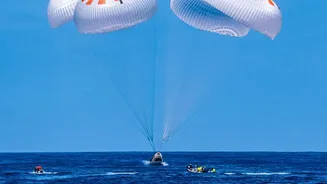
Getting the crew safely to orbit is only half the battle; bringing them home is just as critical. The final stage of the mission relies on a complex sequence of parachutes to slow the crew module from orbital speeds to a gentle splashdown. To validate this system, ISRO has been conducting a series of Integrated Air Drop Tests (IADT). In these tests, a mass-equivalent boilerplate of the crew module is lifted by an Indian Air Force Chinook helicopter to a specific altitude and dropped. This initiates the full parachute deployment sequence, from the smaller drogue chutes that provide initial stabilization to the large main parachutes that manage the final descent. Successful tests, including one in April 2026 and another in July 2026, provide crucial real-world data and build confidence in the recovery systems.
From Qualification to Mission Readiness
Each of these successful tests, whether on the ground or in the air, directly contributes to overall mission readiness. They are not isolated experiments but interconnected parts of a comprehensive qualification campaign. The data gathered from structural tests, abort missions, and parachute trials feed into the final vehicle design and mission procedures, ensuring every system is as reliable as possible. With many of these critical safety systems now flight-qualified, ISRO is steadily progressing towards the first uncrewed orbital mission, designated G1, which is targeted for the end of 2026. The successful completion of this test regimen makes the prospect of an Indian in orbit more relevant and achievable than ever before, with the first crewed flight targeted for 2027.