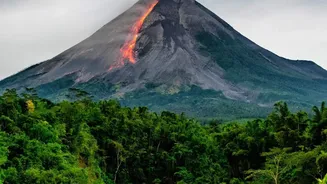




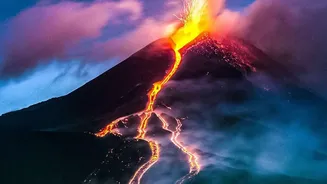
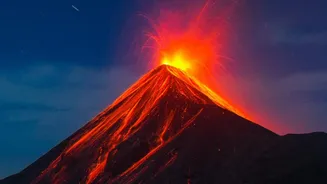
Mount Merapi, Indonesia (2010)
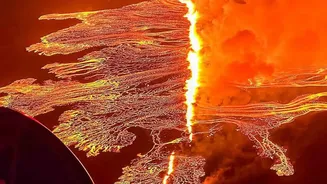
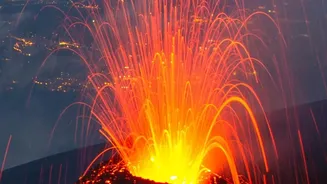
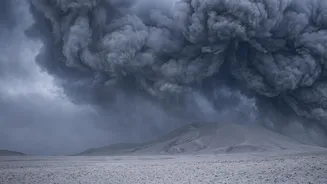
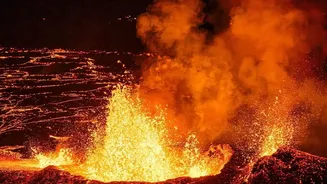
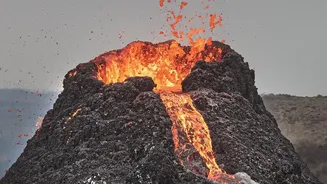
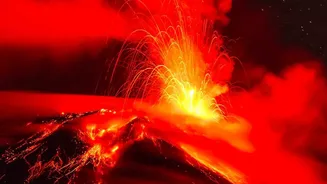
One of the most active and dangerous volcanoes in Indonesia, Mount Merapi roared to life in October and November 2010 with its most powerful eruption in over a century. Classified as a VEI 4, the event was not just a single blast but a series of sustained
eruptions over several weeks. These eruptions produced devastating pyroclastic flows—superheated avalanches of gas, ash, and rock—that traveled down its slopes at incredible speeds. Ash plumes reached high into the atmosphere, forcing widespread evacuations. The human cost was significant, with the disaster claiming the lives of over 350 people and displacing hundreds of thousands more from the densely populated region surrounding the volcano. The eruptions left a lasting mark, destroying thousands of homes and covering agricultural land in a thick layer of ash.
Eyjafjallajökull, Iceland (2010)
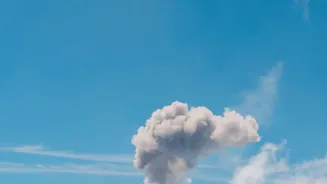
While not the largest eruption in terms of sheer power (a VEI 4), the 2010 eruption of Iceland's Eyjafjallajökull had an outsized global impact. The volcano, located beneath an ice cap, erupted in April, sending a massive plume of fine volcanic ash into the upper atmosphere. This ash cloud drifted directly over Europe, which has some of the busiest airspace in the world. Worries that the abrasive ash particles could damage jet engines led to an unprecedented shutdown of air travel across the continent for nearly a week. The event grounded over 100,000 flights, stranded millions of passengers, and cost the airline industry billions. It was a stark lesson in how a relatively moderate eruption in a remote location could trigger cascading disruptions throughout our interconnected global systems.
Puyehue-Cordón Caulle, Chile (2011)
After 50 years of inactivity, the Puyehue-Cordón Caulle volcanic complex in Chile erupted spectacularly in June 2011. This event was classified as a VEI 5, making it a significantly larger eruption than Eyjafjallajökull the previous year. It sent a colossal ash column more than 10 kilometers into the sky, which was then carried by winds across the globe. The ash disrupted air travel across South America, South Africa, Australia, and New Zealand as the plume circled the Southern Hemisphere. Over 3,000 people were evacuated from the surrounding areas to prevent casualties. The eruption was a powerful reminder of the long reach of major volcanic events, with its atmospheric effects felt thousands of kilometers away from the volcano itself.
Hunga Tonga-Hunga Haʻapai, Tonga (2022)
The eruption of the Hunga Tonga-Hunga Haʻapai submarine volcano on January 15, 2022, was the largest of the 21st century and the most powerful recorded by modern instruments. Rated between VEI 5 and 6, the underwater explosion was hundreds of times more powerful than an atomic bomb. It generated an atmospheric shockwave that circled the globe multiple times and triggered tsunamis across the Pacific, causing damage and fatalities in Tonga and as far away as Peru. The blast sent a plume of ash, gas, and a record-breaking amount of water vapor soaring into the stratosphere and even the mesosphere. This unprecedented injection of water vapor into the upper atmosphere is still being studied for its potential long-term effects on climate and the ozone layer. The event highlighted the unique and devastating power of large-scale submarine eruptions.