







The Art of Improbable Balance
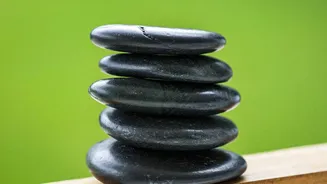
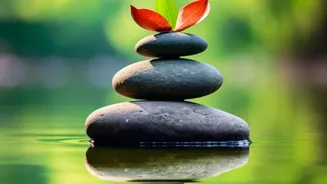
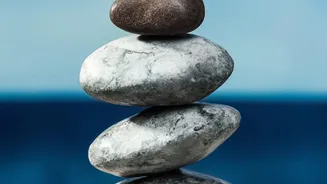
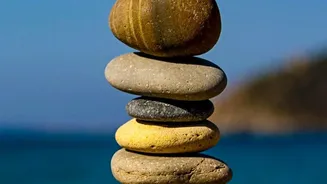
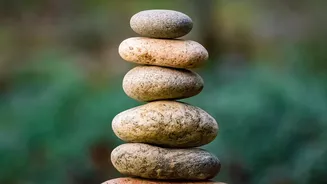
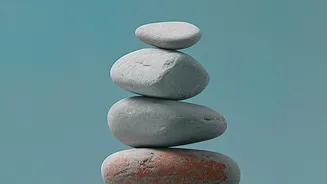
Stone balancing, also known as stone stacking, is the practice of arranging natural stones in precarious and often elaborate formations without using any adhesives, wires, or supports. The only things holding the structure together are gravity and the friction
between the rocks. Practitioners range from hobbyists seeking a creative outlet to artists and individuals using it as a form of active meditation. The goal is to find the unique point of equilibrium for each stone, a process that requires intense patience and a deep connection with the physical world. While some stacks are simple towers, advanced balances can feature rocks resting on impossibly small points, creating a sense of wonder and disbelief.
A Conversation with Gravity
To balance a stone, one must develop an intuitive understanding of physics. Each rock has a center of gravity, and the key is to align these centers vertically over a stable base. Balancers speak of finding at least three points of contact to create a stable 'tripod' for the rock above to rest on. This process is a dialogue of touch and feedback. You feel the direction a rock wants to fall and make minute adjustments, twisting and turning it until you sense a point of stability. It's a search for the 'lock,' where the rock settles into a state of equilibrium and no longer tries to fall, held in place by the forces of nature alone.
Training the Mind-Body Connection
This delicate process is a masterclass in fine motor control and hand-eye coordination. Your hands must execute incredibly precise, small movements while your eyes provide constant feedback. But there's a deeper sense at play: proprioception. Often called our 'sixth sense,' proprioception is the body's ability to perceive its own position and movement in space without relying on vision. Receptors in your muscles, tendons, and joints send a continuous stream of information to your brain, allowing for the automatic adjustments needed to maintain balance. In stone balancing, you are heightening this sense, feeling the subtle shifts in weight and tension through your fingertips to find the perfect point of balance.
A Meditative State of Flow
The intense concentration required for stone balancing often leads to a meditative state, sometimes called a 'flow state.' To succeed, you must clear your mind of external distractions and become fully present in the moment. This singular focus on the task at hand—the texture of the rock, the subtle vibrations, the gentle pressure—quiets the internal chatter of the mind. Many practitioners describe it as a mindfulness practice that promotes relaxation and reduces stress. The repetitive, deliberate motion and the connection with a natural environment help calm the nervous system and lower anxiety. The practice teaches patience, as a single gust of wind or a moment of lapsed focus can send hours of work tumbling down.
The Benefits of Finding Your Center
Beyond the beautiful, temporary sculptures it creates, stone balancing offers tangible benefits. Regularly engaging in this activity can enhance your ability to concentrate in other areas of your life. The development of fine motor skills, coordination, and proprioceptive awareness can improve dexterity for other physical tasks. Psychologically, the practice fosters resilience. Each time a stack falls, it's a lesson in letting go and starting again without frustration. The sense of accomplishment when a difficult balance is finally achieved is a powerful confidence booster. It's a physical manifestation of finding equilibrium, not just with stones, but within yourself.