






Decoding Mars's Wild Weather
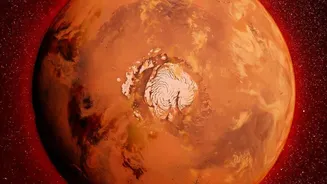
Imagine a world where temperatures can swing from a relatively manageable 22°C to a bone-chilling -123°C. This is the reality on Mars, where the thin atmosphere, composed mostly of carbon dioxide, struggles to hold onto and distribute heat. As a result,
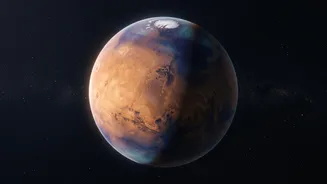
the surface warms up rapidly in sunlight and cools down just as fast when it disappears. Recently, Indian scientists have been at the forefront of mapping these dramatic temperature shifts. A study from Ahmedabad's Physical Research Laboratory (PRL) has shed new light on another fascinating phenomenon: large-scale temperature patterns that move like waves around the planet. These "zonal waves" are like ripples on a pond, giving us an indirect look at how the thin Martian atmosphere circulates and behaves. The research revealed that the shape of the Martian landscape, such as the vast Hellas and Argyre impact basins, plays a huge role in forming these complex wave patterns.
India’s Crucial Role in Martian Science
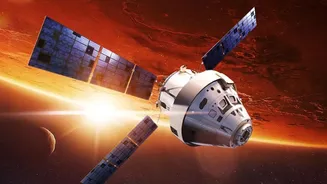
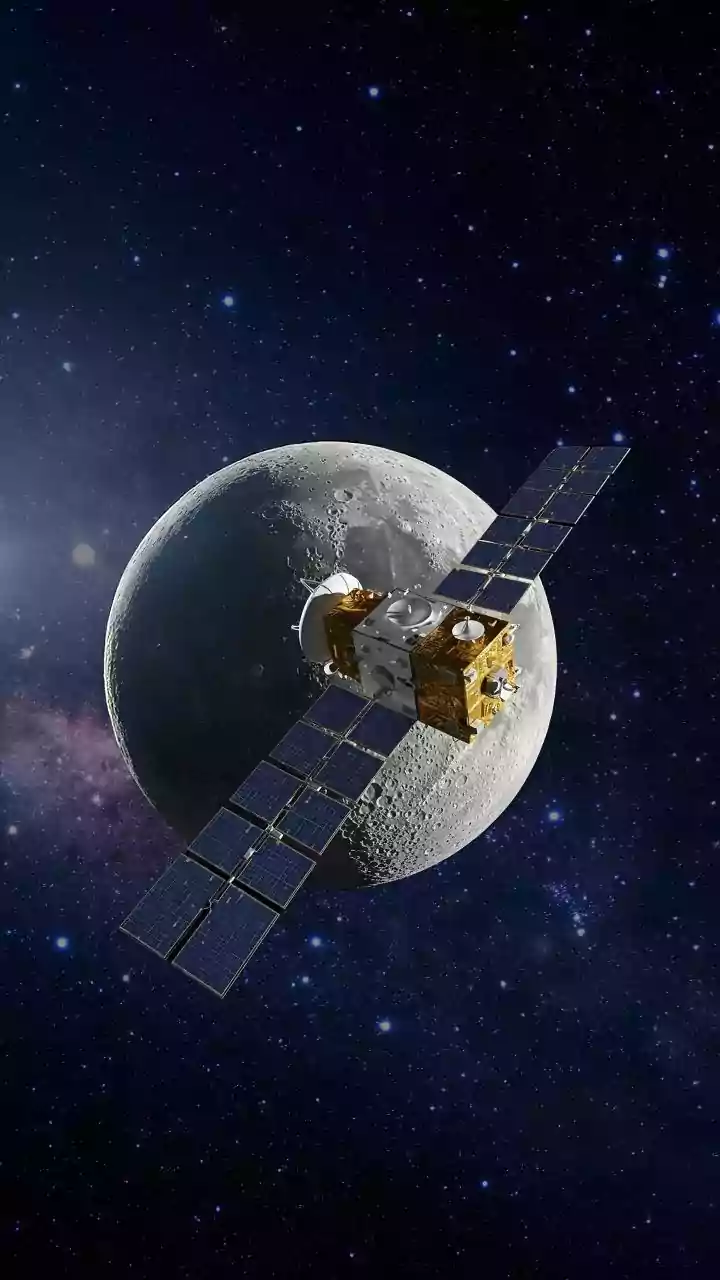
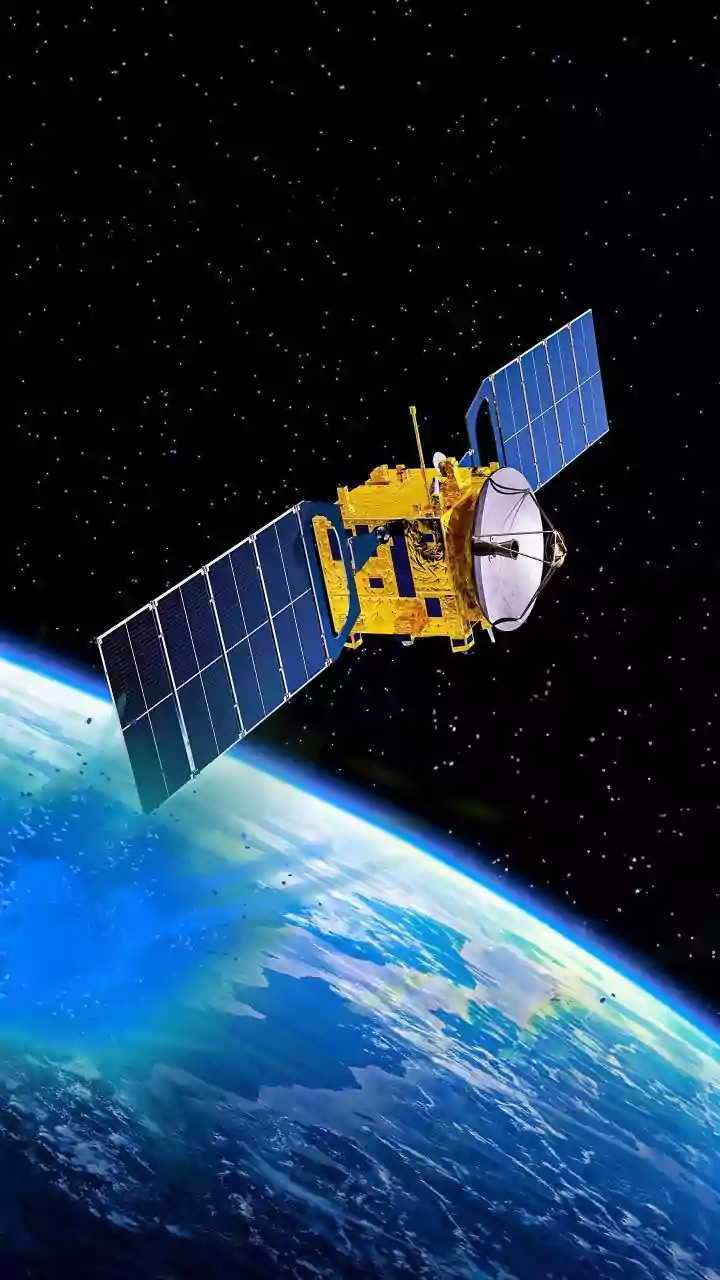
While the recent study utilized data from the Emirates Mars Mission, it builds upon a strong foundation of Martian research led by India. The Indian Space Research Organisation's (ISRO) Mars Orbiter Mission (MOM), also known as Mangalyaan, was a landmark achievement. Launched in 2013, MOM far outlived its expected six-month mission, spending eight years collecting invaluable data on the Martian atmosphere, surface, and mineralogy. Instruments onboard Mangalyaan, such as the Thermal Infrared Imaging Spectrometer (TIS) and Methane Sensor for Mars (MSM), were specifically designed to study atmospheric phenomena. This legacy of research has positioned Indian scientists to be key interpreters of global Mars data, allowing them to make significant contributions to our planetary understanding. This ongoing work in atmospheric science is a direct continuation of the objectives set out by India's first successful interplanetary mission.
A Blueprint for Safer Landings
So, why does mapping these temperature waves matter? The answer is critical for the safety and success of future missions. The Martian atmosphere, though thin, poses significant challenges for any spacecraft attempting to land. Understanding atmospheric density, which can vary widely, is essential for processes like aerobraking—a technique where a spacecraft uses atmospheric friction to slow down and enter a stable orbit. Detailed weather models, informed by data on temperature and pressure waves, allow mission planners to predict atmospheric conditions more accurately. This helps in selecting safer landing zones, away from areas prone to sudden, violent weather events. It also informs the design of landers and rovers, ensuring they are built to withstand the extreme temperature fluctuations they will inevitably face on the surface.
Predicting the Planet-Killing Dust Storms
One of the greatest threats on Mars is its infamous dust storms. These can grow to engulf the entire planet, blotting out the sun and posing a serious danger to solar-powered rovers and future human habitats. Data from Mangalyaan has already enhanced our understanding of these massive storms. The new research on zonal waves adds another layer to this. These waves are part of the larger atmospheric circulation system that can trigger and sustain these global dust events. By understanding the mechanics of these waves, scientists can improve their ability to forecast major storms. For long-term robotic missions and eventual human settlement, the ability to predict Martian weather, especially its most destructive storms, is not a luxury—it's a necessity for survival. This predictive capability is a key goal of ongoing atmospheric research.
The Next Giant Leap for India and the World
The work of Indian scientists on the Martian atmosphere is more than just collecting data; it's about building a roadmap for the future. Every discovery about how Mars 'breathes'—how its atmosphere expands, contracts, and flows—feeds into a global body of knowledge that will one day allow humans to set foot on its rusty soil. Understanding the climate is fundamental to tackling challenges like terraforming—the ambitious idea of making Mars more Earth-like. As India plans future interplanetary missions, this expertise in atmospheric science will be indispensable. The detailed mapping of temperature swings and zonal waves proves that Indian research is not just participating in the global exploration of Mars but is actively providing critical insights that will shape the next generation of missions.