



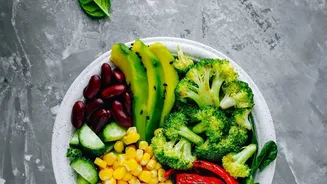
Anchor Your Meal with Protein
Protein is the most filling macronutrient, playing a crucial role in stabilizing blood sugar and promoting satiety. It slows down digestion and helps regulate the hormones that control hunger, which is why a meal lacking sufficient protein can leave you
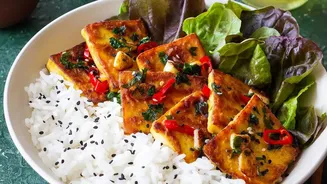
searching for a snack an hour later. For a vegetarian meal with staying power, aim to include a strong protein source. Excellent options include lentils, chickpeas, black beans, tofu, tempeh, and edamame. Dairy products like Greek yogurt and eggs are also powerful protein contributors. Incorporating these ingredients provides the foundation for a meal that truly lasts.
Fill Up with Fibre
Fibre is another key player in the fight against premature hunger. It adds bulk to your meals and, like protein, slows the digestive process, helping you feel fuller for a longer period. Soluble fibre, in particular, forms a gel-like substance in your digestive tract that enhances this feeling of fullness. Fortunately, a well-rounded vegetarian diet is often naturally rich in fibre. To ensure you're getting enough, load your plate with whole grains like quinoa, brown rice, and oats. Legumes such as beans and lentils are fantastic sources of both fibre and protein. Don't forget plenty of vegetables, especially leafy greens, broccoli, and sweet potatoes, which add volume and a wealth of nutrients.
Incorporate Healthy Fats
Fat often gets a bad reputation, but healthy, unsaturated fats are essential for a satisfying meal. Fat slows down the rate at which your stomach empties, contributing significantly to long-term fullness. A meal low in fat might digest too quickly, leading to an early return of hunger pangs. Incorporating sources of healthy fat not only boosts satiety but also enhances the flavour and texture of your food. Great vegetarian sources include avocados, nuts like almonds and walnuts, and seeds such as chia, flax, and pumpkin seeds. A drizzle of olive oil or a creamy tahini-based dressing can also make a world of difference in making a salad or grain bowl more satisfying.
The Satiety Trifecta: Putting It All Together
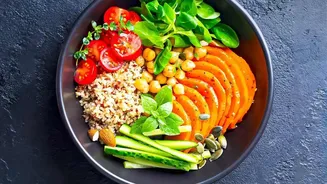
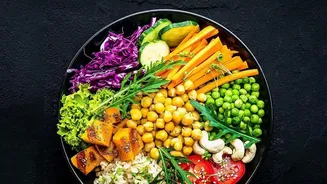
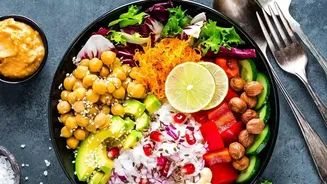
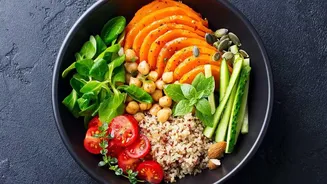
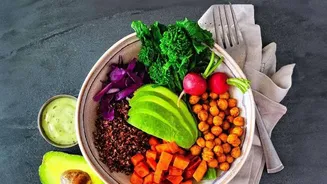
The magic happens when you combine protein, fibre, and healthy fats in a single meal. Instead of thinking of them as separate components, view them as a team working together to keep you fueled and satisfied. For example, a grain bowl could feature quinoa (fibre), roasted chickpeas (protein and fibre), avocado (healthy fat), and a variety of roasted vegetables (more fibre). A hearty lentil soup provides both protein and fibre, which can be enhanced with a swirl of olive oil or a topping of toasted seeds for healthy fat. Even a simple breakfast of oatmeal (fibre) can be transformed with a scoop of peanut butter (protein and fat) and a sprinkle of chia seeds (fibre and fat).
Don't Underestimate Texture and Flavour
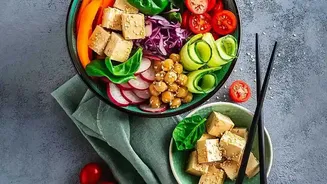
Beyond the nutritional building blocks, sensory satisfaction plays a big role in how full you feel. A meal with varied textures—like the crunch of toasted nuts on a creamy soup or the chewiness of baked tofu in a salad—can be more satisfying than a meal that is texturally monotonous. Likewise, a depth of flavour from herbs, spices, or a tangy dressing can make a dish feel more complete and enjoyable. Adding elements like pickled onions for acidity or a sprinkle of cheese for umami can elevate a simple vegetable dish into a meal you’ll savour, which helps your brain register fullness more effectively.