

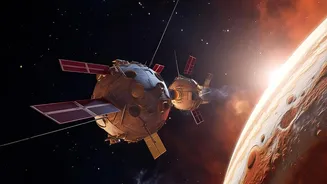
A New Eye on a Hidden Universe
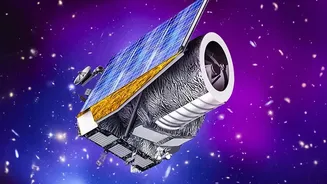
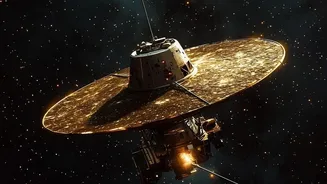
NASA has officially selected the PRobe far-Infrared Mission for Astrophysics, or PRIMA, to move into the next phase of development. Announced in late September 2026, PRIMA is the first mission in a new, billion-dollar class of observatories called Probe
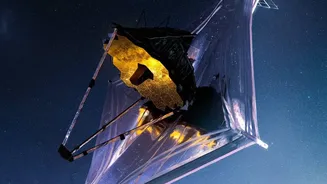
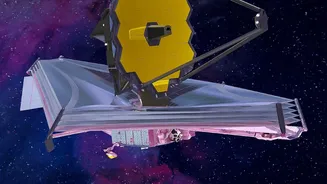
Explorers, designed to tackle high-priority science questions without the flagship-level cost of a giant like the James Webb Space Telescope (JWST). Targeted for launch no earlier than 2033, PRIMA will be a 5.9-foot space telescope on a five-year mission to survey the sky in far-infrared light, a portion of the electromagnetic spectrum that holds clues to some of astronomy's biggest questions. This new mission was recommended by the National Academies as a crucial next step for astrophysics and is being managed by NASA's Jet Propulsion Laboratory.
The Universe's Missing Colors
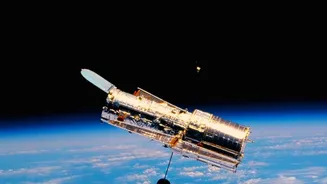
To understand PRIMA's importance, think of the universe's light as a vast rainbow. Telescopes are designed to see specific 'colors' or wavelengths. The Hubble telescope sees mostly in visible light, what our eyes can perceive. The JWST is a master of the near- and mid-infrared, allowing it to see ancient galaxies and peer through thin dust clouds. On the other end of the spectrum, radio telescopes like the Atacama Large Millimeter/submillimeter Array (ALMA) detect very long wavelengths from cold, dark space. Between the view of Webb and ALMA, however, lies a significant observational blind spot: the far-infrared. This is the light emitted by cool objects and is crucial for a complete picture of cosmic evolution. PRIMA is specifically designed to fill this wavelength gap, bridging the views of our other great observatories.
Following the Cosmic Dust
One of PRIMA's primary targets is something that often gets in the way of other telescopes: dust. In astronomy, dust isn't just cosmic clutter; it is the raw material from which stars and planets are born. While dense dust clouds can block visible and even near-infrared light, they glow brightly in the far-infrared as they are gently warmed by nearby stars. By observing this glow, PRIMA will be able to penetrate the densest stellar nurseries to watch planetary systems in the act of formation. It will investigate 'snowlines' around young stars, the regions where volatile molecules like water freeze into solids—a key process in building planets like our own. According to Nicky Fox, associate administrator at NASA, PRIMA will help scientists better understand how water on Earth came to be.
From Baby Planets to Supermassive Black Holes
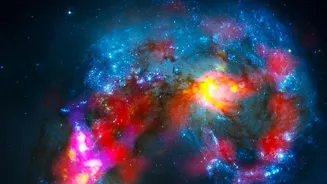
PRIMA's science goals are ambitious and far-reaching. Beyond studying the birth of planets, the telescope will provide unparalleled insight into how galaxies grow and evolve. Far-infrared light allows astronomers to measure the rate of star formation within galaxies, even those billions of light-years away. It also helps them study the flow of gas and dust that feeds the supermassive black holes lurking at the centers of most galaxies, a process that is often hidden from view. The mission will create a comprehensive map of the 'cosmic ecosystem,' tracing how heavy elements, forged in stars and scattered by supernovae, are distributed throughout the universe over billions of years. PRIMA will even look closer to home, with the ability to spot and study distant, cold objects in our own solar system's Kuiper Belt.
Technology That Sees the Cold Universe
To detect the faint warmth of distant dust clouds, PRIMA itself must be incredibly cold. Its mirror will be cooled to just 4.5 Kelvin, preventing the telescope's own heat from overwhelming the faint signals from space. This extreme cooling, combined with highly sensitive modern detectors, will make PRIMA a massive leap in capability over previous far-infrared missions like the Herschel Space Observatory and the Spitzer Space Telescope. Its two main instruments, a wide-field imager and a spectrometer, will not only take pictures but also break down far-infrared light to analyze the composition, temperature, and motion of its cosmic sources. This sensitivity gain means it will survey the sky much faster and detect far fainter objects than ever before possible in this wavelength range.