









Behind the Counter: What Happens to Your Application?
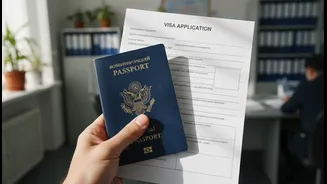
When you entrust your visa application to a travel agent, you're paying for a service of convenience. The agent's primary role is to help you navigate the complex requirements, from filling out forms to compiling the correct documents. However, the agent is an
intermediary. They do not approve your visa. After you hand over your documents, the agent typically submits them to a Visa Application Centre (VAC), which is an official partner of the destination country's government. From there, the VAC forwards your application to the respective embassy or consulate, where the final decision is made. This chain of custody is important to understand; your agent is the first link, not the final authority.
The Key Players: Agents vs. Official Centres
It's vital to distinguish between your travel agent and the official processing body. Travel agents are service providers who specialize in travel logistics—flights, hotels, and tour packages. Many offer visa assistance as part of their service. Official bodies like VFS Global or BLS International, on the other hand, are technology and outsourcing companies contracted by governments to handle the administrative tasks of visa processing. They collect applications, biometric data, and fees, but the decision to grant or deny the visa remains solely with the embassy or consulate. Your agent works for you, while the VAC works for the government of the country you plan to visit.
Why Knowing the Official System Matters
Insisting that your agent identifies the official system provides several layers of protection and transparency. Firstly, it allows for direct tracking. Once you know your application is with a VAC like VFS Global, you can often get a reference number to track its status online directly, cutting out the middleman. This gives you real-time updates on whether your application is being processed, has been sent to the embassy, or is ready for collection. Secondly, it helps prevent fraud. Knowing the official channel confirms your application has been formally submitted and not just held by an unscrupulous agent. Finally, it provides clarity on timelines and a direct point of contact if issues or delays arise, helping you understand whether the hold-up is with the agent, the VAC, or the embassy itself.
Common Systems You Should Know
For Indian travellers, a few names dominate the visa application landscape. VFS Global is the most prominent, handling visa services for numerous countries, including the UK, Canada, and many Schengen nations. BLS International is another major player, often associated with visa applications for countries like Spain. Some countries also operate their own government-run online portals for e-visas. For a US visa, applications are managed through the official U.S. Department of State's system, though appointments are booked via a separate portal. A knowledgeable agent should be able to name the specific system being used for your destination country without hesitation.
Questions to Ask Your Travel Agent
To ensure you are fully informed, treat your interaction with your agent as a partnership. A good agent will welcome your questions. Here’s what you should ask: 1. Which official company will process my application? (e.g., VFS Global, BLS International, etc.) 2. Will you provide me with the official application reference or tracking number once it's submitted? 3. Can I track the status myself on the official website? 4. What is the standard processing timeline provided by the embassy for this type of visa? 5. What are the total fees, broken down by the official visa fee, the VAC service charge, and your agency's service charge? Asking these questions empowers you and helps establish a transparent relationship with your agent.