


The Ticking Time Bombs Above
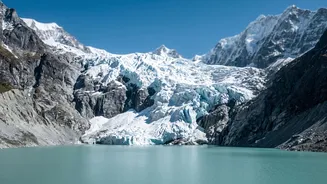
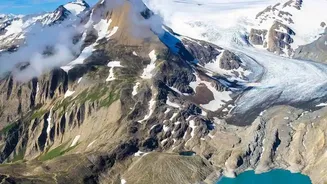
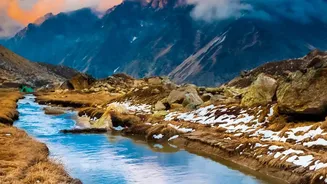
The primary danger comes from what scientists call Glacial Lake Outburst Floods, or GLOFs. As glaciers retreat at an accelerated pace, they leave behind massive lakes dammed by unstable walls of ice and debris called moraines. These natural dams can fail
without warning due to rising water pressure, an avalanche, or an earthquake. When they burst, they release catastrophic torrents of water, rock, and mud that travel faster than any river, giving downstream communities mere minutes to react. A study published in Nature Communications revealed that three million people in India are at direct risk from these floods, the highest number for any country in the world.
A Landscape on High Alert
The entire Indian Himalayan Region, from Ladakh to Arunachal Pradesh, is vulnerable. Government surveys have identified approximately 7,500 glacial lakes across the Indian Himalayas, with the Ganga river basin alone hosting around 4,700. The National Disaster Management Authority (NDMA) has pinpointed 195 of these lakes as being at high or very high risk of a GLOF. Himachal Pradesh has the most vulnerable lakes, followed by Sikkim, Ladakh, Arunachal Pradesh, Jammu and Kashmir, and Uttarakhand. Recent events have underscored the urgency. In October 2023, the South Lhonak Lake in Sikkim breached its dam, triggering a 20-metre-high wave that wiped out settlements and a major hydropower project downstream. This disaster served as a grim reminder of the destructive power held by these high-altitude lakes.
More Than Just Floods
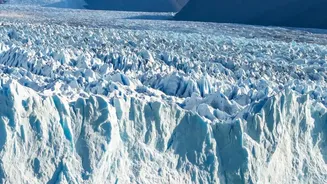
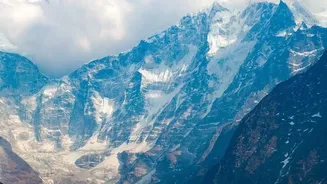
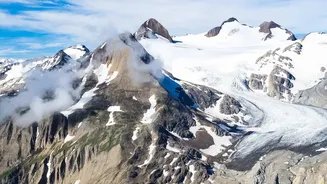
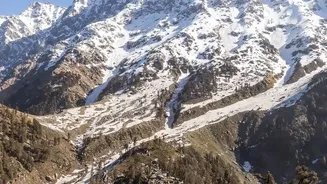
The instability extends beyond lakes. Another emerging threat is from "hanging glaciers" – massive bodies of ice clinging to steep mountain slopes. Rising temperatures can cause these glaciers to suddenly break away, triggering devastating ice-rock avalanches. A 2026 study identified 219 such hanging glaciers in Uttarakhand's Alaknanda basin alone, warning that they can create secondary hazards like debris flows and even trigger GLOFs. The 2021 Chamoli disaster in Uttarakhand, which claimed over 140 lives, is believed to have been caused by a similar cascading event involving a hanging glacier collapse. This combination of hazards creates a complex and unpredictable risk landscape for the region.
The Human and Economic Cost
For the communities living in these mountain valleys, the risks are existential. These disasters threaten not just lives but also homes, farmland, and critical infrastructure like roads, bridges, and hydropower plants. The economic fallout is immense, often wiping out years of development in a single event. Beyond the immediate destruction, the melting glaciers pose a long-term threat to water security for over 1.6 billion people in Asia who depend on rivers fed by Himalayan meltwater, including the Ganges and Brahmaputra. This creates a dual threat: an excess of water in the form of catastrophic floods in the short term, and a scarcity of water for drinking, agriculture, and power generation in the long term.
Racing Against the Thaw
In response to these growing threats, India has launched a National GLOF Risk Mitigation Programme. The NDMA has developed guidelines for monitoring dangerous lakes and establishing early warning systems. Following the Sikkim disaster, the central government allocated Rs 150 crore to improve preparedness in four Himalayan states. The plan involves a five-pronged approach: hazard assessment, monitoring, establishing early warning systems, mitigation measures like controlled draining of lakes, and building community awareness. However, experts stress that the pace and scale of these efforts need to be drastically increased. With only a handful of high-risk lakes currently equipped with automated weather stations and warning systems, India is in a race against time to protect its most vulnerable mountain communities.