





What is an AI Gigafactory?
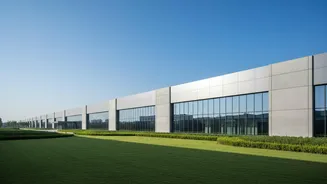
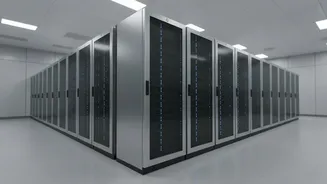
Think of it as a supercomputer on an unprecedented scale, built specifically for artificial intelligence. While the term 'Gigafactory' might bring to mind Tesla's giant battery plants, the EU's version is about processing power, not manufacturing. These
facilities are designed to house tens of thousands of advanced AI processors, combining them with high-speed connectivity and sophisticated software. Their primary job is to provide the immense computational power required to train, test, and run the next generation of 'frontier' AI models—those that are significantly more complex than what we see today. This initiative goes far beyond building typical data centers; it's about creating a sovereign, large-scale infrastructure dedicated entirely to AI development.
Europe's Quest for AI Sovereignty
For years, European companies and researchers have been largely dependent on American tech giants for cutting-edge computing resources. This reliance is now seen as a strategic vulnerability. The AI Gigafactories initiative is a direct response, aiming to establish 'technological sovereignty'. The goal is to ensure that Europe can develop its own advanced AI without relying on infrastructure from the US or China. This is not just a tech issue, but a geopolitical one. By building this capacity, the EU aims to foster its own AI ecosystem, from startups to established industries, all while ensuring development aligns with European values and regulations on data privacy and safety. It’s a move to stop being a customer and become a creator in the new AI-powered world.
The Scale of the Ambition
The project is monumental in scale. The European Commission has initiated a call for tenders to establish up to seven of these gigafactories across the continent. The plan is to mobilize over €30 billion, combining around €10 billion in public EU and national funding with an expected €20 billion or more from private investment. This network will supplement an existing web of 19 smaller 'AI Factories'. The projects will be managed by consortia of companies and public entities, with the first facilities expected to begin construction in 2027 and become operational within 18 months of their contracts being signed. While this demonstrates a massive commitment, the EU will still initially rely on hardware from US firms like Nvidia and AMD, highlighting the complex global supply chains that underpin AI.
The View from India
The EU's ambitious plan doesn't exist in a vacuum. It reflects a global trend where nations are recognizing AI infrastructure as a critical national asset, much like energy or telecommunications. This mirrors India's own strategic push through the IndiaAI Mission, a nearly ₹10,400 crore initiative aimed at building sovereign AI capabilities and providing domestic startups and researchers with the necessary computing power. The EU's move can be seen as both a competitive challenge and a potential template. As countries race to secure their digital futures, the development of sovereign AI infrastructure is becoming a key differentiator. For India, this reinforces the importance of its own mission to foster a local AI ecosystem that is not overly dependent on foreign platforms. The strategies are similar: use public funding to de-risk private investment and build the foundational compute capacity needed for innovation.