







What's in a Name? From AI to SI
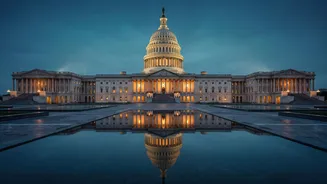
The US federal government, under the direction of President Donald Trump, has initiated a significant rebranding of its technology lexicon. Through a recent executive order, the term 'Artificial Intelligence' (AI) is being officially replaced with 'Super
Intelligence' (SI) across all executive branch communications, policy documents, and public messaging. According to the White House, the term 'Artificial Intelligence' no longer captures the rapidly advancing capabilities of modern systems. The administration argues that today's technology does more than just imitate or automate human tasks; it amplifies human ingenuity and unlocks new creative possibilities. This change is meant to reflect the transformative potential of these technologies and to focus national efforts on expanding their capabilities to empower citizens and strengthen the economy. The directive is sweeping, instructing all departments and agencies to use 'Super Intelligence' and 'SI' in official correspondence, effectively sidelining the globally recognized term 'AI' in US federal government.
The Policy Behind the Pronouncement
This linguistic shift is the public face of a much larger policy initiative aimed at accelerating technological development and securing a dominant position for the US in the global tech race. The rebranding followed a White House summit with top executives from leading tech companies like Google, Meta, and OpenAI. Alongside the terminology change, these companies signed a voluntary 'White House Accord on Super Intelligence,' a morally binding agreement to implement internal safety controls and external audits for their most advanced models. The administration is championing this industry-led, self-regulatory approach, arguing it fosters innovation without what it calls burdensome regulation. This strategy places greater responsibility on companies to govern the technology's development and application in the workplace and beyond.
Fueling the Engine of 'Super Intelligence'
The push for 'Super Intelligence' is backed by substantial government action aimed at creating the necessary infrastructure. The administration has been vocal about its support for rapid data center expansion, even identifying federal lands as potential sites to expedite construction. Furthermore, President Trump recently announced the formation of a 'Super Intelligence Force,' a new task force comprising top officials from intelligence, defense, and commerce. This group is tasked with coordinating the federal response to SI, ensuring America leads the world in its development while protecting against potential threats. This initiative, coupled with a more than $5 billion federal investment in a national effort dubbed the 'Genesis Mission,' demonstrates a clear commitment to not just renaming AI, but aggressively funding and managing its next evolutionary leap.
A Calculated Move in the Global Arena
At its core, the pivot to 'Super Intelligence' is a strategic maneuver in the geopolitical competition for technological supremacy, particularly with China. President Trump has explicitly framed the development race as an existential, must-win competition. By rebranding the field, the administration aims to galvanize a national effort and project an image of unparalleled technological ambition. The term 'super intelligence' itself has a pre-existing definition in the tech world: a hypothetical form of AI that surpasses human cognitive ability in virtually all domains. While this has not yet been achieved, adopting the term suggests an ambition to pursue this frontier. The move, however, creates a potential disconnect, as the rest of the world, including international standards bodies and multinational corporations, continues to operate with the term 'AI.'