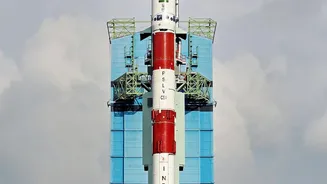








A New Era for Indian Space
The Indian National Space Promotion and Authorisation Centre (IN-SPACe) has released an Expression of Interest, formally starting the process to select a private company to run the Small Satellite Launch Complex (SLC) at Kulasekarapattinam in Tamil Nadu.
This isn't just about outsourcing a small task; the selected company will be responsible for the end-to-end management of the nearly ₹986 crore facility. This includes everything from launch campaign operations and maintenance to safety, security, and coordinating with the Indian Space Research Organisation (ISRO) and its customers. The move is a cornerstone of the Indian Space Policy 2023, which aims to unlock the commercial potential of the space sector and allow ISRO to focus more on research and development of future technologies.
The Kulasekarapattinam Advantage
So, why a second launch site? For decades, India has launched its rockets from the Satish Dhawan Space Centre in Sriharikota. While effective, its location requires rockets heading for polar orbits—common for Earth observation satellites—to perform a 'dog-leg manoeuvre' to avoid flying over Sri Lanka. This consumes extra fuel and limits the rocket's payload capacity. The new spaceport at Kulasekarapattinam, spread across over 2,200 acres, solves this problem. Its location on the Tamil Nadu coast allows for a direct, fuel-saving southward trajectory over the Indian Ocean. This makes it ideal for the Small Satellite Launch Vehicle (SSLV), ISRO's new rocket designed for quick, cost-effective launches of satellites under 500 kg. The new complex is engineered for a high launch frequency, which is crucial for competing in the booming global small satellite market.
From Government Asset to Private Enterprise
The chosen private operator won't be thrown in at the deep end. ISRO will provide extensive technical guidance, training, and operational support for the first three launches or the first year, whichever comes first, to ensure a smooth transition. But the long-term vision is clear: create a robust ecosystem where private firms not only build and launch their own rockets but also manage the critical ground infrastructure. This initiative goes beyond just one launchpad. IN-SPACe has also been encouraging private participation in other areas, such as taking over the manufacturing of proven rockets like the PSLV and establishing private ground stations at ISRO facilities. The government is signaling that the future of Indian space is a collaborative one.
Who Are the Likely Contenders?
The invitation is open to Indian companies with proven experience in managing large-scale infrastructure projects. While no bids have been formally announced, the development is being closely watched by India’s burgeoning space-tech startups. Companies like Hyderabad-based Skyroot Aerospace and Chennai-based Agnikul Cosmos, which are developing their own small-lift launch vehicles, are seen as natural contenders. These firms have already made significant strides, with Agnikul even building its own private launchpad at Sriharikota. For these companies, the opportunity to operate a dedicated, state-of-the-art launch complex is a massive leap forward, potentially accelerating their commercial operations and placing them on the global stage. The eligibility criteria, which may include significant annual turnover and technical capacity, suggest the government is looking for a serious, long-term partner.
The Bigger Picture: A Global Space Hub
Handing over the Kulasekarapattinam launch complex is about more than just efficiency; it's a strategic move to significantly increase India's share of the global space economy. The goal is to transform India into a competitive hub for commercial satellite launches, catering to the growing international demand for small satellite deployment. By allowing a private entity to manage launch operations, ISRO can free up its resources to concentrate on pioneering missions like Gaganyaan (human spaceflight), planetary exploration, and advanced technology development. This public-private model has been successful in other countries and is seen as essential for fostering innovation, reducing costs, and increasing launch cadence. This decision is a clear declaration that India is not just opening up its space sector; it's actively building a launchpad for private ambition to take flight.