





An Unfamiliar Earth-Like Pattern
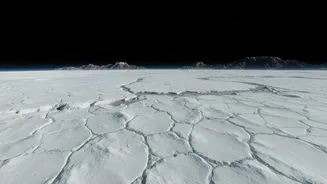
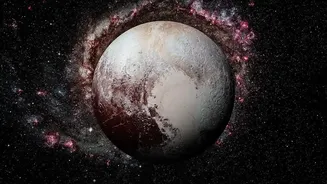
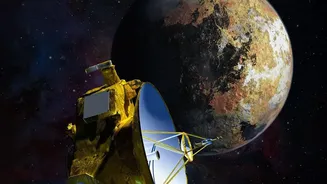
More than a decade after the New Horizons spacecraft zipped past Pluto, the data it sent back is still yielding incredible secrets. The latest surprise comes from a fresh look at Sputnik Planitia, the vast, Texas-sized glacier of frozen nitrogen that
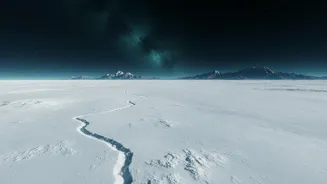
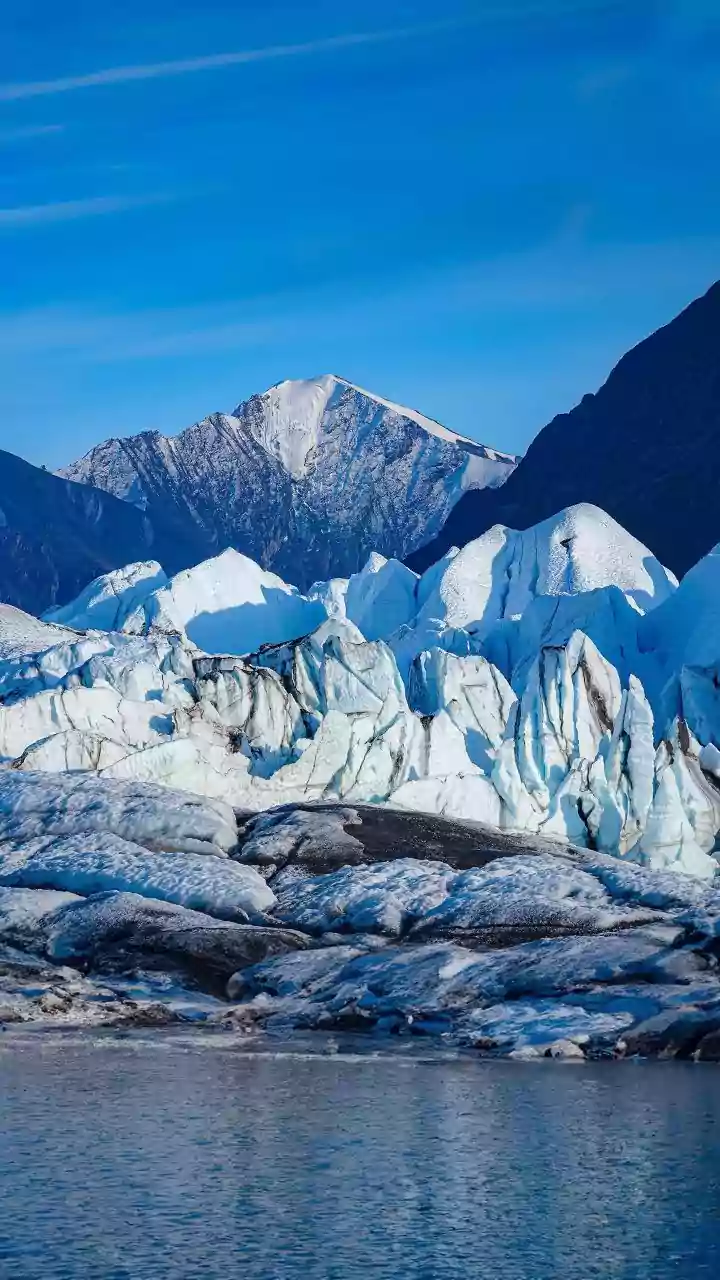
makes up the western lobe of Pluto's iconic 'heart'. Scientists noticed dark streaks and diffuse patches scarring the northern part of the glacier. What caught their attention was how much these features resembled patterns seen on Earth's own ice sheets, specifically in places like Greenland. On our planet, such dark markings often indicate areas where the surface has been wetted, either by rainfall or by liquid water seeping up from below. But on Pluto, where surface temperatures plunge to hundreds of degrees below freezing, rain is a physical impossibility. This left researchers with a tantalizing puzzle: if not rain, what was 'wetting' the nitrogen ice?
An Exotic Form of 'Wetting'
The prime suspect is not water, but liquid nitrogen. According to a new study published in the Planetary Science Journal, the most plausible explanation is that liquid nitrogen is welling up from deep beneath the glacier and spilling onto the surface. This theory hinges on a process known as basal melting. While Pluto's surface is frigid, its interior is thought to retain enough residual heat to warm the base of the kilometers-deep nitrogen glacier. Under the immense pressure of the ice above, the solid nitrogen at the bottom can melt into a liquid state. Computer models support this idea, showing that conditions at the base of Sputnik Planitia are indeed right for liquid nitrogen to form. This liquid would then collect in subsurface reservoirs before finding its way upward, creating the first evidence of recently flowing liquid on the dwarf planet.
From Deep Freeze to Gentle Flow
The journey from deep within the glacier to the surface is a fascinating one. Scientists propose that because liquid nitrogen is less dense than the solid nitrogen ice around it, it would naturally rise, a phenomenon known as buoyancy. This buoyant liquid would travel up through small fractures or conduits in the ice, in a process that some researchers compare to how magma rises through volcanic dikes on Earth. Once it reaches the surface, the models suggest the liquid nitrogen could remain in a fluid state long enough to flow across the icy plains before refreezing. As it spreads and freezes, it alters the texture and appearance of the surface, creating the darker, 'wetted' look captured in the New Horizons images. This process would be sporadic, happening from time to time to continually resurface parts of the glacier, which explains why the region appears geologically young, likely less than a million years old.
Why This Discovery Matters
Finding potential signs of recent liquid flow completely recasts our understanding of Pluto. Instead of a simple, inert ball of ice and rock, it appears to be a complex and dynamic world with ongoing geological processes. This discovery suggests a new kind of time-variable feature on Pluto, a world that is actively changing, however slowly. The lead author of the study, Dr. Alan Stern, who is also the principal investigator for the New Horizons mission, noted, "Pluto never stops surprising us." Understanding these exotic cryo-geological processes has implications beyond just Pluto. It provides a unique natural laboratory for how materials behave in extreme cold, which is difficult to replicate on Earth. These insights could help scientists better understand similar features on other distant bodies, such as the mysterious geysers observed on Neptune's moon, Triton, expanding our knowledge of the outer solar system's hidden activity.