










The Countdown That Halted
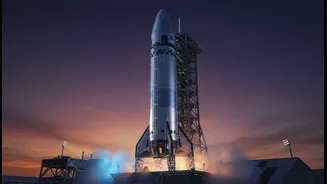
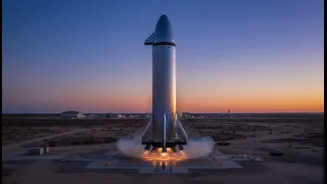
All eyes were on Starship’s 13th test flight on Thursday, July 16. The countdown proceeded smoothly, with excitement building for the launch of the world's most powerful rocket. However, at the very moment of liftoff, as the 33 Raptor engines were supposed
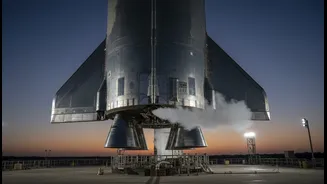
to roar to life, the onboard computers triggered an automatic abort. On-screen data indicated that some engines failed to ignite correctly, prompting the system to shut everything down to prevent a potential launch failure. SpaceX commentator Dan Huot confirmed the abort on the company’s livestream, stating, "We did trigger a hold on the booster that aborted our liftoff as we were starting to light those Raptor engines." The massive vehicle remained safely on the pad, enveloped in vapour, as the mission was officially scrubbed for the day.
Decoding the 'Propellant Offload'
Following the abort, the immediate task for the launch team was to begin the delicate process of "offloading propellant." This involves carefully draining the super-chilled liquid methane and liquid oxygen from the rocket's tanks. It is a critical safety procedure, as a fully-fueled rocket is essentially a controlled bomb. Offloading the propellants makes the vehicle safe for engineers to approach, inspect, and begin troubleshooting the root cause of the abort. In a post on the social media platform X, CEO Elon Musk confirmed the engine issue and the offloading procedure. He later added that two Raptor engines would be removed and replaced to ensure confidence for the next attempt. This cautious approach underscores the high stakes involved, even in a test flight.
The Tyranny of the Launch Window
The abort means SpaceX missed its initial launch opportunity, often called a "launch window." This isn't just a casual timeframe; it's a specific period when the rocket must launch to achieve its mission objectives. Factors like orbital mechanics, payload destination, weather, and airspace clearances all dictate the window. For this Starship test, the flight plan involved a suborbital trajectory with a splashdown in the Indian Ocean. While the window for this type of test is more flexible than for a mission to the International Space Station, there are still constraints. The abort means SpaceX must now find a new window, which requires not only fixing the technical issues but also coordinating for a new airspace clearance and ensuring favourable weather. Musk stated the next attempt would likely be "early next week."
A Setback, But Part of the Plan
While a last-second abort might seem like a major failure, for SpaceX it is a valuable data-gathering event and a demonstration that its safety systems work. The company’s entire philosophy is built around a rapid, iterative process: build, test, fly, and, if necessary, fail, then learn and repeat. Each test, successful or not, provides crucial information to improve the vehicle. This flight was the first for this vehicle but the 13th in the overall Starship test program. The fact that the automatic abort system worked perfectly, preventing the loss of the vehicle, is a significant positive. It's a far better outcome than a catastrophic failure just after liftoff, which has happened in some earlier Starship tests. This event was also the first since SpaceX’s massive IPO in June, adding extra scrutiny from investors.
What's Next for Starship
The immediate next step is for engineers to replace the faulty engines and analyze the data to understand precisely why they failed to ignite. Once the vehicle is deemed ready, SpaceX will coordinate with the Federal Aviation Administration (FAA) for a new launch license and target the next available window. The delay, while short, is a reminder of the immense technical challenges of spaceflight. The success of the Starship program is critical for both SpaceX’s business—including its Starlink satellite internet constellation and future ambitions for Mars—and for NASA, which is counting on a version of Starship to land its Artemis astronauts on the Moon. This aborted flight, carrying 20 Starlink satellites as a test payload, shows that even routine-looking procedures are fraught with complexity.