









An Unprecedented Expansion
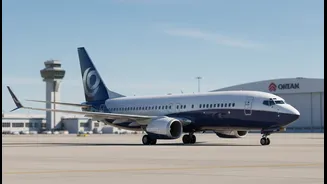
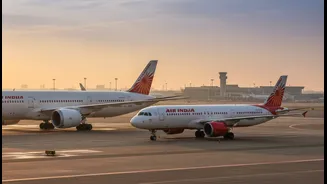
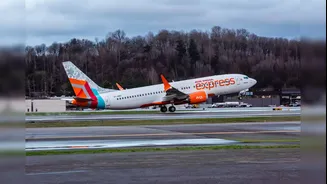
Indian carriers, led by giants like Air India and IndiGo, are in the midst of one of the most aggressive expansion phases in global aviation history. In 2023, Air India placed a landmark order for 470 aircraft from Airbus and Boeing, with more added since.
Combined with IndiGo's massive backlog, Indian airlines have nearly 1,700 new planes on order. The plan is clear: to modernise fleets, expand domestic and international routes, and capture the surging demand for air travel in India. Air India Group, for instance, expects to induct 50 to 60 new aircraft every year for the next several years, a staggering pace that would see a new plane joining its fleet almost every week. This grand vision is designed to transform Indian carriers into global aviation powerhouses, offering passengers new products, modern cabins, and greater connectivity.
The Manufacturing Bottleneck
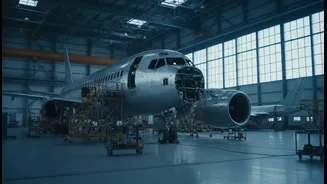
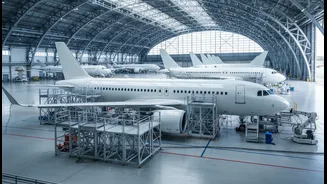
However, placing an order is one thing; receiving the aircraft is another. Both Airbus and Boeing are facing significant production challenges that are creating a global delivery logjam. These issues stem from persistent post-pandemic supply chain disruptions, from raw materials and components to, most critically, engines. For example, Airbus's ability to ramp up A320neo family production has been throttled by shortages of Pratt & Whitney's Geared Turbofan (GTF) engines. This has forced the manufacturer to park newly built planes while they await power plants. While Boeing is regaining its production rhythm for the 737 MAX and 787 Dreamliner, it too has faced its own delays. This global manufacturing slowdown means airlines worldwide, including those in India, are facing extended wait times, with some delivery schedules stretching out as far as 15 years.
The Certification Hurdle
Beyond production delays, aircraft certification presents another significant variable. Before any new aircraft model or variant can be delivered and operated, it must be certified by aviation safety regulators like the US Federal Aviation Administration (FAA) and the European Union Aviation Safety Agency (EASA), followed by India's Directorate General of Civil Aviation (DGCA). This is a painstaking process to ensure the aircraft is safe. New models like the Boeing 737 MAX 10 and the Airbus A321XLR are awaiting final certifications. Even after an aircraft type is certified, individual planes undergo rigorous checks. Recently, the FAA has been regaining confidence in Boeing's processes, allowing the company to resume self-certification for its 737 MAX and 787 jets, which could help streamline future deliveries. However, any new safety concerns, like those recently investigated on a Boeing 787 fuel switch, can trigger fresh scrutiny and potential delays.
Impact on Airlines and Flyers
These delays have a direct impact on airlines' strategies and, ultimately, on passengers. For airlines like Air India and IndiGo, the inability to get new aircraft on time slows down their planned capacity expansion. This can mean postponing the launch of new international routes, being unable to increase frequencies on popular existing ones, and being forced to fly older, less fuel-efficient aircraft for longer. This directly affects profitability. Some reports even suggest that Air India, facing these headwinds, is in discussions to defer some deliveries to manage costs and stabilise operations. For flyers, the trickle-down effects may include slower introduction of new routes, fewer flight options than anticipated, and potentially higher fares as capacity growth fails to keep pace with soaring demand.
Navigating the Turbulence
In response to this challenging environment, airlines are adapting. One key strategy is leasing aircraft to bridge the gap until their ordered planes arrive. Another is investing heavily in retrofitting older aircraft with new cabins and systems to improve the passenger experience, a process Air India is currently undertaking with its legacy wide-body fleet. Despite the significant headwinds, airline executives remain publicly optimistic, stressing that their transformation plans are on track, even if the timeline is extended. While the pace of expansion may be slower than originally hoped, the commitment to growth remains. The current situation highlights a fundamental tension in modern aviation: the soaring ambitions of airlines versus the ground-level realities of manufacturing and regulation.