




The Galaxy's Missing Millions
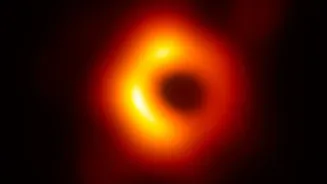
When a star at least 20 times more massive than our Sun dies, it collapses under its own gravity into an object so dense that nothing, not even light, can escape: a black hole. Based on the number of massive stars that have lived and died over the Milky
Way's 13-billion-year history, astronomers estimate that our galaxy should be littered with millions of these stellar remnants. The problem is that, unless they are actively feeding on nearby gas and dust, which causes them to blaze with X-rays, these black holes are completely invisible. They are dark objects drifting silently through the cosmos. While researchers believe most of these black holes exist in binary systems, orbiting a companion star, only about 70 have been definitively identified, creating a huge gap between theory and observation. A new approach, however, is empowering scientists and the public alike to go hunting for this missing population.
Seeing with Gravity's Help
The key to finding these invisible objects is a phenomenon predicted by Albert Einstein called gravitational microlensing. Think of it like a cosmic magnifying glass. Gravity warps the fabric of spacetime, and a massive object like a black hole creates a significant warp. If a black hole passes almost perfectly in front of a distant star from our point of view, its gravity will bend and magnify the star's light. For a brief period, the background star will appear to get brighter and then fade back to normal. This temporary, characteristic flash of light is the 'light pattern' that astronomers are searching for. By analyzing the shape and duration of this brightening event, scientists can infer the mass of the invisible object that acted as the lens, potentially revealing a hidden black hole or another 'dark object' like a lone neutron star.
Meet the Black Hole Hunters
The 'Black Hole Hunters' initiative is a citizen science project that invites anyone with a computer to join the search. Hosted on the Zooniverse platform, the project provides volunteers with data from NASA's Transiting Exoplanet Survey Satellite (TESS). Originally designed to find planets, TESS monitors the brightness of hundreds of thousands of stars over time, creating graphs called light curves. The sheer volume of data is too much for astronomers to sift through alone, and computer algorithms can be fooled by natural variations in a star's brightness. Volunteers are shown examples of the tell-tale symmetrical peak that signifies a potential microlensing event and are asked to flag any promising candidates. This human pattern-recognition is crucial for identifying which of the millions of light curves deserve a closer look from professional astronomers with more powerful telescopes.
A New Cosmic Census
The project, co-led by researchers in the United Kingdom, has already seen nearly 23,000 volunteers make almost 12 million classifications since it began. The ultimate goal is to create the first real census of these quiet, isolated black holes. Finding them and counting them will help answer fundamental questions about the lives and deaths of massive stars. How many black holes are truly out there? Where are they located? Do they typically have companions? Answering these questions provides a crucial check on our models of stellar evolution. Each confirmed detection adds another vital data point to our map of the galaxy's unseen architecture. The search is not just confined to citizen scientists; next-generation observatories like the Vera C. Rubin Observatory in Chile and the recently launched Nancy Grace Roman Space Telescope are poised to revolutionise this field, conducting massive surveys specifically designed to detect thousands of these microlensing events.