







The Pact at the Center of the Storm
In late July 2026, U.S. and Saudi officials formally signed a Section 123 Agreement, a framework that governs peaceful nuclear cooperation. This deal, designed to last for 30 years, would allow American firms to help develop Saudi Arabia's civilian nuclear energy
program. For Saudi Arabia, it represents a key part of its strategy to diversify its energy sources. For the U.S., it ensures American influence over the kingdom's nuclear ambitions and blocks competitors like Russia or China from gaining a foothold. The agreement was the culmination of years of negotiations that spanned multiple U.S. administrations. However, the ink had barely dried before a major new complication emerged.
The Unexpected Israeli Normalization Clause
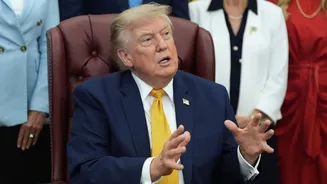
Just one day after the formal signing, U.S. President Donald Trump announced that the nuclear deal would be entirely conditional on Saudi Arabia normalizing diplomatic relations with Israel by joining the Abraham Accords. This announcement reportedly took both Saudi and even some senior American officials by surprise, as the condition was not part of the negotiated and signed text. This post-signing linkage immediately introduced a significant hurdle. President Trump's declaration effectively tied the bilateral nuclear energy deal to a far more complex trilateral geopolitical negotiation involving the long-standing Israeli-Palestinian conflict.
Saudi Arabia’s Unchanged Condition
The new American condition collides with Saudi Arabia's own long-held public stance. For months, and with renewed emphasis following regional conflicts, Riyadh has repeatedly stated that any normalization with Israel is contingent on the establishment of an irreversible pathway to a Palestinian state. Saudi officials have called this position non-negotiable. This puts the parties in a diplomatic deadlock. The U.S. has made the nuclear deal dependent on Saudi-Israeli normalization, but Saudi Arabia has made normalization dependent on a resolution for the Palestinians—a step the current Israeli government has rejected. This fundamental conflict of preconditions is the source of the new uncertainty.
Why This Creates Widespread Uncertainty
The sudden introduction of the normalization requirement casts the entire agreement into doubt. Diplomatic experts have questioned the move, with some calling it a "bait and switch." It remains unclear whether this will force a renegotiation of the signed pact or if it reflects an undisclosed political understanding. The situation is further complicated by the terms of the nuclear deal itself, with some non-proliferation experts expressing concern that it may set a dangerous precedent by potentially allowing for uranium enrichment on Saudi soil with less stringent oversight than previous agreements, such as the one with the UAE. This controversy adds another layer of political difficulty to getting the deal approved and implemented.
The Geopolitical Chessboard
The fate of this pact has significant implications for the Middle East. A successful three-way deal involving the U.S., Saudi Arabia, and Israel would be a historic realignment, solidifying a regional bloc against Iran. However, its failure could also have major consequences. Saudi Arabia has made it clear it is exploring all options for its nuclear program, and if the U.S. deal falters, it may turn to other global powers. For India and other nations, stability in the Gulf is paramount for energy security and the well-being of a large diaspora. The outcome of these complex negotiations, balancing nuclear aspirations, security guarantees, and the unresolved Palestinian question, is being watched closely from New Delhi to Washington and beyond.