






The World's Most Important Chokepoint
The Strait of Hormuz is a narrow channel of water separating Iran from Oman and the United Arab Emirates. It is the only sea passage from the Persian Gulf to the open ocean. At its narrowest point, the strait is just 54 kilometres wide, with shipping
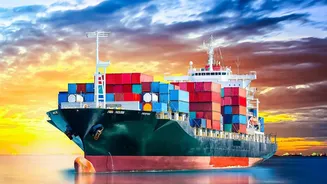
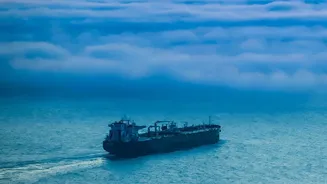
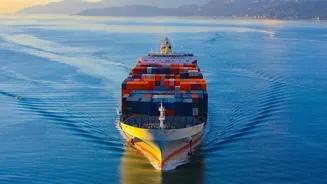
confined to two-mile-wide lanes for inbound and outbound traffic. This geography makes it a critical chokepoint in global trade. A significant portion of the world's energy supply, along with other goods, must navigate this confined space, making the global economy highly vulnerable to any disruption in the area. Major oil producers like Saudi Arabia, the UAE, Kuwait, Iraq, and Iran all rely on this route to get their product to international markets.
A River of Oil by the Numbers
The headline figure of around 20 million barrels of crude oil and petroleum products per day represents roughly a fifth of the world's total oil consumption. In total, this accounts for about 25% of all oil traded by sea. But it’s not just oil. The strait is also a crucial artery for liquefied natural gas (LNG), with about 20% of the world's supply, primarily from Qatar and the UAE, passing through it. More than 80% of the crude oil transiting Hormuz is destined for Asia, making countries like China, Japan, South Korea, and India heavily dependent on its stability.
The Direct Impact on India
For India, the Strait of Hormuz is more than a distant geopolitical issue; it's a vital economic lifeline. India is one of the world's largest importers of crude oil, and a significant percentage of these imports must pass through this chokepoint. While India has been diversifying its sources, estimates suggest that between 40% and 50% of the country's crude oil imports still transit the strait. Furthermore, over half of India's LNG imports, crucial for power generation and fertilizer production, also come through this route. Any blockage or major disruption would have an immediate and severe impact. It would not only threaten the physical supply of energy but also cause a dramatic spike in global oil prices, leading to higher prices for petrol, diesel, and cooking gas across India and triggering wider inflation.
A Flashpoint for Global Tensions
Given its strategic importance, the Strait of Hormuz has long been a center of geopolitical tension. Iran's proximity gives it a powerful strategic position, and it has, at various times, threatened to disrupt or close the waterway in response to international pressure or conflict. This has led to a heavy military presence in the region, including the U.S. Navy's Fifth Fleet, which is based in nearby Bahrain, and other international naval forces conducting patrols to ensure freedom of navigation. Incidents involving tanker seizures, attacks, and military standoffs have occurred over the years, each one sending ripples of anxiety through global energy markets. Recent conflicts in early 2026 led to a near-total shutdown of traffic, with shipping numbers plummeting and insurance costs soaring, highlighting the strait's fragility.
Are There Any Alternatives?
The simple answer is no, not really. There are very limited options to bypass the Strait of Hormuz. Only Saudi Arabia and the UAE have pipelines that can carry some of their crude oil to ports outside the Persian Gulf. For example, the UAE can pipe a portion of its oil to the port of Fujairah on the Gulf of Oman, and Saudi Arabia has a pipeline to the Red Sea. However, the total capacity of these pipelines is only a fraction of the 20 million barrels that flow through the strait each day. For major producers like Iraq, Kuwait, and Qatar, there is no viable alternative for their seaborne exports. For the foreseeable future, the world's energy security remains inextricably linked to the safe and uninterrupted passage of ships through this narrow, contested waterway.