






Decode the Buzzwords: Whole Grain vs. Multigrain
The most common point of confusion lies in terms that sound healthy but can be misleading. A 'multigrain' product simply contains more than one type of grain. These grains are often refined, meaning the nutrient-rich outer layers—the bran and germ—have
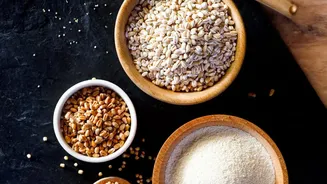
been stripped away, leaving mostly starch. 'Whole wheat' is a type of whole grain, but you need to check the percentage. In India, FSSAI guidelines state 'whole wheat bread' must contain at least 75% whole wheat flour. The gold standard is '100% whole grain,' which ensures the product contains the entire grain kernel—bran, germ, and endosperm—preserving its natural fibre, vitamins, and minerals.
The Ingredient List Is Your Best Friend
The front of the box tells you what the brand wants you to think; the ingredients list tells you the truth. Ingredients are listed by weight, from highest to lowest. For a product to be genuinely whole grain, the very first ingredient should be a whole grain, such as 'whole wheat flour,' 'whole oats,' or millets like 'bajra' or 'jowar'. If the first ingredient is refined flour ('maida' or wheat flour) and the whole grain is listed further down, the product is not predominantly whole grain, regardless of the claims on the front.
Prioritise Fibre for Fullness and Health
Fibre is a key indicator of a healthy grain. It aids digestion, helps manage blood sugar levels, and keeps you feeling full for longer. When comparing products, check the 'Dietary Fibre' content on the Nutrition Facts label. A product is considered a 'good source of fiber' if it contains 2.5 grams or more per serving, and 'high fiber' if it has 5 grams or more. Many whole grains like millets, oats, and barley are naturally rich in fibre. For instance, millets can contain significantly more fibre than refined rice and wheat, making them an excellent choice for improving gut health and managing weight.
Watch Out for Hidden Sugars and Sodium
Many products marketed as healthy, including whole grain cereals, granola bars, and breads, can be loaded with hidden sugars and sodium to improve taste. These additives can negate the health benefits of the grains themselves. Check the 'Added Sugars' line on the nutrition label; it's often listed under names like high-fructose corn syrup, dextrose, or fruit juice concentrate. Similarly, some 'heart-healthy' cereals and even instant oatmeal packets can contain surprisingly high amounts of sodium. Always aim for products with minimal added sugars and sodium.
Don't Mistake 'Gluten-Free' for Healthier
The term 'gluten-free' has a 'health halo' around it, leading many to believe it's an inherently healthier option. However, a gluten-free diet is medically necessary only for individuals with celiac disease or a diagnosed gluten sensitivity. There is no evidence that avoiding gluten is beneficial for the general population. In fact, many gluten-free products are made with refined starches and may be lower in fibre and essential nutrients while being higher in sugar and fat to compensate for texture and flavour. Choosing a gluten-free cookie over a regular one doesn't make it a healthier choice.
Embrace India's Indigenous Grains
Beyond wheat and rice, India has a rich diversity of millets like ragi (finger millet), jowar (sorghum), and bajra (pearl millet). These ancient grains are nutritional powerhouses, often outperforming wheat and rice in fibre, protein, and essential minerals like iron and calcium. For example, finger millet (ragi) provides about ten times more calcium than rice or wheat. Millets also have a lower glycemic index, meaning they release sugar into the bloodstream more slowly, which is beneficial for blood sugar control. Incorporating these local grains is a great way to boost the nutritional value of your diet.