




The Stellar Conundrum
For decades, astronomers have searched for distant worlds, or exoplanets, by watching for tiny dips in a star's light, an event called a transit. When a planet passes in front of its star, it blocks a fraction of the light, telling us a planet is there
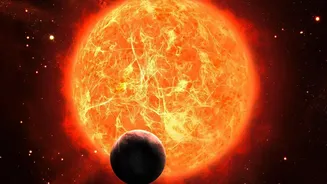
and even hinting at its size. By studying the starlight that filters through the planet's atmosphere, scientists can look for signs of water, methane, and other chemical fingerprints of life. But there's a problem: stars are not perfect, steady lightbulbs. They are dynamic, roiling balls of plasma with their own 'weather,' like dark, cool starspots and violent, bright flares. This stellar activity changes the star's brightness and can mimic or mask the very signals we're trying to detect from a planet's atmosphere, leading to distorted measurements of its size, temperature, and composition.
Introducing the SPARCS Solution
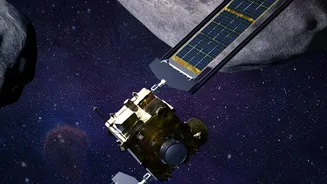
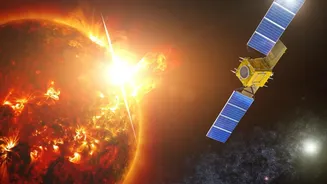
To solve this, NASA has deployed a specialised mission called the Star-Planet Activity Research CubeSat, or SPARCS. Launched in early 2026, this small but mighty observatory, about the size of a cereal box, is the first mission dedicated to monitoring this stellar variability over long periods. Its primary targets are low-mass stars, specifically M-dwarfs. These stars are the most common in our galaxy and are prime targets in the search for habitable planets. However, they are also known to be particularly active, with flares that can be a hundred times more powerful than our sun's. By staring at these stars, SPARCS provides the context needed to untangle the star's behaviour from the planet's signature, giving missions like the James Webb Space Telescope (JWST) a clearer picture to analyse.
How It Works
The key to SPARCS's work is its focus on ultraviolet (UV) light. Stellar flares and other magnetic activity emit strongly in the UV spectrum, which is precisely the kind of high-energy radiation that can strip away a planet's atmosphere and impact its potential for life. SPARCS is equipped with sensitive detectors that simultaneously measure both near-UV and far-UV light, allowing it to track the frequency and intensity of flares and other changes on the star's surface. By observing a star for days or weeks at a time—long enough to see a full stellar rotation—the mission can build a comprehensive profile of its activity. This data essentially creates a 'weather report' for the star, which astronomers can then use to correct the data they gather about its orbiting planets. This helps them distinguish between a signal that's truly from the planet's atmosphere and one that's just 'noise' from the star itself.
The Future of Planet Hunting
The insights from SPARCS are not just about correcting errors; they are fundamental to understanding habitability. A planet might be in the 'habitable zone'—the right distance from its star for liquid water to exist—but if it's constantly being blasted by intense UV radiation, its chances of supporting life are slim. The mission's data will help scientists model how stellar activity affects planetary atmospheres over time, from eroding them completely to altering their chemical makeup. This allows for a much more nuanced assessment of which worlds are genuinely promising candidates in the search for life. While larger telescopes like JWST and the upcoming Habitable Worlds Observatory hunt for the planets themselves, small, focused missions like SPARCS and the complementary Pandora mission provide the critical, underlying data needed to make sense of their findings. By understanding the star, we can finally begin to truly understand the planet.