

A Cosmic Census That Doesn't Add Up
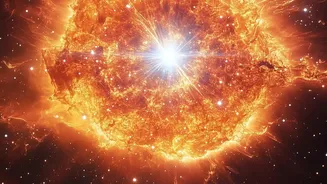
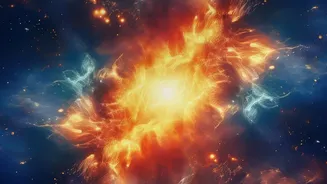
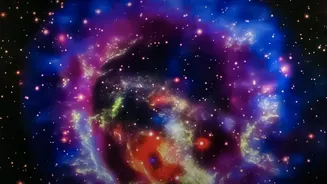
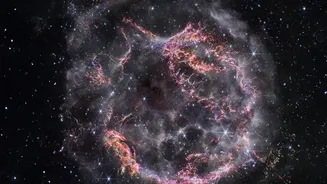
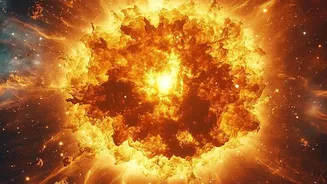
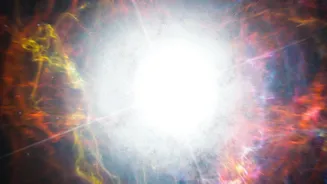
When a star more than eight times the mass of our Sun runs out of fuel, it dies in a cataclysmic explosion called a core-collapse supernova. These cosmic fireworks are incredibly important; they forge and scatter heavy elements like the iron in our blood
across the galaxy, seeding the next generation of stars and planets. For decades, however, astronomers have faced a puzzling discrepancy. Based on the number of massive stars we observe, we should be witnessing far more of these supernovae than we actually do. It’s as if a significant number of these giant stars simply vanish without the expected bang, a phenomenon sometimes called the "missing supernova problem." This has led scientists to wonder if some stars aren't exploding as brightly as predicted, or if they are failing to explode at all.
Enter the Elusive Ghost Particle
The prime suspect in this cosmic mystery is the neutrino. Neutrinos are fundamental particles with almost no mass that interact so weakly with other matter they can pass through entire planets as if they were empty space. Despite their phantom-like nature, they are produced in almost unimaginable quantities during the core collapse of a star—about 99% of the explosion's colossal energy is carried away by these particles. For a brief, crucial period, the core of the dying star becomes so dense that even neutrinos can't immediately escape. Scientists have long theorized that the way these trapped neutrinos push their way out is the key to kick-starting the explosion that blows the star apart. This is known as the neutrino-driven explosion mechanism.
An Explosion Inside a Supercomputer
The physics of a star's final moments are so complex that they can't be solved with a pen and paper. For years, physicists' computer models of supernovae struggled to produce a successful explosion; often, the simulated shockwave would stall, and the star would fail to blow up. However, thanks to the power of modern supercomputers and increasingly sophisticated 3D simulations, researchers are finally breaking the deadlock. New models are now able to simulate the chaotic, turbulent environment inside a dying star with unprecedented detail. These simulations are confirming that neutrinos are not just a byproduct of the explosion, but the essential engine driving it. They show how neutrino heating can revive the stalled shockwave, providing the power needed to blast the star's outer layers into space.
How Neutrinos Provide the Crucial Kick
The latest computer models show that as the star's core implodes, it forms an incredibly hot, dense proto-neutron star. This core radiates a torrent of neutrinos. In the intensely packed moments following the collapse, a small fraction of these neutrinos are absorbed by the material just outside the core. This deposition of energy creates immense pressure, reheating the stalled shockwave and giving it the violent push needed to overcome the star's immense gravity. The simulations reveal that this process is not uniform; it's a turbulent, bubbling chaos that channels the energy of the neutrinos outward. The models also suggest that subtle changes in neutrino behavior, such as how they oscillate between different "flavors," can significantly alter the outcome, determining whether the star explodes as a supernova or collapses directly into a black hole.
From a Fizzle to a Black Hole
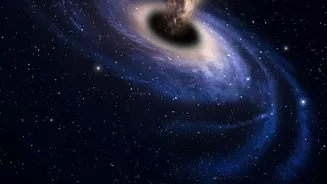
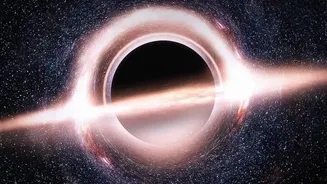
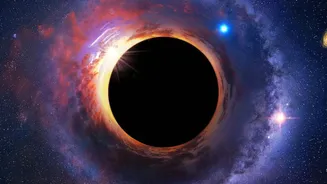
This new understanding from computer modeling directly addresses the missing supernova problem. The simulations suggest that for some of the most massive stars, the neutrino-driven explosion might not be powerful enough to blow the star completely apart. Instead, the star might experience a weaker "failed" supernova, where most of its material falls back onto the core, causing it to collapse directly into a black hole. This would explain why astronomers have observed massive stars seemingly disappearing without the bright flash of a traditional supernova. By accounting for these fizzles and direct collapses, the number of predicted explosions begins to line up much better with what telescopes actually see, potentially resolving a decades-old astrophysical puzzle.