






India's Outpost in the Cosmos
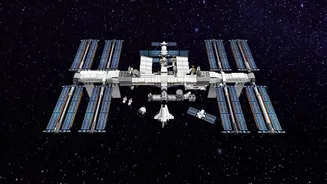
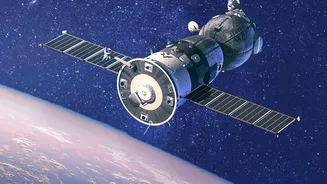
The Bharatiya Antariksh Station (BAS) is the Indian Space Research Organisation's (ISRO) plan to build and operate a modular space station. Envisioned as a crucial part of India's long-term space roadmap, the station is slated to be fully operational
by 2035. It will orbit the Earth at an altitude of approximately 400-450 kilometres, providing a platform for Indian astronauts, or 'Gaganauts', to live and work in space for extended periods of three to six months. This project represents the logical next step after the Gaganyaan mission, which is focused on developing India's capability to send humans into space. The development of the BAS is seen as a critical milestone, positioning it as a successor to short-duration flights and a stepping stone toward a crewed lunar mission planned for 2040.
A Modular Marvel: The Five Components
The station will be assembled in space, piece by piece, much like a complex puzzle. It is designed to consist of five distinct modules launched in phases. The first component, the BAS-01 Base Module, is scheduled for launch by 2028. Following the base module, a core-docking module, a science research module, a laboratory module, and a common berthing module will be added to complete the 52-tonne structure. These modules will be launched using ISRO's powerful LVM3 rocket and the upcoming Next-Generation Launch Vehicle. A robotic arm, a critical component for assembly and maintenance, is also part of the design. The entire project received formal approval from the Union Cabinet in September 2024, folding its development into an expanded Gaganyaan programme.
The Stepping Stones to 2035
The road to establishing the Bharatiya Antariksh Station is paved with a series of precursor missions. The Gaganyaan programme is the foundational element, tasked with validating all the technologies necessary for human spaceflight. This includes the human-rated launch vehicle (HLVM3), the crew escape system, and life support systems. Between 2026 and 2028, ISRO plans to conduct four dedicated missions to test crucial technologies like docking, robotics, and long-duration habitation in space. The first uncrewed Gaganyaan mission, G1, is already in advanced stages of preparation. These efforts are not happening in isolation; India has been gaining valuable operational experience through international collaborations, including a mission to the International Space Station in 2025 that provided key insights into microgravity research and astronaut training.
A Laboratory in the Sky
The primary purpose of the Bharatiya Antariksh Station is to serve as a national laboratory in space. It will enable long-term scientific research in the unique environment of microgravity. Scientists will be able to conduct advanced studies in fields like life sciences, investigating the effects of space on the human body, such as muscle atrophy and bone density loss. Other key research areas include materials science, biotechnology, and fluid behaviour, which can lead to innovations with applications back on Earth. The station will also enhance India's Earth observation capabilities for disaster management and climate studies and provide a testbed for new technologies developed by startups and entrepreneurs. This continuous human presence in orbit is essential for developing the solutions needed for future deep-space exploration.
Securing India's Place Among the Stars
By building its own space station, India will join an exclusive club of nations—following the United States, Russia, and China—that have independently operated such orbital outposts. This move holds immense strategic importance, enhancing India's autonomy in space and bolstering its status as a major global power. With the International Space Station (ISS) expected to be retired around 2030, the BAS is timed to ensure there is no gap in having a human-occupied laboratory in orbit. The station is also being designed with international collaboration in mind, featuring docking ports compatible with global standards to potentially allow visits from astronauts from other nations, including the European Space Agency. Ultimately, the project is a powerful symbol of national ambition and a driver for economic growth, aiming to significantly increase India's share of the global space economy.