



Planning Your Celestial Escape
The difference between seeing a few faint stars and witnessing the magnificent sweep of the Milky Way comes down to planning. Before you even pick a destination, two factors are critical: weather and the moon. The best time for stargazing is typically
from October to May, after the monsoons have washed the skies clear and humidity is low. Always check the forecast for a cloudless night. Equally important is the lunar cycle. A bright full moon can wash out the night sky as effectively as city lights, hiding all but the brightest objects. Aim for a trip during the new moon phase, or on nights when the moon sets early or rises late, to get the darkest skies possible.
Naneghat: History Meets the Cosmos
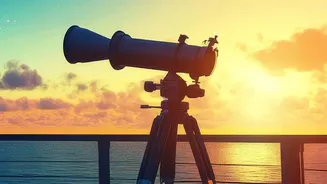
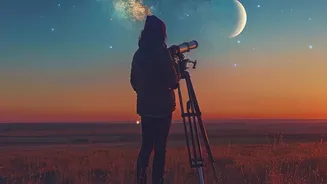
Approximately a three-hour drive from Mumbai, Naneghat offers a unique combination of history and astronomy. This ancient mountain pass, once a bustling trade route, now provides a high-altitude platform for some of the region's best stargazing. At over 2,400 feet, you are above much of the atmospheric haze, offering a clear, unobstructed view of the cosmos with minimal light pollution. The journey itself is part of the adventure, with a motorable road leading to the top. Many local groups organize overnight camping and stargazing sessions here, complete with telescopes and expert guidance, making it an accessible option for both beginners and seasoned observers.
Dehene: A Rustic Stargazer’s Haven
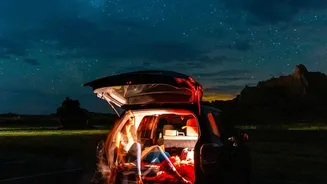
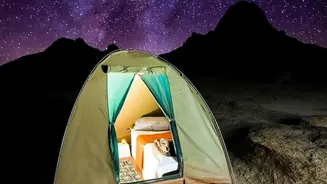
Tucked away in the foothills of the Sahyadris, the small village of Dehene is a beloved spot for amateur astronomers and astrophotographers. A mere two-hour drive from the city, it feels a world away. The area's low light pollution and wide-open fields provide a perfect canvas for observing constellations and even capturing star trails on camera. Its location in a valley helps shield it from the glow of distant highways. Several local organizers offer structured camping and stargazing events in Dehene, often including stays in tents, local meals, and guided sessions with telescopes to view planets and deep-sky objects.
Vaitarna: Lakeside Cosmic Reflections
For those who dream of seeing the stars reflected in still waters, the area around Vaitarna Dam is an ideal choice. Located about a three to four-hour drive from Mumbai, the reservoir's remoteness ensures minimal light interference. This spot is particularly popular with astrophotographers aiming to capture the Milky Way band against the stunning backdrop of the lake. The experience here is tranquil and immersive, far from mainstream civilization. Homestay options and local meals are available through the warm and welcoming villagers, offering a complete and rustic getaway.
Bhandardara: The All-Rounder Escape
Known for its monsoon beauty, Bhandardara transforms into a stargazing paradise in the drier months. Situated about 165 km from Mumbai, it’s a popular weekend destination. Camping on the grassy patches near the vast Arthur Lake allows for a spectacular show as the Earth turns, revealing a dazzling display of constellations. The dam's still water provides a mirror for the sky, doubling the spectacle. For a truly secluded experience, some local boat owners might even take you to smaller islands in the middle of the lake for an unforgettable night with the stars.
Mahuli: The Quick Star Hop
If you're short on time but desperate for a glimpse of a darker sky, Mahuli village is an excellent option. Easily accessible and not too far from Mumbai, it offers a quick escape without a long journey. The area has plenty of open flatlands, perfect for lying back and watching the stars appear, with the backdrop of the popular Mahuli peak. Its low level of light pollution makes it a reliable choice for a spontaneous stargazing trip. Local astronomy groups frequently host overnight sessions here, making it a convenient and organized way to enjoy the night sky.