



Our Galaxy’s Not-So-Sleeping Giant
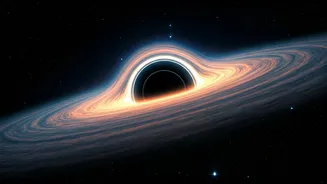
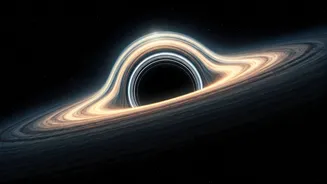
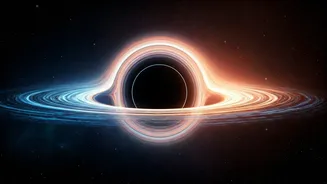
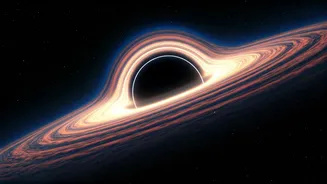
For decades, scientists have viewed Sagittarius A (Sgr A), the supermassive black hole at the center of the Milky Way, as relatively dormant. With a mass over four million times that of our sun, its gravitational pull is immense, but its activity level
is low. Compared to the brilliant, violent quasars seen in other galaxies, which blast out unmistakable jets of matter, Sgr A has been considered quiet. It consumes so little material that its diet has been compared to a human eating a single grain of rice over a million years. This picture suggested its influence was largely passive—a massive anchor around which the galaxy revolves, but not an active participant in galactic life. Recent discoveries, however, are forcing a major rethink of this long-held belief.
The 50-Year Hunt for a Cosmic Wind
The theory has been straightforward: even a small amount of gas falling into a black hole should release enough energy to push some material back out. This outflow, known as a 'black hole wind', is a key component of how galaxies evolve. While these winds are easily seen around active black holes in other galaxies, finding one from the faint and distant Sgr A proved incredibly difficult. The center of our galaxy is a chaotic place, packed with bright stars, thick dust, and supernova remnants that create a sort of cosmic fog, making it hard to spot a gentle, invisible outflow. For half a century, the hunt for this wind was a major astronomical mystery.
Finding the Invisible Man's Footprints
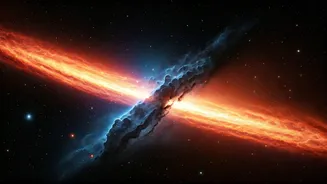
The breakthrough came not from seeing the wind itself, but by observing its dramatic effects. Using data from the Atacama Large Millimeter/submillimeter Array (ALMA) and NASA's Chandra X-ray Observatory, astronomers mapped the gas near Sgr A. They discovered a giant, cone-shaped cavity in the cool gas pointing directly toward the black hole. This empty space was the smoking gun. Overlaying X-ray data revealed that this cavity was filled with hot gas, suggesting a powerful wind had blown from the black hole, either heating the cold gas or pushing it out of the way entirely. Scientists couldn't see the wind, but they could see the path it had carved through its neighbourhood, like finding footprints in the snow.
An Engine of Galactic Change
This discovery fundamentally changes our understanding of Sgr A. It is not just a passive gravitational point but an active engine influencing its surroundings. This process, known as 'feedback', is crucial for regulating how galaxies grow. The wind from Sgr A can both trigger and suppress the birth of new stars. By compressing clouds of gas, it can cause them to collapse and form stars. Conversely, by blowing away that same gas, it can starve future star formation of its essential raw materials. This confirms that even relatively quiet black holes play a direct role in the life cycle of their host galaxies, acting as a cosmic regulator of star birth.
A New Window into the Universe
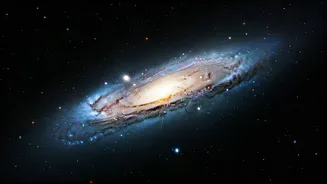
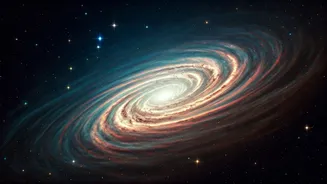
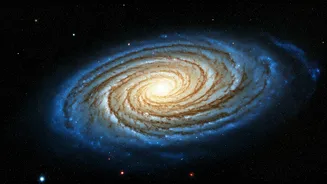
Studying our own galactic center provides a unique local laboratory for understanding processes that occur across the universe. While other galaxies show us the dramatic 'fireworks' stage of black hole activity, Sgr A* gives us a rare glimpse into the dominant, quiet state in which most supermassive black holes spend their lives. This finding helps fill a significant gap in our models of how the Milky Way evolved and how supermassive black holes and their host galaxies grow together over billions of years. It proves that even in its quietest moments, the monster at our galaxy’s heart is always shaping its home in profound ways.