




An Icon Under Scrutiny
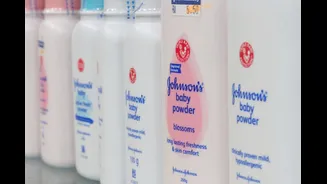
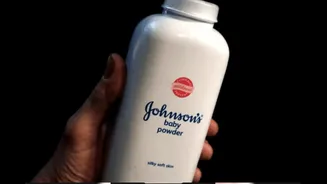
Johnson's Baby Powder has been a household staple since 1894. For generations, its primary ingredient was talc, a soft mineral mined from the earth. The core of the legal battle lies in the proximity of talc and asbestos, a known carcinogen, in the ground.
Plaintiffs in more than 60,000 lawsuits allege that the talc used in J&J's products was contaminated with asbestos, leading to cancers like ovarian cancer and mesothelioma. The first major lawsuit was filed in 2009 by a woman who claimed her ovarian cancer was caused by the powder, setting the stage for a flood of litigation.
The Science on Trial
At the heart of the conflict is a scientific dispute. J&J has consistently maintained that its talc is safe, asbestos-free, and does not cause cancer. However, investigations and courtroom proceedings have unearthed internal company documents that plaintiffs argue show J&J knew about potential asbestos contamination for decades, from at least the 1970s until the early 2000s, but failed to disclose this to the public or regulators. While some studies found no link, others presented in court convinced juries of a connection, leading to a string of bombshell verdicts against the company.
Billion-Dollar Verdicts and Mounting Pressure
The tide began to turn dramatically against J&J in the mid-2010s. A series of massive jury awards shocked observers and signaled a new level of legal peril for the company. A landmark 2018 verdict in St. Louis awarded $4.69 billion to 22 women who alleged the product caused their ovarian cancer. While some large verdicts were later overturned or reduced on appeal, the financial and reputational damage was immense. The mounting legal costs and negative publicity prompted J&J to stop selling its talc-based powder in North America in 2020, and globally by 2023, switching to a cornstarch formula.
The Controversial 'Texas Two-Step'
Facing an overwhelming number of lawsuits, J&J employed a controversial legal strategy known as the "Texas Two-Step" in 2021. The company created a new subsidiary, LTL Management, and transferred all its talc-related liabilities to it. This new entity then immediately filed for bankruptcy, a move intended to halt the thousands of individual lawsuits and consolidate them into a single bankruptcy court proceeding. However, courts repeatedly rejected this maneuver, with judges ruling that the subsidiary was not in the kind of financial distress that would justify bankruptcy protection, forcing J&J to confront the lawsuits head-on once again.
A $5.5 Billion Path to Resolution?
After three failed bankruptcy attempts, J&J announced its latest strategy in July 2026: a direct settlement offer of $5.5 billion to resolve the vast majority of the remaining 76,000 ovarian cancer claims. Unlike the bankruptcy plans, this proposal was negotiated with plaintiffs' lawyers. The deal, however, comes with a major condition: it must be accepted by at least 95% of the claimants to take effect. If successful, payments could begin as early as 2027, potentially bringing an end to one of the largest and longest-running mass tort litigations in U.S. history.