


The Expected Grand Finale
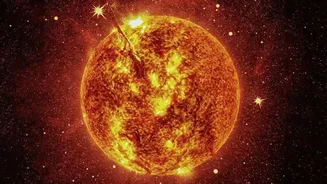
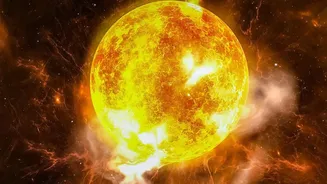
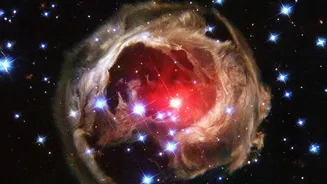
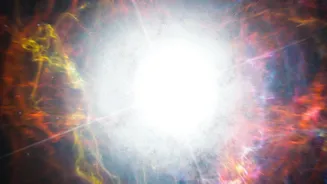
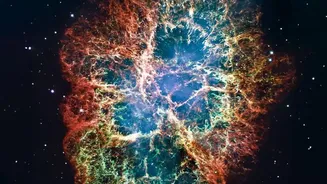
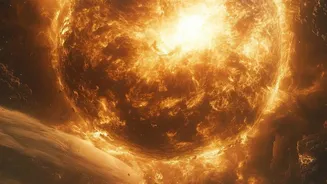
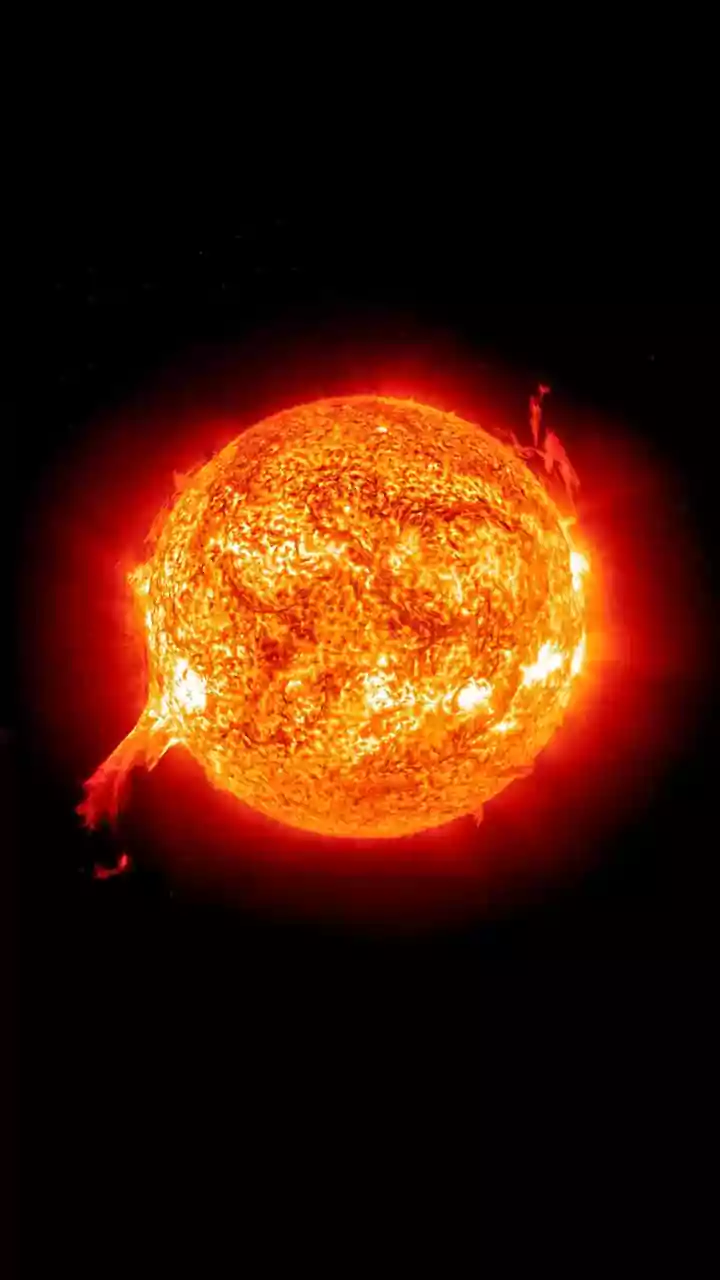
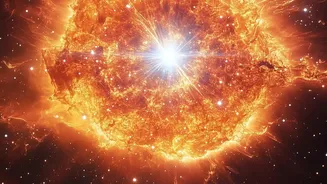
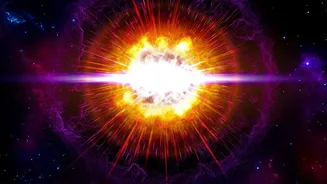
When a truly massive star, known as a red supergiant, runs out of fuel, it’s supposed to go out with a bang. The star’s own immense gravity causes its core to collapse, triggering a cataclysmic explosion called a supernova. For a brief period, this single
event can outshine an entire galaxy, scattering heavy elements created inside the star across the cosmos. For decades, this has been the accepted model for the death of stars more than eight times the mass of our sun. Astronomers expected to see the sky regularly lit up by these brilliant farewells from the universe's giants, like the famous red supergiant Betelgeuse is predicted to do one day. But a strange discrepancy has emerged: scientists are seeing far fewer supernovae from the most massive red supergiants than their theories predict.
A Cosmic Disappearing Act
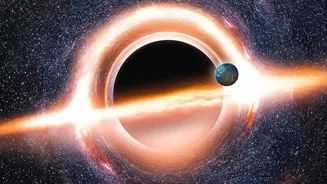
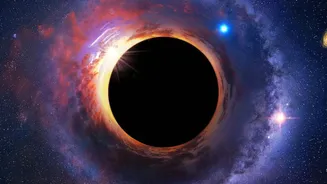
Instead of a spectacular explosion, some of these colossal stars appear to be doing something far stranger: they just disappear. Observations have captured instances where a bright red supergiant, shining intensely for years, suddenly fades and vanishes from sight. This phenomenon is known as a “failed supernova.” In these cases, the star's core collapses so completely and rapidly that it forms a black hole directly, swallowing the burgeoning supernova before it can even erupt. For an observer millions of light-years away, the star simply winks out. It’s estimated that as many as 20-30% of massive stars might end their lives this way, which could neatly explain the mystery of the missing supernova explosions.
Enter the Ghost Particle
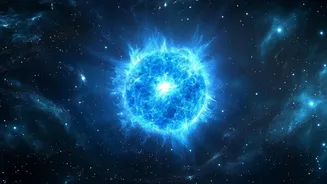
The key to understanding whether a star explodes or implodes may lie with one of the most elusive particles in the universe: the neutrino. When a star’s core collapses, it releases an almost unimaginable flood of these “ghost particles,” which carry away about 99% of the collapse energy. For a supernova to succeed, a tiny fraction of these neutrinos must be reabsorbed by the material just outside the core, providing the final, crucial push to blow the star apart. If this neutrino heating fails, gravity wins, and the star collapses into a black hole. The fate of a star hundreds of times the size of our sun hinges on the precise behavior of these nearly massless, weakly interacting particles.
The Challenge of Digital Stars
This is where the headline's call for better simulations comes in. Modeling the death of a star is an incredibly complex task. Recent research has shown that a subtle property of neutrinos, their ability to change “flavor” or type, can dramatically alter the outcome. Including this flavor-changing behavior in simulations has caused a whole range of model stars, which were previously predicted to explode, to instead fail and collapse into black holes. The effect seems particularly important for stars between 16 and 30 times the mass of our sun. However, accurately simulating these neutrino physics in three dimensions requires immense computational power, pushing the limits of current technology. Most existing models are one-dimensional or use simplified approximations, which don't capture the chaotic, swirling reality inside a dying star.
What Better Simulations Could Reveal
Creating more realistic, fully three-dimensional simulations that incorporate the complex physics of neutrino oscillations is the next frontier for astrophysicists. Such models could finally provide a definitive answer to why some red supergiants go supernova while others vanish. They would allow scientists to test their theories and predict which stars are destined for which fate. This isn't just about solving one mystery; it has ripple effects across astronomy. It would refine our understanding of black hole formation, explain the observed rates of supernovae in the universe, and help us better interpret data from neutrino observatories here on Earth. These digital recreations of stellar death are essential tools for piecing together the life and death cycles of the cosmos.