



An Ocean's Ghosts in the Mountains
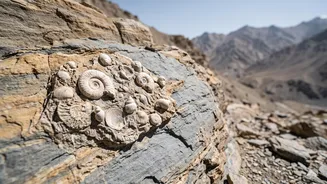
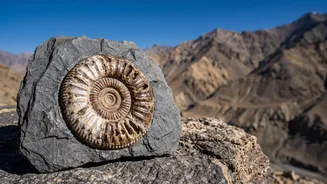
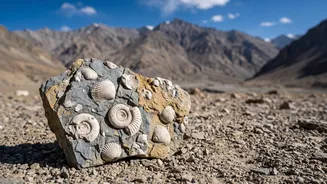
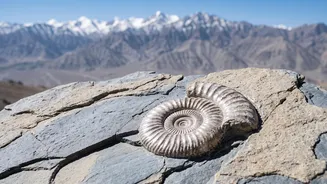
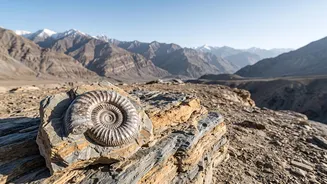
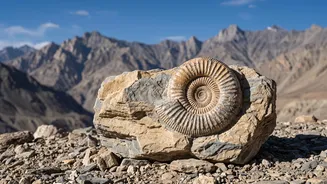
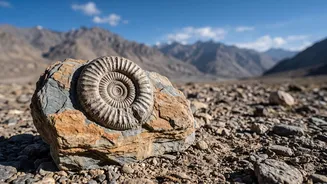
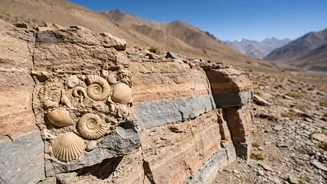
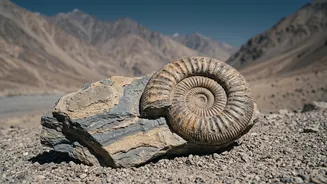
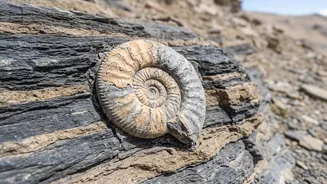
In the remote Changthang region of eastern Ladakh, geologist Dr. Ritesh Arya has unearthed a remarkable collection of marine fossils. Found in Nyoma, the haul includes the remains of gastropods (snail-like creatures), bivalves, and oyster-like organisms.
This isn't the first time such fossils have been found in Ladakh, a region known as a geological goldmine. However, the concentration and preservation of this new find provide an exceptionally clear window into a world that existed millions of years before the Himalayas reached for the sky. These fossils are the silent ghosts of an ocean, their presence at thousands of metres above sea level a testament to the immense geological forces that have shaped the Indian subcontinent.
Pinpointing a Crucial Moment in Time
The headline's "fresh angle" comes from the preliminary dating of these fossils, which places them in the Eocene epoch, between 34 and 38 million years ago. This is a pivotal period in Earth's history. It’s the time just before the final, dramatic collision between the Indian and Eurasian tectonic plates. The fossils bear a striking resemblance to those found in the Subathu Formation in Himachal Pradesh, a well-studied layer of Eocene marine deposits. According to Dr. Arya, the similarity was an immediate surprise, suggesting that this ancient sea extended much further into Ladakh than previously confirmed. This discovery helps scientists more accurately map the geography of a lost sea and a subcontinent on the move.
The Birth of the Himalayas
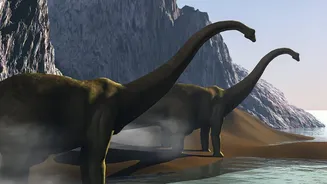
So, how did sea creatures end up on the roof of the world? The story begins over 100 million years ago, when the landmass we now know as India was an island continent drifting north across the ancient Tethys Ocean. As it moved, the dense oceanic crust of the Tethys was forced underneath the lighter Eurasian continent. Finally, between 40 and 50 million years ago, the two landmasses collided. The immense pressure buckled the earth's crust, folding and thrusting the seafloor upwards. The rocks that formed the seabed of the Tethys, along with the remains of the creatures that lived in it, were lifted thousands of metres into the air, eventually becoming the Himalayan mountain range we know today. These fossils from Nyoma are physical, tangible proof of this colossal planetary event.
Painting a Picture of Ancient Ladakh
The discoveries at Nyoma go beyond just marine life. Dr. Arya’s expeditions have also uncovered fossilized palms, petrified wood, and trace fossils, like burrows left by organisms in ancient sediment. Together, these finds dismantle our modern perception of Ladakh as a cold, arid desert. Instead, they paint a vibrant picture of a warm, subtropical coastal region. Palm trees likely fringed a shallow, warm sea teeming with life. This rich ecosystem existed in a climate vastly different from today's, offering crucial data for scientists studying long-term climate change and biodiversity. It shows that nearly 35 million years ago, this part of the Trans-Himalaya was an active, thriving coastal environment.
Ladakh’s Geological Treasure Chest
This find underscores Ladakh's importance as a natural laboratory for understanding planetary science. Institutions like the Wadia Institute of Himalayan Geology have long studied the region, uncovering everything from ancient snake fossils to new clues about the extinction of life. The work of geologists like Dr. Arya and his mentor, the renowned palaeontologist Prof. Ashok Sahni, continuously refines our knowledge. While these latest fossils from Nyoma still require detailed analysis to confirm their precise age and species, they have already opened up exciting new questions. They may prove that the Eocene-era Subathu Sea was far more extensive than ever imagined, rewriting a key chapter in the epic story of the Himalayas.