






Power Up with Protein
One of the most common reasons a vegetarian meal fails to satisfy is a lack of protein. Protein slows digestion, stabilizes blood sugar, and provides a long-lasting feeling of fullness. A simple salad with just lettuce and vegetables digests quickly,
but adding a protein anchor can make all the difference. For your next meal, be intentional about including a robust protein source. Excellent vegetarian options include lentils, chickpeas, black beans, tofu, tempeh, and edamame. Even grains like quinoa offer a complete protein, containing all the essential amino acids your body needs. Aim to have a dedicated source of protein in every meal, not just as an afterthought.
Fill Up on Fibre
Fibre is a vegetarian's best friend when it comes to satiety. It adds bulk to your meals, physically filling your stomach, and it slows down the rate at which food leaves your stomach, keeping you feeling fuller for longer. Luckily, a well-rounded vegetarian diet is often naturally rich in fibre. To ensure you're getting enough, focus on incorporating whole foods. Choose whole grains like brown rice, oats, and farro over their refined white counterparts. Load up on vegetables and fruits, especially leafy greens, broccoli, and Brussels sprouts. Legumes like beans and lentils are fibre powerhouses, as are nuts and seeds like chia, flax, and almonds.
Incorporate Healthy Fats
For decades, fat was unfairly villainized, but healthy fats are crucial for a satisfying meal. Fat contributes to satiety and helps your body absorb essential fat-soluble vitamins. If you've ever had a smoothie and felt hungry shortly after, it might be because it lacked fat. Adding sources of healthy monounsaturated and polyunsaturated fats can provide staying power. Avocado is a fantastic addition to salads, bowls, and toast. Nuts and seeds, whether sprinkled on top of a dish for crunch or blended into a creamy sauce, are also excellent choices. A drizzle of extra-virgin olive oil over roasted vegetables or in a salad dressing can also elevate both the flavour and the fullness factor of your meal.
Don't Underestimate Umami
Sometimes, that feeling of dissatisfaction isn't about hunger but a lack of deep, savoury flavour. This is where umami, often called the 'fifth taste', comes in. It provides a 'meaty' richness that can make a vegetarian dish feel complete and deeply satisfying. You don't need meat to achieve this. Mushrooms, especially dried varieties like shiitake, are an umami bomb; even the water used to rehydrate them can be used as a flavourful broth base. Other great sources include soy sauce, miso paste, nutritional yeast, and sun-dried tomatoes. Roasting vegetables like carrots, cauliflower, or sweet potatoes until they are browned and caramelized also develops their natural umami flavours.
Consider Your Portions and Plate
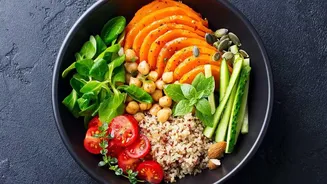
It's a simple point, but an important one: you might just need to eat more. Many plant-based foods are less calorie-dense than animal products, which means a vegetarian meal might require more physical volume to provide the same amount of energy. Don't be afraid to have a larger serving of whole grains or a second helping of lentil stew. A helpful framework is to fill half your plate with fruits and vegetables, a quarter with a quality protein source, and the final quarter with whole grains or healthy starches. This balanced approach ensures you are getting a wide array of nutrients that work together to keep you energized and satisfied until your next meal.