






The Trillion-Dollar Opportunity
The projections are staggering. Various reports estimate that Generative AI (GenAI) could add anywhere from $1.2 to $1.5 trillion to India's GDP by 2030. This isn't just a far-off dream; the productivity boost is expected to start adding between 0.9%
to 1.1% to India's annual growth rate. This economic surge is driven by GenAI's ability to enhance efficiency, automate complex tasks, and accelerate discovery across industries. Unlike previous technologies that took decades to show an impact, experts believe GenAI's effects will be felt much quicker, fundamentally altering how businesses operate and create value. This positions India, with its vast digital infrastructure and large, young workforce, to potentially become a global leader in the AI-driven economy.
The High-Impact Zones: IT, Finance, and Media
The first and most powerful waves of transformation will hit knowledge-intensive sectors. Industries like IT services, software development, business services, and financial services are set to be the biggest beneficiaries. About 75% of the value from GenAI is expected to come from four main areas: customer operations, marketing and sales, software engineering, and R&D. For India's world-class IT and BPM sectors, this is a monumental shift. GenAI can write code, manage customer service queries with unprecedented sophistication, and create marketing content, freeing up human employees from routine work to focus on strategy and innovation. Similarly, media, entertainment, education, and healthcare are primed for a revolution. In these fields, GenAI can assist with tasks like medical diagnostics, creating personalized learning paths, and generating creative content.
Evolution, Not Revolution: The Slower-Burn Sectors
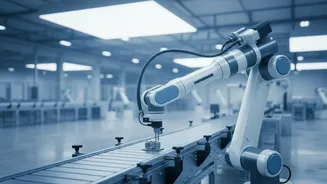
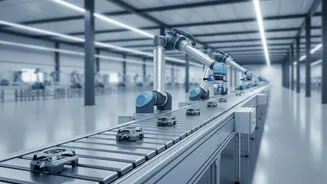
Conversely, sectors where work is predominantly physical will experience a more gradual evolution. Industries like manufacturing, construction, and textiles are expected to see more modest gains from GenAI initially. While AI will certainly play a role in optimizing supply chains and design processes, the core tasks in these industries remain tied to the physical world, where robotics and other forms of automation are more directly impactful. An Access Partnership report notes that while manufacturing and retail could contribute significantly to productivity gains due to their large share of the workforce, the transformation will be different. The impact will be less about replacing core physical tasks and more about augmenting decision-making and improving efficiency around the edges. It’s a slow burn, not a wildfire.
The Great Divide: Skills and Readiness
The uneven impact of GenAI is not just about industries, but about people and their preparedness. A significant barrier to adoption in India is the existing skills gap. Reports indicate that a majority of businesses feel they have low to moderate readiness to harness GenAI, with over half citing a lack of skilled talent as a primary challenge. While AI can automate tasks that currently consume 60-70% of employees' time, this automation is concentrated in knowledge work. This means the demand will shift dramatically towards workers who possess skills in critical thinking, creativity, and AI management. Without a concerted national effort in upskilling and education, there's a risk of widening the gap between the AI-ready and the AI-bypassed workforce, creating new forms of inequality even as the overall economy grows.