



What Exactly Is a Hanging Glacier?
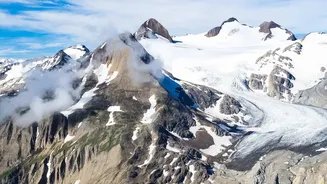
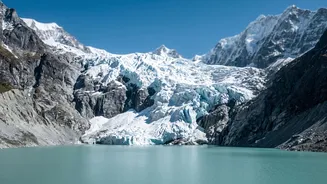
A hanging glacier is a body of ice that clings to the side of a steep mountain, often originating high up on a valley wall or cliff. Unlike valley glaciers that flow downwards along the valley floor, a hanging glacier descends only part of the way and
abruptly stops, often at a precipice. This precarious position means that instead of slowly melting into a stream, pieces of it can break off without warning. The primary way a hanging glacier transfers ice and snow to the valley below is through dramatic and powerful icefalls and avalanches.
The Chain Reaction to a GLOF
The real danger begins when a hanging glacier is located above a glacial lake. A Glacial Lake Outburst Flood (GLOF) is the sudden and violent release of water from a lake that was dammed by a glacier or a moraine—a natural barrier of rocks and debris. A GLOF can be triggered in several ways, but a hanging glacier introduces a particularly potent risk. If a large chunk of ice breaks off the hanging glacier, it can trigger a massive ice avalanche. When this mass of ice and rock crashes into the glacial lake below, it creates a huge displacement wave, similar to a tsunami. This wave can overwhelm the natural moraine dam, causing it to breach and release a catastrophic torrent of water, mud, and debris downstream.
India’s Himalayan Vulnerability
The Indian Himalayan Region is acutely vulnerable to this threat. Climate change is accelerating glacier melt, leading to the formation of numerous new glacial lakes and the expansion of existing ones. As temperatures rise, the stability of hanging glaciers is also reduced, increasing the likelihood of break-off events. A government survey has identified approximately 7,500 glacial lakes across the Indian Himalayas, with around 200 considered high-risk. Many of these potentially dangerous lakes lie in states like Sikkim, Himachal Pradesh, Uttarakhand, and Arunachal Pradesh, as well as the union territories of Jammu and Kashmir and Ladakh.
Identifying the High-Risk Zones
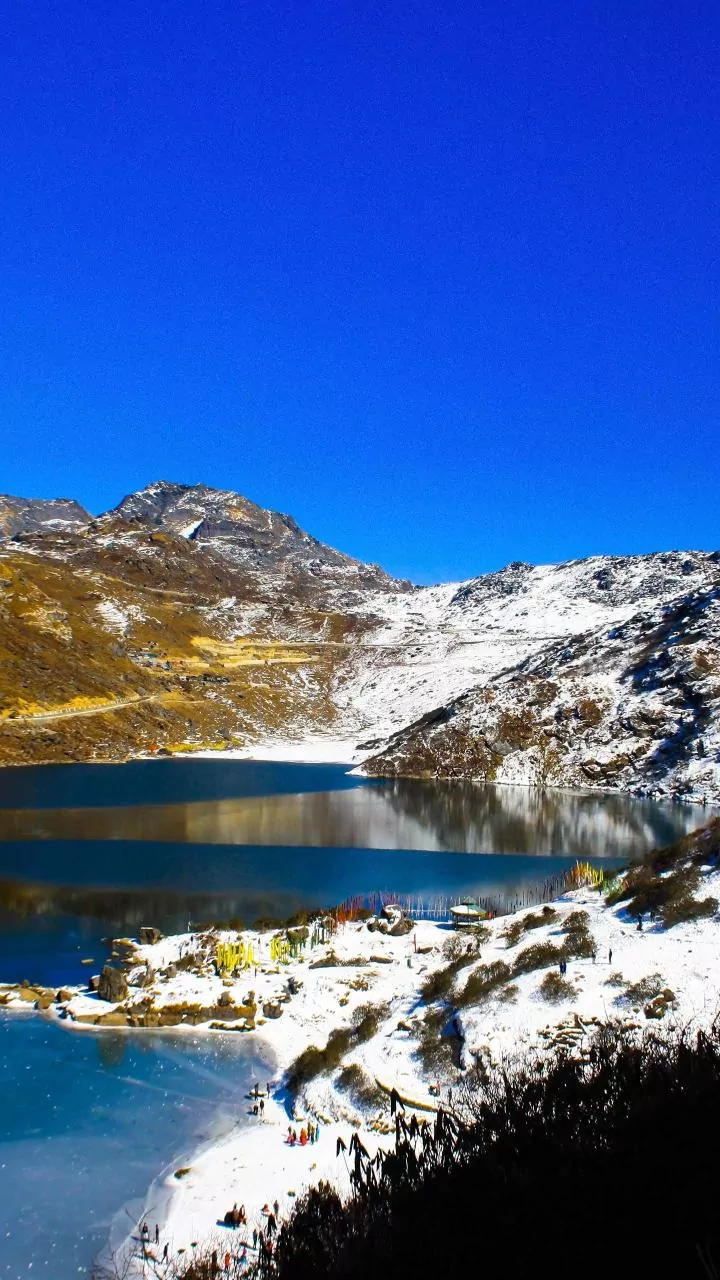
Recent studies have pinpointed specific areas of concern. For example, one study identified 219 hanging glaciers in the Alaknanda basin of Uttarakhand's Garhwal Himalayas alone. The National Disaster Management Authority (NDMA) has been working to identify and categorise these high-risk lakes. Himachal Pradesh has the highest number of vulnerable lakes, followed by Sikkim and Ladakh. Events like the devastating GLOF at Sikkim's South Lhonak Lake in October 2023, which killed dozens and destroyed major infrastructure, serve as a stark reminder of the destructive power of these floods. That event was triggered by a landslide into the lake, demonstrating a similar mechanism to the risk posed by hanging glaciers.
Monitoring and Staying Prepared
In response to the growing threat, Indian authorities have increased their focus on mitigation and preparedness. The NDMA has issued guidelines for managing GLOF risks, which include identifying dangerous lakes, monitoring them, and developing early warning systems. Agencies like the Central Water Commission and the Wadia Institute of Himalayan Geology are actively involved in monitoring these high-altitude water bodies using satellite imagery and field surveys. The goal is to create a robust system that can provide downstream communities with enough warning to evacuate in the event of a potential GLOF. This includes installing sensors to detect changes in water levels and establishing clear communication channels to alert people at risk.